Last Year's Sales Exceed 7.3 Trillion Won
Gangnam Branch Surpasses 2 Trillion Won for 2 Consecutive Years
Times Square Gwangju Branch Also Shows Growth
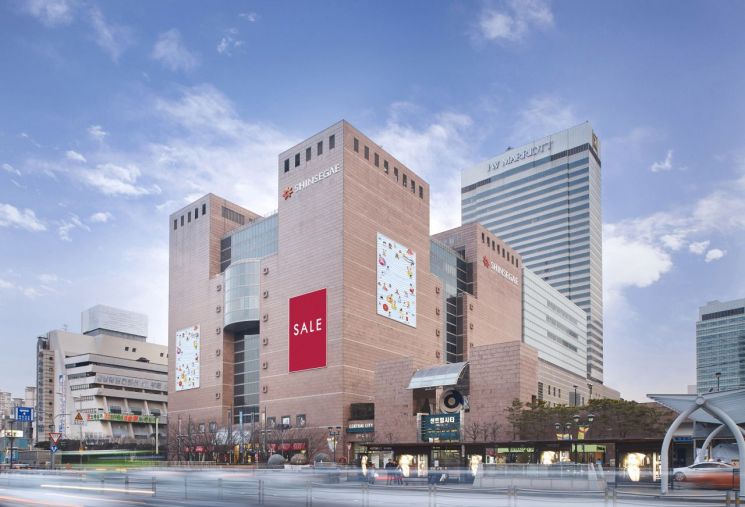
[Asia Economy Reporter Lim Hye-sun] Shinsegae Department Store's 'hub enlargement' strategy shone even amid the COVID-19 crisis.
Shinsegae Overcoming COVID-19
On the 13th, it was confirmed that Shinsegae Department Store's sales last year exceeded 7.3 trillion KRW, showing a slight increase compared to the previous year. Considering that overall department store sales declined by 10%, this performance is regarded as a strong showing. As COVID-19 severely impacted the retail industry, department stores nationwide struggled with an average monthly customer decrease of 20%. In contrast, Shinsegae's mega stores saw sales growth compared to the previous year.
About a decade ago, Shinsegae established strategies of 'enlargement' and 'premiumization' to become the 'number one regional department store.' Chairman Lee Myung-hee of Shinsegae Group actively invested, and stores that opened or were expanded and renewed afterward?such as Gangnam Branch, Busan Centum City Branch, Daegu Branch, and Gwangju Branch?all ranked first in sales. The luxury business was directly expanded through the efforts of Jung Yoo-kyung, Shinsegae's General Manager.
Gangnam Branch Surpasses 2 Trillion KRW Sales for Two Consecutive Years
Shinsegae Gangnam Branch exceeded 2 trillion KRW in sales for two consecutive years. Last year, sales grew by more than 5% compared to the previous year. Amid the COVID-19 impact, Gangnam Branch is the only department store worldwide to record sales in the 2 trillion KRW range.
In 2016, Gangnam Branch expanded its new building and renewed the entire store, increasing its sales area from 55,500㎡ to 86,500㎡, becoming the largest department store in Seoul. Annual sales, which were 1.3 trillion KRW before the renewal, surged and have been in the 2 trillion KRW range since 2019.
The core of this growth is luxury goods. The luxury sales proportion at Gangnam Branch exceeds four times the average luxury sales proportion of Shinsegae Department Store. With growing interest from younger customers, luxury sales among those in their 20s and 30s surged by 40% compared to the previous year. Gangnam Branch is also a must-visit place for CEOs of overseas luxury brands visiting Korea to understand Asian luxury customer trends. For luxury brands that need to attract new young customers interested in luxury, Gangnam Branch is the optimal place to meet customers with high purchasing potential while maintaining their 'premium image.'
Only Mega Stores Grow
The Centum City Branch, the largest in the nation with a sales area of 198,462㎡, recorded sales of 1.23 trillion KRW. It was effective to be the first in the region to house Louis Vuitton, Chanel, and Herm?s, and to create the largest men's specialty hall in the provinces. Times Square Branch, which was the first in the industry to open a food hall on the first floor of a department store, recorded sales of 470 billion KRW thanks to the renewal effect, growing 3% compared to the previous year. Considering that more than half of customers purchase both lifestyle and food categories, Shinsegae broke the existing mold by placing the first floor as a food store for shopping convenience. They also experimented by dedicating an entire building to a lifestyle specialty hall, judging that the living market is also growing as domestic consumers' living standards rise.
Gwangju Shinsegae, the 'number one store in the Gwangju-Jeonnam region,' recorded sales of 640 billion KRW, a 3% increase. Gwangju Branch introduced many luxury brands favored by younger generations such as Gucci, Saint Laurent, Moncler, Balenciaga, and Bottega Veneta instead of the three major luxury brands including Chanel. The Food Plaza, gathering famous local and nationwide restaurants, and the premium living product category's luxury lifestyle specialty hall also gained popularity.
© The Asia Business Daily(www.asiae.co.kr). All rights reserved.

















