Reflecting Media Changes
Growing Influence and Economic Benefits
Additional Telecom Operators Also Face Obligations
Can YouTube and Netflix Be Regulated?
Key Is Addressing Fairness and Reverse Discrimination
[Asia Economy Reporter Koo Chae-eun] A bill to collect the Broadcasting and Communications Development Fund (Bangbal Fund) from value-added telecommunications service providers such as Netflix, Naver, Kakao, and CJ ENM is being promoted.
The purpose is to impose public responsibilities related to broadcasting businesses as the influence and economic benefits of portals and online video services (OTT) increase, but it is difficult to enforce on overseas companies like Netflix and YouTube that earn huge amounts of money domestically, raising concerns about fairness and reverse discrimination.
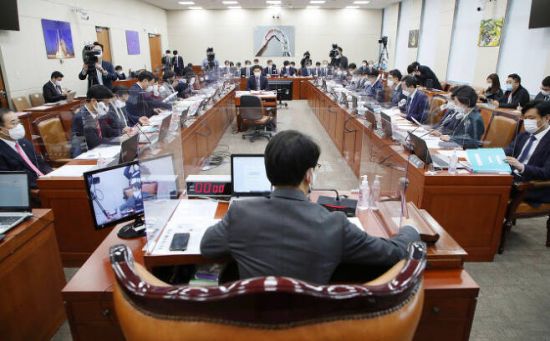
According to the related industry on the 8th, Kim Young-sik, a member of the National Assembly’s Science, Technology, Information and Broadcasting and Communications Committee from the People Power Party, plans to propose the “Broadcasting and Communications Development Basic Act Amendment” this month, which includes collecting the Bangbal Fund from value-added telecommunications service providers such as portals and OTTs, as well as multiple channel operators (MPP) like CJ ENM.
This bill reorganizes the Information and Communications Promotion Fund and the Broadcasting and Communications Development Fund into the “Broadcasting and Communications Promotion Fund,” and includes provisions to impose charges on value-added telecommunications service providers above a certain scale and multiple channel operators such as CJ ENM to expand the fund’s resources. According to this bill, not only Naver, Kakao, and CJ ENM but also overseas content giants like Netflix, YouTube, Facebook, and Disney Plus must pay the Bangbal Fund proportional to their sales under the name of charges.
The problem is effectiveness. It may be easy to collect the fund from domestic value-added telecommunications service providers like Naver or Kakao, but it could be practically difficult to collect charges from overseas companies like YouTube or Netflix. This is because they have servers overseas, making it hard for domestic regulatory agencies to enforce the law. In fact, YouTube and Netflix do not pay network usage fees, which Naver and Kakao pay 70 billion KRW and 30 billion KRW respectively.
Therefore, for the bill to impose the Bangbal Fund on portals or OTTs to have justification, legal means to collect from overseas operators should also be prepared. Since related regulatory system reforms must be carried out simultaneously, a difficult path is expected during the National Assembly’s discussion process. An internet industry official said, “If the Bangbal Fund burden is imposed only on domestic portals and OTTs, it could act as a burden factor in competition with overseas companies,” adding, “It is necessary to design the system so that there is no reverse discrimination against native companies.”
In this regard, Kim Young-sik of the People Power Party added a provision to the bill allowing the Minister of Science and ICT or the Korea Communications Commission to request cooperation such as data submission from central administrative agencies, local governments, or related organizations when necessary. A representative from Kim Young-sik’s office explained, “If necessary, we plan to secure effectiveness by linking with the National Tax Service to collect the fund from overseas companies as well.”
Meanwhile, the Bangbal Fund was established in 2000 under the “Broadcasting Act” for the purpose of promoting broadcasting projects and cultural and artistic promotion projects. Currently, the scope of collection includes terrestrial broadcasters, comprehensive programming channels and news channels, cable TV operators (SO), satellite broadcasting, IPTV, home shopping, and the three mobile carriers. As of last year, 1.4159 trillion KRW was collected in the Bangbal Fund. The fund is budgeted and distributed with 18% allocated to the Korea Communications Commission’s project expenses and 82% to the Ministry of Science and ICT.
© The Asia Business Daily(www.asiae.co.kr). All rights reserved.

![Clutching a Stolen Dior Bag, Saying "I Hate Being Poor but Real"... The Grotesque Con of a "Human Knockoff" [Slate]](https://cwcontent.asiae.co.kr/asiaresize/183/2026021902243444107_1771435474.jpg)















