[Post-Corona Global Business Survival Strategy②]
Mobility Services Change Due to COVID-19
Automakers Evolve from Simple Manufacturers to Service Providers
[Asia Economy Reporter Su-yeon Woo] "Since the COVID-19 pandemic, as the value of non-face-to-face interactions and hygiene has been emphasized, business trends will shift toward mobility services that allow individual use and easy hygiene management." (Lee Bo-sung, Director of Hyundai Motor Global Management Research Institute)
After the COVID-19 pandemic (global outbreak), changes have come to the mobility service market as well. While the sharing economy, which prioritized cost-effectiveness and practicality, has slowed down, the subscription economy emphasizing individuality and non-face-to-face interaction has emerged as a new trend in our society. Following COVID-19, demand for public transportation, carpooling, and car-hailing (vehicle call services) involving multiple passengers has decreased, whereas demand for vehicle subscriptions, long-term rentals, and micro-mobility services that allow individual use has been on the rise.
Mobility Services: From Sharing to Subscription Economy
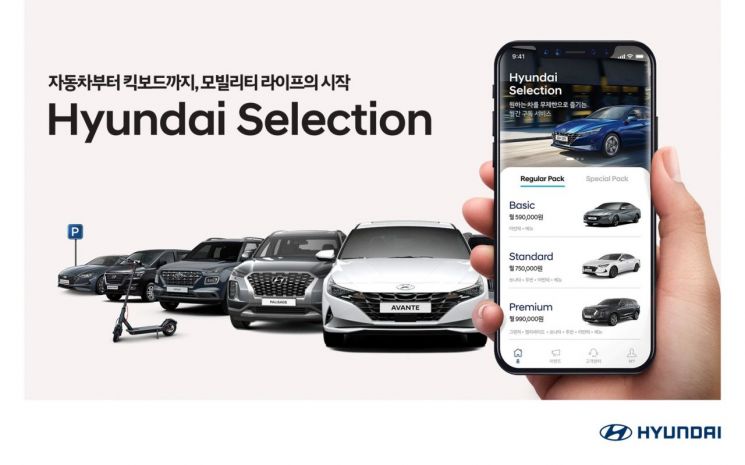
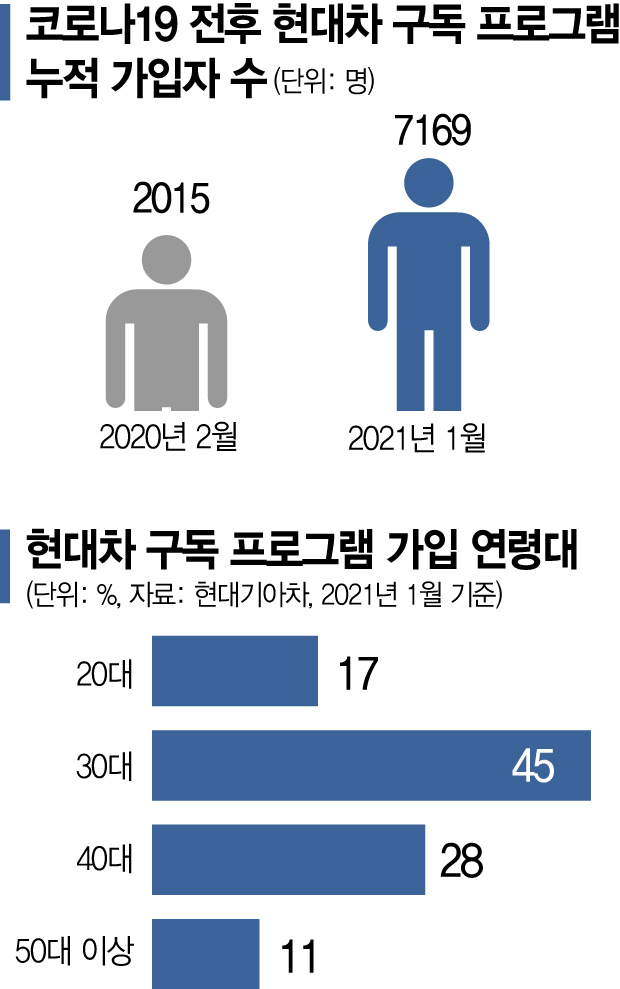
According to Hyundai Motor Group, as of January this year, the number of subscribers to Hyundai Motor's subscription program 'Hyundai Selection' reached 7,169, a 255% increase compared to February last year, just before the COVID-19 outbreak. This figure represents more than a 3.5-fold increase in just over a year, and when combined with Kia and Genesis programs, the total number of subscribers reaches 16,000. The age group of subscribers is dominated by those in their 20s and 30s, accounting for 62%. This is because the millennial generation, which values 'experience' over 'ownership,' is familiar with subscription services that allow them to pay for the experience of driving various car models.
Subscription services are no longer an unfamiliar concept in the automotive industry. Cadillac, Porsche, BMW, Toyota, and others operate subscription services worldwide, and Volvo has announced plans to allocate 50% of the vehicles produced by 2050 to subscription services. Hyundai Motor Group also plans to gradually expand the regions and vehicle models covered by these services.
Since the pandemic, subscription, rental, and leasing services that allow personal use without direct contact with drivers have gained popularity, and micro-mobility, which enables individuals to travel short distances alone instead of using crowded public transportation, has rapidly emerged as a new alternative. According to Hyundai Card's major service payment data, the number of shared electric scooter payments, which was zero until 2017, grew to 750,000 transactions by October last year. During the same period, payments for shared car mobility services reached 890,000 transactions, a 1.4-fold increase compared to 2017.
The Future Mobility Service Domain is Infinite
In the autonomous driving era, the concept of mobility services can expand infinitely beyond vehicles to include vehicle operation software, infotainment content, and vehicle parts. This includes subscribing to autonomous driving software that requires regular updates or subscribing to entertainment content that can be enjoyed inside autonomous vehicles.
Tesla has already introduced subscription packages in the U.S. that include real-time traffic information, satellite map viewing, video streaming, and internet browser services. As early as the beginning of this year, Tesla plans to introduce the subscription concept for autonomous driving feature updates. Currently, to update Tesla's Full Self-Driving (FSD) beta version, customers must pay a one-time option fee of about $7,000 (7.6 million KRW), but in the future, they will be able to pay a reasonable monthly fee to access the latest updates.
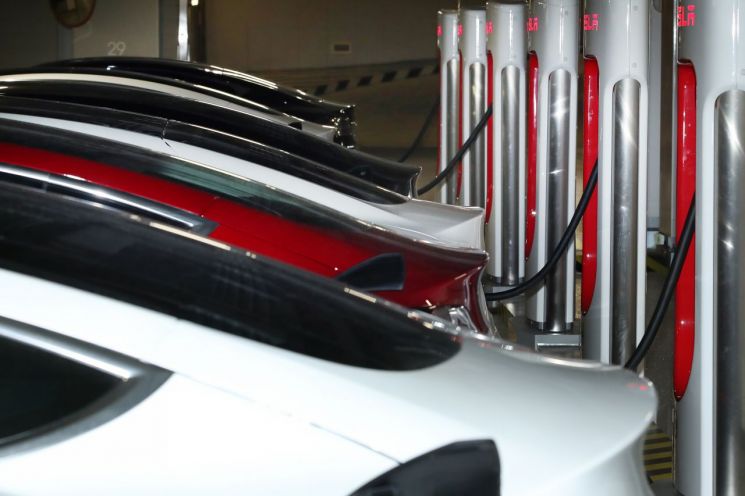
In the eco-friendly vehicle sector, the concept of electric vehicle battery subscription and rental services can also be considered. By shifting to a model where the battery, which accounts for a significant portion of the electric vehicle's cost, is rented, the final consumer price of electric vehicles can be lowered. Including various services such as battery repair, management, and charging can further broaden the concept of mobility services.
Accordingly, the focus of major automakers is shifting from simple transportation means to service solution development. Last year, Hyundai Motor Group declared its transition to a mobility solutions provider and proposed future urban mobility solutions centered on Urban Air Mobility (UAM). In Europe, a hydrogen commercial vehicle operation service that charges fees based on distance traveled (pay-per-use) has also been introduced. Kia recently removed 'MOTORS' from its company name and is accelerating the development and operation of services based on electric and autonomous vehicles.
Post-COVID Era... Diversification of Travel Purposes and Means
In the post-COVID era, not only the cost of mobility services but also the value and form of travel are expected to change in ways different from before. As major cities worldwide issue travel restrictions and remote and non-face-to-face work expands, uniform travel is expected to decrease. Instead, travel methods and purposes will diversify, and the total volume of travel is expected to increase.
Director Lee predicted, "In the post-COVID era, commuting demand will decrease, but leisure time will increase due to remote work, leading to increased demand for small-scale travel by families and individuals, and demand for parcel delivery will also rise due to the activation of non-face-to-face online sales." Accordingly, mobility products and services are expected to develop focusing on small-scale travel methods that minimize face-to-face contact and movement paths.
Director Lee added, "Various automakers, including Hyundai Motor, and electric vehicle startups are developing vehicles that can flexibly modify interiors according to customer needs and minimize contact between passengers. Demand-responsive mobility, which uses artificial intelligence to find optimal routes and match mobility with passengers, will promote qualitative changes in travel triggered by COVID-19."
© The Asia Business Daily(www.asiae.co.kr). All rights reserved.
!["The Woman Who Threw Herself into the Water Clutching a Stolen Dior Bag"...A Grotesque Success Story That Shakes the Korean Psyche [Slate]](https://cwcontent.asiae.co.kr/asiaresize/183/2026021902243444107_1771435474.jpg)


















