'Memories of Rural Exploitation During the Japanese Colonial Period: Hwaho-ri I' Report
Kumamoto Rihei, Operator of a 10.5 Million Pyeong Farm
"Characteristics of a Plunder Economy Possible Because It Was a Colony"
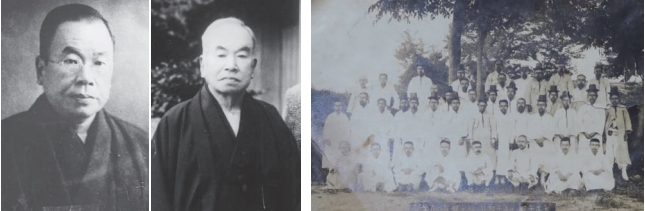
During the Japanese colonial period, Japan implemented an agricultural immigration policy in Joseon. This was to permanently colonize Joseon. Hwaho-ri, Shintaein-eup, Jeongeup-si, Jeollabuk-do was selected as the settlement area, and a large-scale farm was established. The ownership of the reclaimed farmland and land was transferred to Japanese individuals such as Kumamoto Rihei (熊本利平), Taue Taro (田植太郞), and Osawa Shinzo (大澤新藏). The indigenous people, who were self-sufficient farmers, were reduced to tenant farmers. They lived in poverty until liberation. At that time, a resident was orally recorded in the 2008 publication "The Landscape and Memories of Hwaho-ri in the 20th Century" as follows.
"They gave loans cheaply from banks or similar places, so they took it cheaply and made interest play, those guys. They just sat there without even having to be salaried workers. For example, if it was 10,000 won, they borrowed 10,000 won and then lent it out, so how much did they get? The highest interest rate was 50%. So they just sat still and exploited the Korean people. Still, Koreans had to farm, so when spring came, since there was nothing to eat, they had to sell their food supplies to live. They had to buy fertilizer, and do this and that. They used high-interest loans to repay by farming. They exploited us like that."
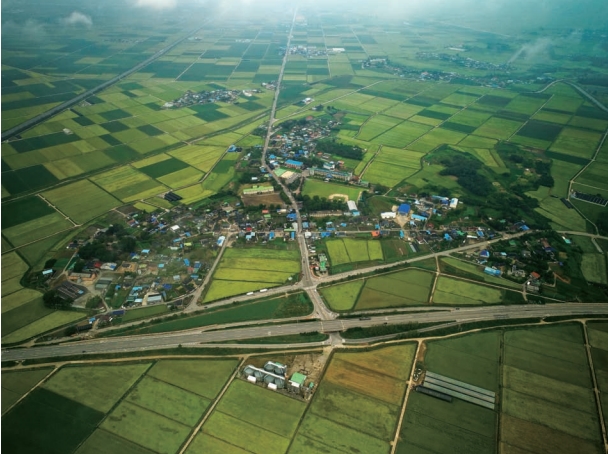
Tenant farmers could only smile after liberation. Thanks to the rice produced in the Gimje Plain and the educational and welfare facilities established by Dr. Lee Young-chun Ssangcheon (1903?1980). Dr. Lee was a doctor affiliated with Kumamoto Rihei's farm. After liberation, he utilized the farm facilities to build Hwaho Central Hospital and Hwaho Girls' Middle and High School, treating tenant farmers and improving the poor rural health issues. However, with urbanization and industrialization, the population gradually decreased, and the commercial district collapsed as a car-only road was opened nearby. Currently, only the appearance of a declining rural area remains.
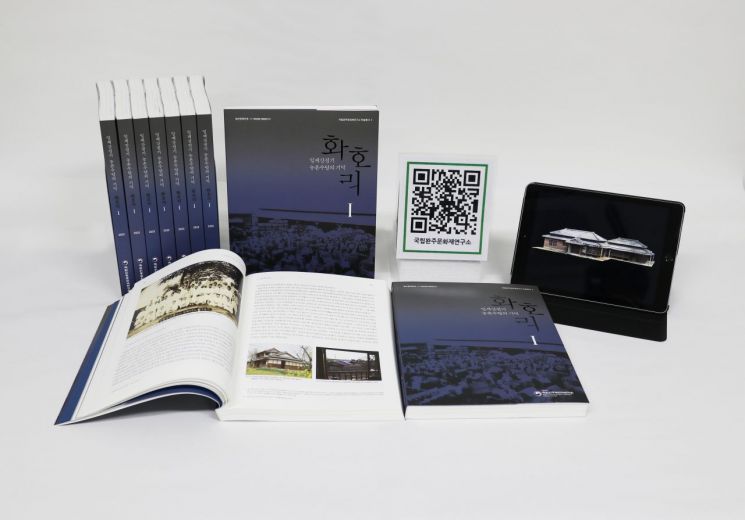
The National Wanju Cultural Heritage Research Institute announced on the 6th that it had published a report titled "Memories of Rural Exploitation during the Japanese Colonial Period Hwaho-ri I," which contains the results of an academic investigation of Hwaho-ri. It is a book that looks back on the memories and landscapes of the Japanese colonial period and verifies history and human geography through contemporary newspaper articles and maps. It includes comprehensive investigation, research, and recording results on modern tangible assets such as the status of buildings, types of wood used, vegetation, and sources of stone materials. It can be viewed at national and public libraries or on the websites of the Cultural Heritage Administration and the National Wanju Cultural Heritage Research Institute.
According to this, Kumamoto Rihei established farms in two areas: Naesari, Bak-myeon, Okgu-gun, Jeollabuk-do, and Hwaho-ri, Shintaein-eup. The area reached 3,500 jeongbo (町步, approximately 10.5 million pyeong). Excluding the national policy company, the Oriental Development Company, he was the largest private landowner in Jeollabuk-do. He exploited tenant farmers to produce rice, which he sent to Japan. He paid no heed to the tenant farmers' resistance. A resident at the time remembers as follows.
"There was a tenant dispute because it was too expensive. A person named 000 living in Sinduri led it. It must have been in the newspaper. Even though they did that to the Japanese guys, what could they do? In the end, the Japanese exploited a lot. Our people worked themselves to death farming, but nothing was left over."
Most traces from that time disappeared due to the rural residential environment improvement project. The remaining Japanese-style houses are also scheduled for demolition. However, this does not erase the history of exploitation. At that time, Japanese landlords claimed that they developed Joseon agriculture by investing large-scale capital to improve land, introducing and encouraging improved farming methods and superior seeds, and promoting improved farming tools and fertilizers. The report refutes this as follows.
"The managerial rationality and efficiency that allowed Kumamoto Rihei to secure the greatest profits in Joseon actually demonstrate the characteristics of a plunder economy made possible because the stage for business development was a colony. Furthermore, the capitalist management supported by colonial public authority such as local administrative agencies and police forces, as well as the trust system of Japanese national policy banks and the Oriental Development Company, clearly reveals the colonial nature of colonial landlord capital."
© The Asia Business Daily(www.asiae.co.kr). All rights reserved.
![Clutching a Stolen Dior Bag, Saying "I Hate Being Poor but Real"... The Grotesque Con of a "Human Knockoff" [Slate]](https://cwcontent.asiae.co.kr/asiaresize/183/2026021902243444107_1771435474.jpg)













