Korea Institute of Finance Analyzes 'Key Financial Issues of 2021'
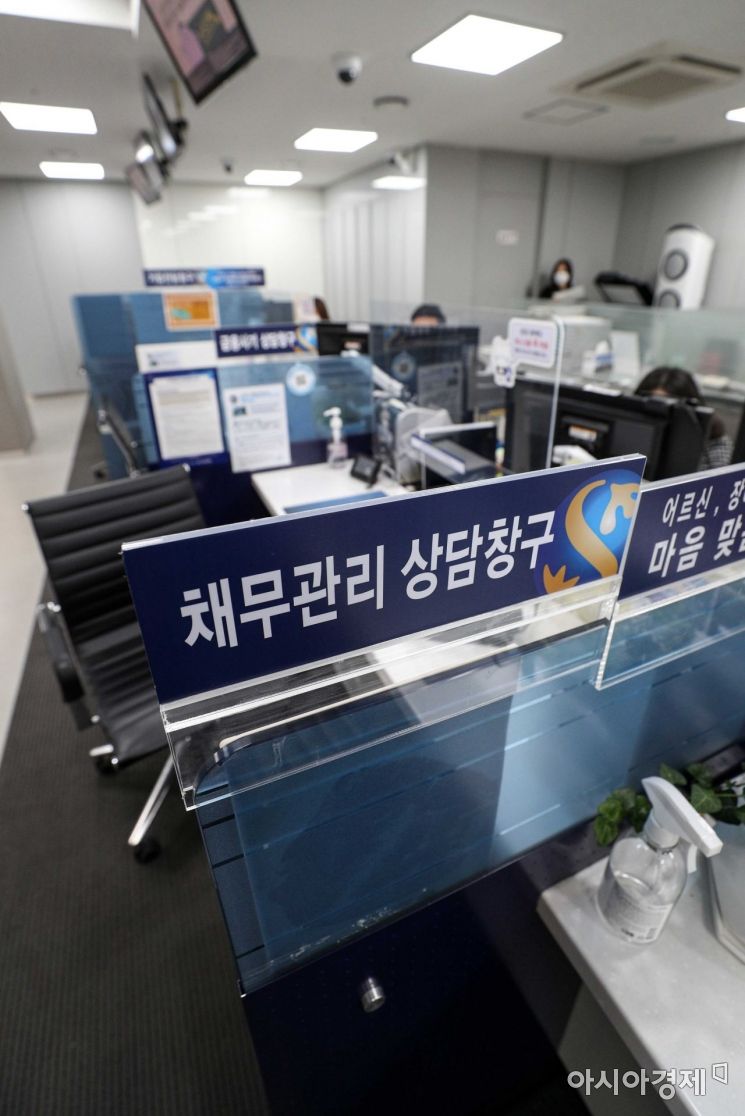
[Asia Economy Reporter Kangwook Cho] The spread of the novel coronavirus infection (COVID-19) has deepened economic polarization, leading to a diagnosis that the risk of loan defaults among vulnerable groups will increase this year.
On the 3rd, the Korea Institute of Finance assessed the major financial issues of 2021 in its regular publication 'Financial Brief,' including this matter, and emphasized, "Regarding the various measures taken to stabilize the financial market, an exit strategy should be considered in advance according to vaccine distribution."
The Institute identified seven key issues for this year: ▲ deepening economic polarization ▲ COVID-19 exit strategy ▲ household debt risk ▲ corporate insolvency and restructuring ▲ introduction of personal credit information management services (MyData) and comprehensive payment services ▲ overseas alternative investment defaults ▲ and whether to extend financial policy support programs.
Senior Research Fellow Sungwook Park stated, "As we enter the winter season, infectious diseases are resurging, prolonging the economic shock of COVID-19," adding, "Accordingly, economic polarization will deepen for the time being, increasing the risk of loan defaults among vulnerable groups."
Research Fellow Park emphasized, "For vulnerable borrowers who maintain long-term debt repayment ability, continuous funding should be supplied to reduce the possibility of credit crunch, while for vulnerable groups with diminished repayment prospects, smooth debt restructuring should be facilitated."
Senior Research Fellow Youngdo Kim commented on the 'financial exit strategy,' saying, "Various policies implemented last year due to COVID-19 contributed to stabilizing the financial market but also amplified various latent risks within the financial system," and forecasted, "With vaccine distribution making the end of COVID-19 visible this year, it will be time to consider an exit strategy."
Kim further suggested, "However, since exit strategies can contract the economy, deciding the timing and method is important," and recommended, "Because the speed of growth or recovery will vary significantly by class and industry, a micro-level exit strategy is desirable."
The Korea Institute of Finance viewed the immediate risk spread from household debt as low. However, it pointed out that if risk factors emerge simultaneously, they could escalate into financial system risks, necessitating countermeasures.
Senior Research Fellow Mingyu Song stressed, "Even amid the COVID-19 crisis, management and supervision should maintain the capacity to assess household debt repayment ability," adding, "In particular, in preparation for possible adjustments in the housing market, residential stability programs for delinquent borrowers should be prepared in advance, and 'pre-workout' (pre-debt restructuring) should be actively conducted for self-employed individuals and others."
© The Asia Business Daily(www.asiae.co.kr). All rights reserved.
![Clutching a Stolen Dior Bag, Saying "I Hate Being Poor but Real"... The Grotesque Con of a "Human Knockoff" [Slate]](https://cwcontent.asiae.co.kr/asiaresize/183/2026021902243444107_1771435474.jpg)
















