Concerns Over Iron Ore Production Disruptions in Brazil and Australia
Rising Iron Ore Demand Centered on China
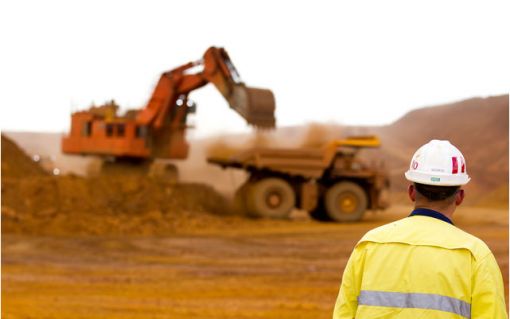 A worker is watching iron ore being loaded onto a truck at the Rio Tinto iron ore mine in the Pilbara region of Australia.
[Asia Economy Reporter Hwang Yoon-joo] Iron ore prices are reaching their highest levels since the 2010 "supercycle." With expectations of increased iron ore demand next year, the supply-demand imbalance is worsening, causing prices to surge. Steelmakers are concerned that if the rise in raw material costs is not reflected in shipbuilding heavy plate prices, losses in the heavy plate sector may continue.
According to the Ministry of Trade, Industry and Energy on the 29th, iron ore prices reached $167.2 per ton (as of December 25), marking the highest price since the first week of April 2010. This represents a 44.8% increase compared to the first week of January ($92.2). After surpassing $150 per ton on the 11th, prices broke through $160 within two weeks, and there are forecasts that they could exceed the historical high of $191.7 (February 17, 2011).
The primary cause of this year's iron ore price surge is identified as the "supply-demand imbalance." Operations were halted at Vale, a Brazilian iron ore company producing about 20% of the world's maritime iron ore trade, due to a worker fatality accident. Additionally, cyclone warnings at Australia's Pilbara port have raised concerns about supply disruptions. Park Sung-bong, a researcher at Hana Financial Investment, stated, "Typically, from the end of the year through the first quarter, weather issues such as cyclones in Australia and Brazil cause concerns about iron ore supply disruptions, so price volatility is expected to increase for some time."
On the other hand, iron ore demand is rapidly increasing, centered on China. To stimulate the economy after the COVID-19 shock, China has issued local government bonds worth 481 trillion won to invest in infrastructure. Due to the surge in iron ore prices caused by the supply-demand imbalance, China has decided to resume scrap metal import restrictions, which had been banned last year, starting next year. Tokyo Steel, Japan's largest electric furnace company, also raised prices of major products distributed in January by 10,000 yen. This price increase is the third following those in July and December, marking the largest hike since 2008.
Blast furnace steelmakers such as POSCO and Hyundai Steel have expressed their intention to raise shipbuilding heavy plate prices, which had been postponed due to order cliffs and COVID-19. Shipbuilding heavy plate prices have reportedly remained at around 600,000 won per ton since 2016.
A steel industry official said, "Blast furnace steelmakers are incurring losses in the heavy plate sector because they cannot reflect the rise in raw material prices in product prices," adding, "We will raise prices in the shipbuilding heavy plate price negotiations scheduled for the first half of next year."
© The Asia Business Daily(www.asiae.co.kr). All rights reserved.
















