Prolonged COVID-19 Pandemic Expands Remote Work
Half of Office Workers Report Remote Work Stress
Some Experience 'Sexual Harassment During Video Meetings'
 A citizen is checking their mobile phone. The photo is unrelated to specific expressions in the article. [Image source=Yonhap News]
[Asia Economy Reporter Heo Midam] # Kim, a 28-year-old office worker who joined the retail industry in the first half of this year, has recently been under severe stress due to work instructions from her boss via KakaoTalk (KakaoTalk). Kim said, "Since switching to remote work, if I don't respond immediately to my boss's questions, he suspects me by asking, 'Were you doing something else?'" She added, "I check KakaoTalk even when I go to the bathroom because I never know when my boss will call me." Kim also complained, "Because of my boss's excessive work instructions, I don't even have time to eat lunch." She is currently seriously considering changing jobs.
As the novel coronavirus disease (COVID-19) spread, more companies have implemented remote work. Office workers agree that remote work has many advantages, such as reducing the stress of commuting and turning group lunches into 'honbap' (eating alone).
However, due to the online work environment, some office workers are struggling with their bosses' incessant online work instructions at all hours. They have to respond to KakaoTalk messages even while eating lunch or going to the bathroom. As a result, some workers say, "I'd rather go to the office and work." This reflects complaints that the boundary between work and life balance ('Work-Life Balance' or 'Wolabal') is breaking down in the non-face-to-face work environment.
Experts worry that the online work environment makes it difficult to properly understand the other person's emotions, leading to one-sided work instructions that can effectively become boss bullying.
According to a survey, a significant number of office workers report stress due to remote work. In a survey conducted by the job portal Incruit of 530 office workers on 'online bullying experiences,' 47.7% of those with remote work experience said they felt stressed due to remote work. The most common reason was 'increase in work instructions outside working hours (19.8%).'
Looking at the details, the boundaries of working hours and commuting times were blurred. ▲Regular working hours were not observed (17.2%) ▲Difficulty in reporting work (or receiving work instructions) (27.1%) ▲Decrease in work efficiency (16.8%) followed.
Summarizing office workers' complaints, bosses cannot properly grasp whether their department staff are actually working, so they continuously issue work instructions. This not only lowers work efficiency but also creates a vicious cycle perceived as a form of bullying.
Office workers lament that the concept of leaving work has almost disappeared. Gu, a 30-year-old office worker, said, "After work, my boss often sends work instructions saying, 'It's a simple task, so please handle it.'" He added, "Although I feel unfair, it's hard to find a job during the COVID-19 situation, so I handle it without complaint, fearing retaliation if I argue with my boss."

Some point out that the boundary between home and workplace has become blurred, breaking down the boundary between work and private life. Choi, a 25-year-old office worker who works remotely every other week, said, "I like that commuting time has decreased and I can work in a comfortable environment while working remotely. But I developed an obsession that I have to respond quickly whenever my boss asks something." She added, "I'm afraid that if I don't respond quickly, my boss will misunderstand that I'm not working."
She continued, "I'm always tense because I never know when my boss's KakaoTalk messages will come during lunch or after work breaks," adding, "I feel like the workload has actually increased since I started remote work."
Because of this, office workers agreed on the need for a 'No KakaoTalk After Work Law.' The 'No KakaoTalk After Work Law' refers to prohibiting work instructions outside working hours.
According to a survey conducted by JobKorea of 717 office workers, 85.5% said they had received work instructions via messenger after work. These instructions came from bosses (68.4%), colleagues such as peers (17.1%), and partners or clients (12.2%).
Also, when asked if a 'No KakaoTalk After Work Law' is necessary, 87.7% of office workers answered yes. Both team leaders and managers (90.8%) and team members (87.1%) agreed that such a law is needed.
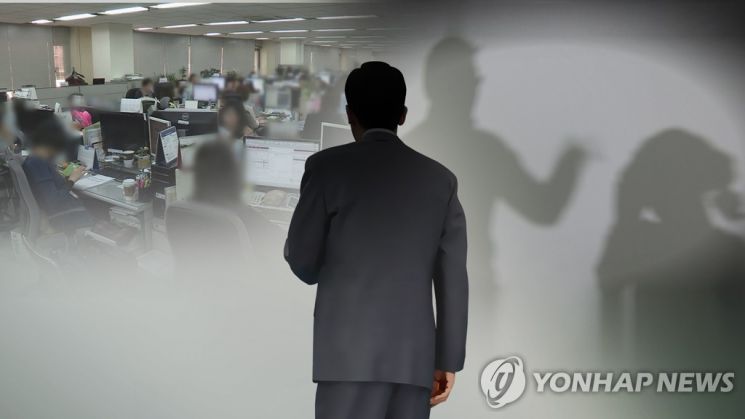
Yoon, a 27-year-old office worker in the advertising industry, said, "Since implementing remote work, I have been criticized a lot for lower performance. Because of the pressure, I have no choice but to work from home even on weekends." He added, "If the results are not good, they do not hesitate to insult me personally, which is very stressful."
He continued, "I think it would be better to be criticized face-to-face. When communicating via messenger, I can't tell how the other person feels or whether they are joking or serious. Because of work stress, I can't sleep well at night. If it's urgent, I think it's better to make a phone call."
In particular, some office workers reported experiencing sexual harassment through video conferences or online chats. In the Incruit survey mentioned earlier, 12.2% of respondents said they had been criticized for appearance, clothing, or attitude during video conferences, and 2.0% said they had experienced sexual harassment during video conferences.
Experts analyzed that the likelihood of boss bullying is higher in non-face-to-face situations where facial expressions cannot be seen. They also pointed out that those who bully may not even realize their behavior is bullying, suggesting that so-called messenger bullying by some bosses in remote work environments is likely to continue.
Professor Kwak Geumju of Seoul National University's Department of Psychology said, "Bullying within a group can happen in any organization," and analyzed, "As remote work increases, naturally (bullying) moves online." She added, "Since the victim's appearance cannot be seen directly online, the sense of responsibility for abusive language or bullying decreases, and the level of aggression and violence can increase."
© The Asia Business Daily(www.asiae.co.kr). All rights reserved.



















