New Relations Begin with Future Agreement on the 24th
Changes in Trade, Fair Competition, Fisheries, and Mobility Everywhere
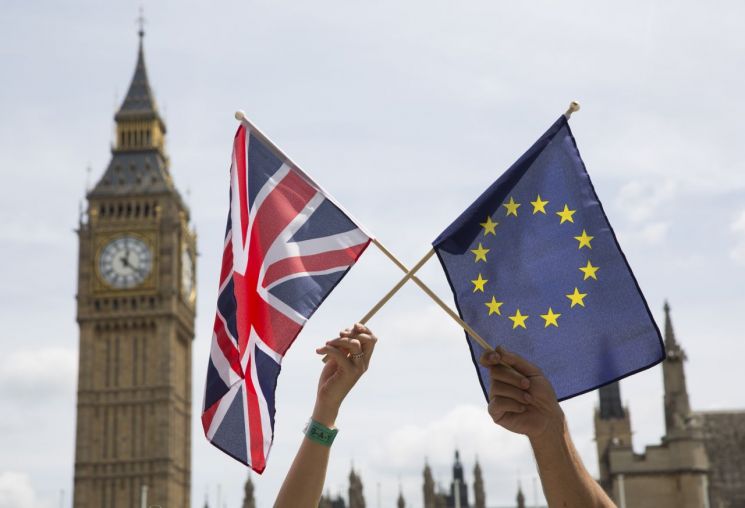
[Asia Economy Reporter Jeong Hyunjin] As the United Kingdom and the European Union (EU) successfully concluded future relationship negotiations following Brexit (the UK's withdrawal from the EU), the two sides will establish a new relationship starting January next year, when the transition period ends. Throughout the negotiation period, the UK emphasized sovereignty restoration, while the EU insisted on prohibiting 'cherry pickers' (entities that benefit without obligations) outside member states. As a result, ties between the two sides in various fields, including trade, are expected to become somewhat looser and face obstacles compared to before.
According to Bloomberg and others on the 24th (local time), the 2,000-page draft agreement agreed upon by both sides consists of three main pillars: ▲ a free trade agreement encompassing new economic and social cooperation relations ▲ a citizen safety partnership establishing a new system for law enforcement and judicial cooperation in criminal and civil law matters ▲ a horizontal agreement on governance, including dispute resolution methods. In particular, the free trade agreement covers trade in goods and services, investment, competition, state subsidies, tax transparency, maritime and road transport, energy, sustainability, fisheries, and data protection.
Bloomberg explained, "Under the post-Brexit trade agreement, the UK will face more trade barriers than when it was an EU member," adding, "This is the price of regaining sovereignty." An EU official said, "Everyone must prepare for a situation next year that will be very different from today."
Trade in Goods: Tariff-Free and Quota-Free but Customs and Quarantine Procedures Introduced
The starting point of the UK-EU future relationship negotiations was the trade agreement, especially trade in goods. Both sides initially insisted that tariff-free trade should continue after Brexit and that no separate quantity restrictions (quotas) should be imposed. However, as clashes occurred during negotiations and the possibility of a 'No Deal' withdrawal without agreement increased, the UK firmly responded that it could accept the Australian model, which operates under World Trade Organization (WTO) rules with separate agreements on some goods. This would significantly raise tariffs, inevitably impacting businesses.
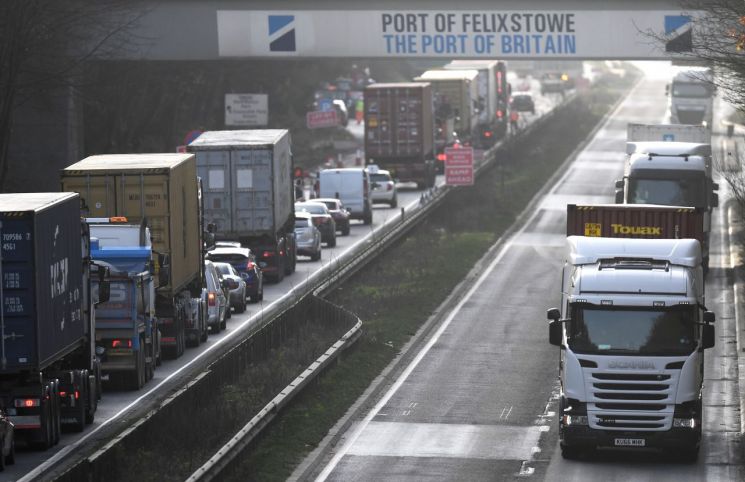
Ultimately, the UK and the EU reached an agreement on tariff-free and quota-free trade in this negotiation. The EU agreed to grant the UK greater access to the single market than in trade agreements it has with other advanced countries such as Canada or Japan.
However, compared to the UK’s previous status within the EU single market and customs union, new obstacles will arise, increasing costs for exporters. From January 1 next year, customs and regulatory borders will be established between the two sides, and customs and quarantine procedures will be implemented during goods trade. Through this, the EU will require UK exporters to provide health and safety certificates and origin certifications for relevant goods.
Since the UK has left the EU single market, it will create new regulations not applied to member states. The European Commission stated, "Although access to the market is less than within the single market, this agreement will provide sustainable connectivity in aviation, road, rail, and maritime sectors."
Level Playing Field: Legally Binding with Tariffs Imposed if Disadvantages Occur
The level playing field was a contentious issue with differing positions until the final stages of negotiations. The EU argued that after the UK leaves the EU regulatory system, it must not gain unfair advantages by securing competitiveness over EU member states in areas such as taxation, state subsidies, environment, and labor rights. The EU insisted that a fair competitive environment must be established in the market.
Regarding this, the UK and EU agreed on common legally binding principles related to state subsidies in the draft agreement. These principles are enforceable in courts of both sides and allow for the recovery of illegal subsidies. Subsidy implementation must be transparent, and rather than defining problematic levels of state subsidies, judgments will be made on a case-by-case basis.
Additionally, to prepare for regulatory differences in areas such as labor rights, a 'rebalancing mechanism' was created, allowing the disadvantaged party to impose tariffs to restore fair competition. Through this procedure, the UK does not need to directly follow EU regulations or fall under the jurisdiction of the European Court of Justice (ECJ).
Fisheries: 5 Years and 6 Months Transition Period, Annual Negotiations Thereafter
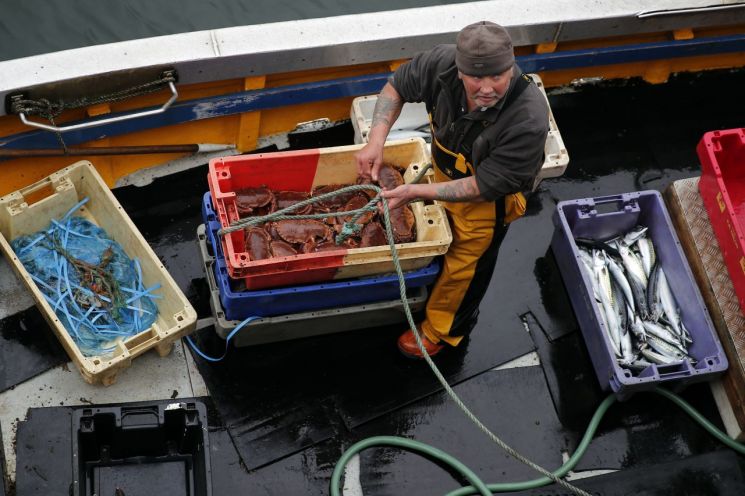
The fisheries issue was also a major point of contention until the final stages of negotiations, concerning EU fishing vessels' access to UK waters and the allowable catch quotas within UK waters. France and others took a hard stance due to the direct impact on their national economies.
Through this agreement, the UK and EU decided on a 5 years and 6 months transition period for EU fishing vessels' access to UK waters. During this period, access rights to each other's waters will remain unchanged at current levels. However, the EU catch quota in UK waters will be reduced by 25% during this period. The current value of the catch by EU fishing vessels in UK waters is approximately 650 million euros.
After the transition period ends, annual negotiations will be held regarding EU fishing vessels' access to UK waters. These talks are expected to determine the species and quantities that EU vessels can catch.
Financial Services, Freedom of Movement, Security
The financial services sector was not specifically addressed in this agreement. Both sides have anticipated the need for a separate agreement on financial markets, apart from the trade agreement negotiations. Starting next year, financial services will be subject to regulatory equivalence assessments. If the EU determines that a non-member country's financial regulations and supervision are effective and meet EU standards, financial companies from that country can operate without separate authorization from individual EU member states. However, since some regulations lack established EU equivalence standards, the two sides plan to conduct separate regulatory negotiations on financial services based on a memorandum of understanding (MOU).
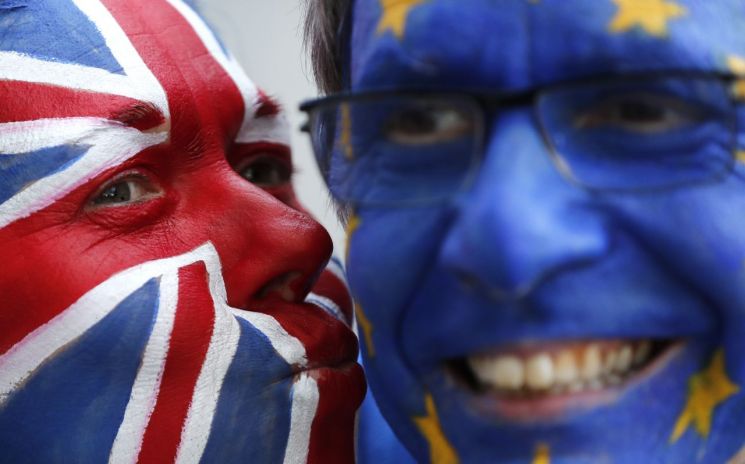
With the UK's departure from the EU, British citizens will no longer be able to move freely within the EU as before. This means losing the rights to work, study, conduct business, or reside in EU member states as if they were citizens of those countries. British citizens will need visas to stay longer than 90 days in EU member states. Likewise, free movement of EU nationals within the UK will no longer be possible.
On security, the UK will withdraw from the European Union Agency for Criminal Justice Cooperation (Eurojust) and the European Police Office (Europol), but cooperation between police and judicial authorities on both sides will continue. The UK will still be able to use EU regional databases for police alerts on missing persons or thefts, as well as cooperate on counter-terrorism and share suspect fingerprints and DNA databases.
© The Asia Business Daily(www.asiae.co.kr). All rights reserved.
![User Who Sold Erroneously Deposited Bitcoins to Repay Debt and Fund Entertainment... What Did the Supreme Court Decide in 2021? [Legal Issue Check]](https://cwcontent.asiae.co.kr/asiaresize/183/2026020910431234020_1770601391.png)


















