Government to Announce 'Plastic-Free Measures for Household Waste' on 24th
Target to Reduce Plastic Containers from 47% to 38% by 2025
Delivery Container Thickness Limit... 20% Reduction if Limited to 1mm
Introduction of Deposit System for Disposable Cups... Strengthened Regulations on Bundled Packaging
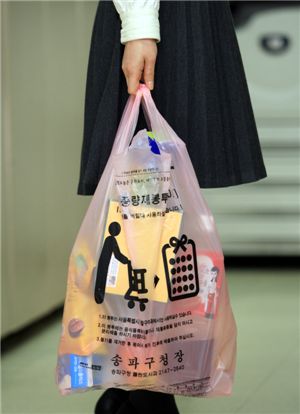 Pay-As-You-Go Bag/Asia Economy DB
[Asia Economy Reporter Kim Bo-kyung] The government will apply the ban on single-use plastic bag usage to all industries starting in 2030. It will limit the thickness of plastic containers used for food delivery and extend the mandatory use of transparent PET bottles beyond beverage and water bottles to other PET products such as cosmetics and detergents.
Through these measures, plastic waste will be reduced by 20% by 2025. Additionally, in line with carbon neutrality goals for 2050, the plan is to transition petroleum-based plastics to eco-friendly bio-plastics.
On the 24th, the government held a National Policy Issue Inspection and Coordination Meeting chaired by Prime Minister Chung Sye-kyun at the Government Seoul Office, where it finalized and announced the "Living Waste De-plasticization Measures." This plan includes reducing plastic production at the source, cutting down plastic household waste, and increasing recycling rates.
The government will first require container manufacturers to reduce plastic production. The goal is to decrease the plastic proportion of all containers from the current 47% to 38% by 2025. Instead, production of glass bottles, which are advantageous for reuse and recycling, will be increased.
An official from the Ministry of Environment said, "Currently, over 90% of water bottles displayed in supermarkets are plastic, but it will become easier to find glass water bottles in the future," adding, "We plan to communicate with related industries to set transition targets considering the characteristics of each product group."
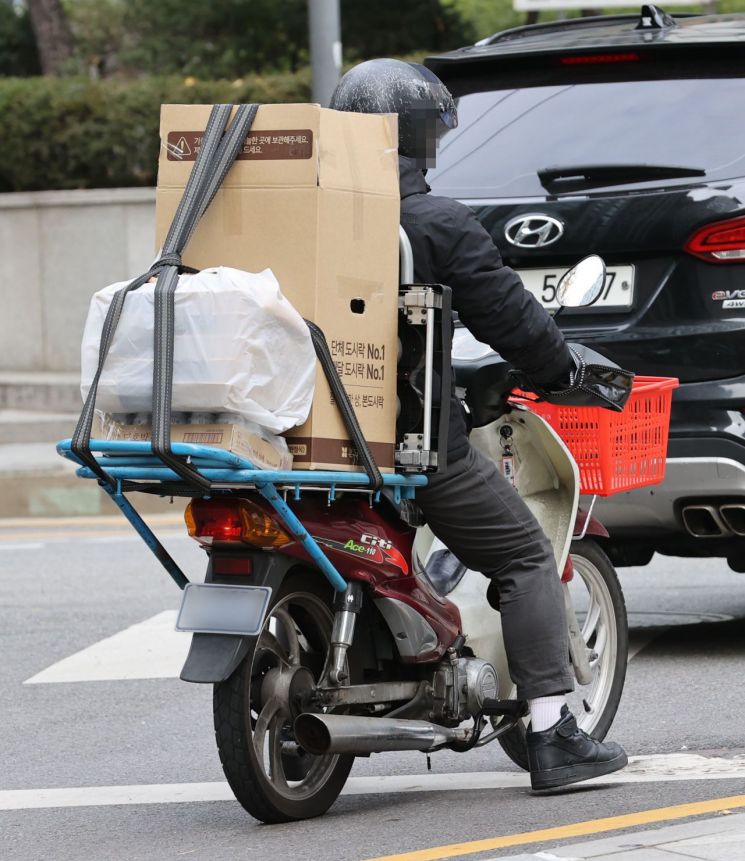
Plastic containers for food delivery will be reduced starting next year by limiting their thickness. Currently, plastic delivery containers for dishes like gamjatang (pork bone soup) or seafood stew have thicknesses ranging from 0.8 to 1.2 mm, but limiting this to 1 mm is analyzed to reduce the amount by an average of 20%. However, since container thickness varies depending on the type and size of delivery food, the limit will be decided based on further investigation.
The ban on single-use plastic bags will be expanded to all commercial activities by 2030. Currently, the ban is enforced in large supermarkets, department stores, and supermarkets. In the future, convenience stores and bakeries will no longer provide single-use plastic bags for free; customers will have to purchase volume-based bags or reusable shopping bags to carry their items.
Starting January next year, regulations on bundled packaging, such as packaging "buy one get one free" products and combining gifts or giveaways in one package, will be strengthened. However, to allow the related industries to adapt, a grace period until March next year will be provided, and small and medium-sized enterprises will be subject to the regulations from July next year. Packaging that is not made of synthetic resin or packaging attached with tape will be permitted.
The deposit system for single-use cups will be introduced as scheduled in June 2022. This system requires customers at coffee shops and similar stores to pay a certain deposit in addition to the product price for cups, which will be refunded upon returning the cup after use.
The mandatory use of transparent PET bottles, currently applied only to beverage and water bottles, will be gradually expanded to other PET products such as alcoholic beverages, cosmetics, and detergents. Additionally, companies using containers without labels (brand bands) will receive a 50% reduction in the producer responsibility fees they pay. Through this, the proportion of packaging materials that are difficult to recycle among packaging containers will be reduced from the current 34% to 15% by 2025, cutting it by more than half.
The mandatory use of recycled raw materials will also be applied to plastics starting next year, with the usage rate of recycled materials gradually increasing to 30% by 2030.
In apartment complexes, separate collection of transparent PET bottles will be gradually implemented starting tomorrow (the 25th), and by 2022, four or more types of plastic recycling bins will be installed.
The government will expand 10 public pyrolysis facilities that extract petroleum from waste vinyl by 2025. Currently, 11 private pyrolysis facilities are installed and operating. Pyrolysis facilities have the advantage of causing less air pollution as they decompose materials at high temperatures.
Starting next year, plastic compactors will be pilot distributed in large complexes with more than 3,000 households. In densely populated areas such as movie theaters and amusement parks, unmanned kiosks that compress and collect PET bottles and cans will be installed, providing eco-miles to citizens who bring recyclable waste.
Import of plastic waste from overseas will be completely banned starting in 2022. The export scale of Korea's recycled plastic products, currently at 30 billion KRW, will be increased to 50 billion KRW by 2025.
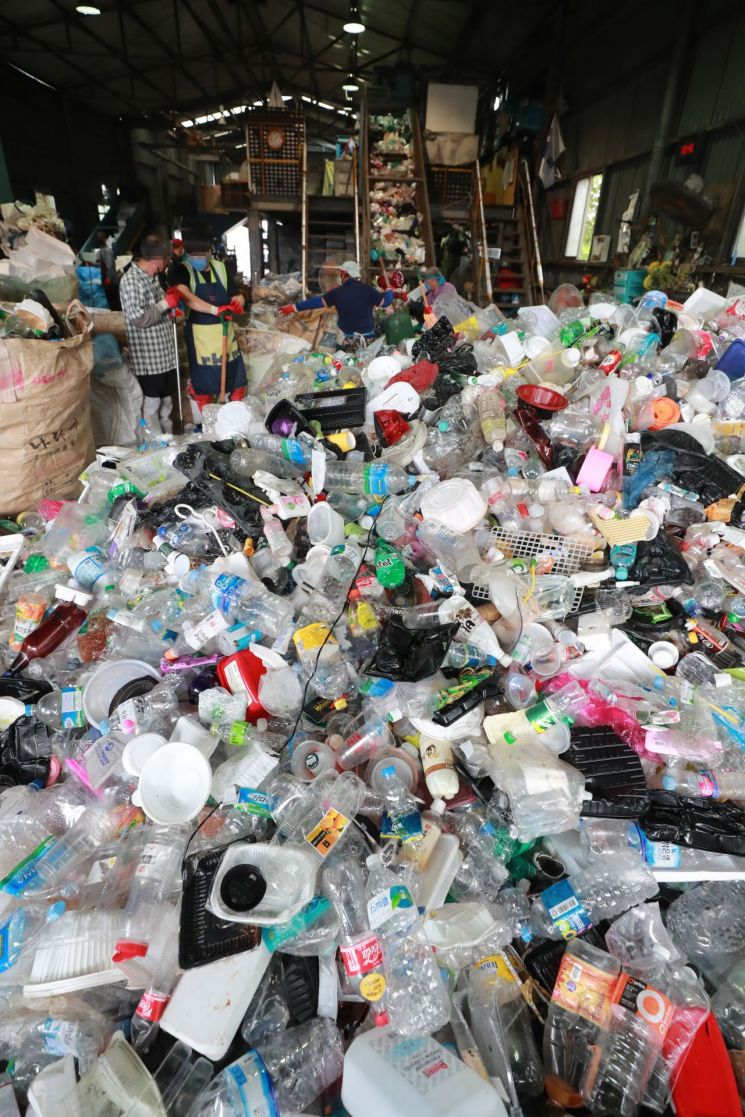
The Ministry of Environment plans to reduce plastic waste by 20% by 2025 and increase the recycling rate of waste plastics from the current 54% to 70% by 2025 through this de-plasticization plan.
In the mid to long term, the government aims to reduce greenhouse gas emissions caused by plastics by 30% by 2030 by cutting petroleum-based plastics. By 2050, efforts will be made in cooperation with the industry to transition to pure (100%) bio-plastics. Bio-plastics decompose faster than conventional plastics and emit less carbon during production.
Minister of Environment Cho Myung-rae stated, "Transitioning to a de-plastic society is essential to achieve a carbon-neutral society by 2050," and added, "We will make multifaceted efforts in production, distribution, consumption, and recycling to reduce plastics."
© The Asia Business Daily(www.asiae.co.kr). All rights reserved.


















