[Asia Economy Reporter Hana Na] The United Kingdom became the first country in the world to begin COVID-19 vaccination on the 8th (local time), and reviews from people who participated in or received the 'Pfizer' vaccine clinical trials are being reported.
According to the American business magazine Business Insider, nurse Christine Choi, who participated in the Pfizer vaccine clinical trial, reported experiencing side effects after receiving the second dose in September.
She said, "When I received the first dose a month ago, only the arm where the injection was given hurt, but two hours after the second dose, I suddenly felt chills, nausea, and dizziness." The next morning, her temperature rose to 40.5 degrees Celsius. Fortunately, after taking a Tylenol-type antipyretic, the fever gradually subsided, and by the next morning, all side effects had disappeared.
Although it was painful for a day, as a nurse, she encouraged vaccination, saying that the symptoms she experienced after vaccination are common.
She emphasized, "I believe everyone must get vaccinated," adding, "Feeling sick after vaccination is the process of our body learning how to fight the COVID-19 virus."
Besides Christine Choi, most participants who received the Pfizer vaccine in the clinical trial experienced some side effects.
Among these, 84% reported 'pain at the injection site' as the most common side effect. This was followed by fatigue (63%) and headache (55%). Fever symptoms were relatively rare, and it was uncommon for multiple symptoms to appear simultaneously.
According to British media, on the 9th (local time), it was reported that two National Health Service (NHS) staff members who received the Pfizer vaccine the previous day showed 'anaphylactoid reactions.' This is a type of allergy where the body has a hypersensitive reaction to certain substances.
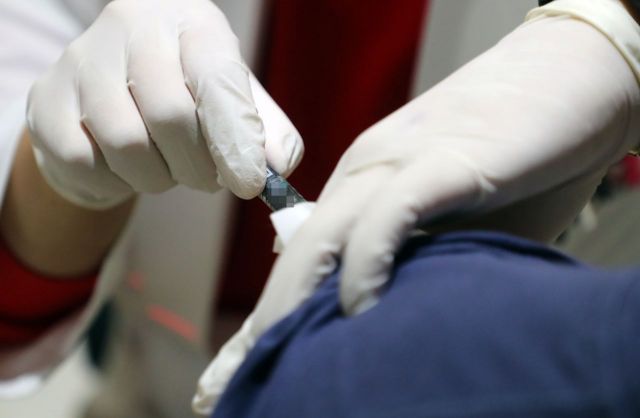
 The United Kingdom became the first country in the world to start administering the novel coronavirus (COVID-19) vaccine on the 8th (local time). Photo by Yonhap News
Pfizer is known to have excluded individuals with a history of allergies during the rapid development and clinical trials. On the 10th, the UK's Medicines and Healthcare products Regulatory Agency (MHRA) issued guidelines stating, "People with a history of allergies to vaccines or medicines should not receive the Pfizer vaccine."
Professor Steven Powis, NHS Medical Director, said, "Just as not everyone who has a severe allergy to a certain food cannot eat that food, not everyone should avoid vaccination just because some have vaccine allergies," foreign media reported.
Meanwhile, following the UK, the United States is also expected to begin Pfizer vaccine vaccinations. Local media such as CNN forecast that the U.S. Food and Drug Administration (FDA) will approve the emergency use of the Pfizer vaccine today or tomorrow.
© The Asia Business Daily(www.asiae.co.kr). All rights reserved.