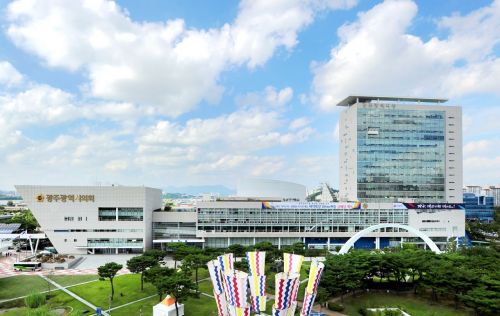
[Asia Economy Honam Reporting Headquarters Reporter Park Seon-gang] Gwangju Metropolitan City announced on the 4th that it will implement the ‘2nd Seasonal Fine Dust Management Plan’ from December to March, when high concentrations of fine dust frequently occur.
The ‘Seasonal Management Plan’ is a system introduced last year and now in its second year, aimed at proactively implementing strengthened reduction measures during winter (December to March), when high concentrations of fine dust frequently occur, to reduce the intensity and frequency of high concentration occurrences.
Over the past three years (December to March), the average concentration of ultrafine dust in the area increased by about 14% compared to the annual average concentration. In particular, in the last two years, emergency reduction measures for high concentration fine dust were issued 8 times only during December to March, showing a concentrated pattern.
Accordingly, Gwangju City will focus on 16 projects across six sectors?transportation, industry, power generation, daily life, health protection communication, and response?with the goal of intensively reducing high concentrations of ultrafine dust during the 2nd Seasonal Fine Dust Management Plan period.
First, in the transportation sector, while intensively promoting restrictions on the operation of Grade 5 emission vehicles, starting from January next year, the operation of Grade 5 emission vehicles will be restricted when emergency reduction measures for high concentration fine dust are issued, and violations will be monitored.
However, if the vehicle owner applies for low-emission measures before the emergency reduction measure is issued, the operation restriction enforcement will be deferred. To apply for low-emission measures, inquiries can be made through the Ministry of Environment’s vehicle emission grading system website or Gwangju City’s Climate and Air Quality Division.
In the daily life sector, when emergency reduction measures are issued, 31 vehicles including 3 water spraying trucks, 25 road cleaning vehicles, and 3 dust suction vehicles will be deployed on six roads designated as fine dust concentration roads to conduct road cleaning more than three times a day.
In the health protection communication sector, using the Safe Citizen Practice Headquarters’ Blue Sky Leader Group, promotional activities encouraging citizen participation such as the two-day vehicle operation system and restrictions on Grade 5 vehicle operation will be carried out in five zones at multi-use facilities, roads with heavy vehicle traffic, and apartment complexes.
Jung Dong-hoon, head of the Climate and Air Quality Division of the city, said, “High concentration fine dust is caused by a complex influence of weather conditions, domestic emissions, and foreign inflow, but from December to March, continuous unfavorable weather conditions make efforts to reduce emissions essential. We will do our best to improve air quality by minimizing the frequency and intensity of high concentration occurrences during this seasonal management period and actively responding with emergency reduction measures when high concentrations occur.”
© The Asia Business Daily(www.asiae.co.kr). All rights reserved.
![Clutching a Stolen Dior Bag, Saying "I Hate Being Poor but Real"... The Grotesque Con of a "Human Knockoff" [Slate]](https://cwcontent.asiae.co.kr/asiaresize/183/2026021902243444107_1771435474.jpg)
















