Daedong Hospital, Urinary Tract Constriction Due to Cold... Rapid Diagnosis Needed to Prevent Complications Like Renal Failure
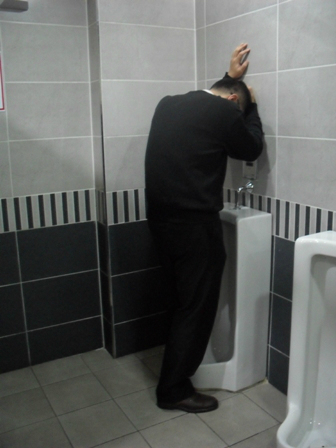
[Asia Economy Yeongnam Reporting Headquarters Reporter Kim Yong-woo] Cold weather makes the body curl up, but it also causes the urethra, the passage for urine, to contract. Specialists advise being cautious of a condition called ‘acute urinary retention’ as winter cold approaches.
A man in his mid-40s, office worker Mr. A, experienced symptoms of needing to urinate but having difficulty actually passing urine for several days. Although puzzled, he did not take it seriously until he ended up visiting the emergency room.
He felt as if his bladder was about to burst, but despite repeatedly going to the bathroom, no urine came out. As time passed, the pain in his lower abdomen worsened, and he eventually sought emergency care, where he was diagnosed with ‘acute urinary retention.’
Normal urination involves urine being produced in the kidneys, passing through the ureters, stored in the bladder, and then expelled through the urethra. However, when urine accumulates in the bladder but cannot be expelled, it is called ‘acute urinary retention.’
The main symptoms include feeling the urge to urinate but being unable to do so, or only a few drops coming out before stopping. Some also experience a persistent sensation of bladder fullness and swelling above the pubic bone.
‘Acute urinary retention’ often occurs due to a combination of factors. These include bladder distension caused by diuretics or excessive alcohol consumption, mechanical obstruction due to benign prostatic hyperplasia, decreased bladder contraction from spinal anesthesia, sudden temperature drops, use of alpha receptor stimulants such as cold medicine, urethral blockage from urethral stones, and stress.
On average, if the post-void residual urine volume exceeds 400cc, it is diagnosed as ‘acute urinary retention.’ Ultrasound is used to scan the amount of urine in the bladder, or if scanning is not possible, simple catheterization is performed to drain and measure the urine volume.
Once diagnosed with ‘acute urinary retention,’ the first step is to drain the urine using a ‘Foley catheter,’ commonly called a urinary catheter, followed by identifying and treating the underlying cause.
If acute urinary retention is left untreated, the kidneys may stop producing urine, leading to decreased kidney function and, in severe cases, kidney failure, requiring special caution.
Kidney failure can cause uremia due to the inability to excrete waste products from the body. Additionally, an excessively distended bladder and increased pressure inside the bladder can impair bladder function, leading to voiding difficulties.
Dr. Lee Young-ik, head of the Department of Urology at Daedong Hospital, explained, “The high incidence of acute urinary retention in winter is due to the urethra contracting from the sudden cold weather or the use of antihistamines to relieve cold symptoms such as runny nose and phlegm, which stimulate alpha receptors and cause urethral contraction.”
Dr. Lee advised, “To prevent acute urinary retention, be cautious with cold medicine that can cause stimulation and alcohol consumption, and keep the body warm to maintain body temperature during winter.”
He also emphasized, “If symptoms of benign prostatic hyperplasia appear suddenly, such as sudden urinary incontinence or a weak urine stream, you should immediately visit a urology clinic for treatment.”
© The Asia Business Daily(www.asiae.co.kr). All rights reserved.
![Clutching a Stolen Dior Bag, Saying "I Hate Being Poor but Real"... The Grotesque Con of a "Human Knockoff" [Slate]](https://cwcontent.asiae.co.kr/asiaresize/183/2026021902243444107_1771435474.jpg)
















