[Sejong=Asia Economy Reporter Kim Hyunjung] Even couples who jointly own a single house will be able to choose the benefits of elderly and long-term holding deductions to reduce their comprehensive real estate tax burden.
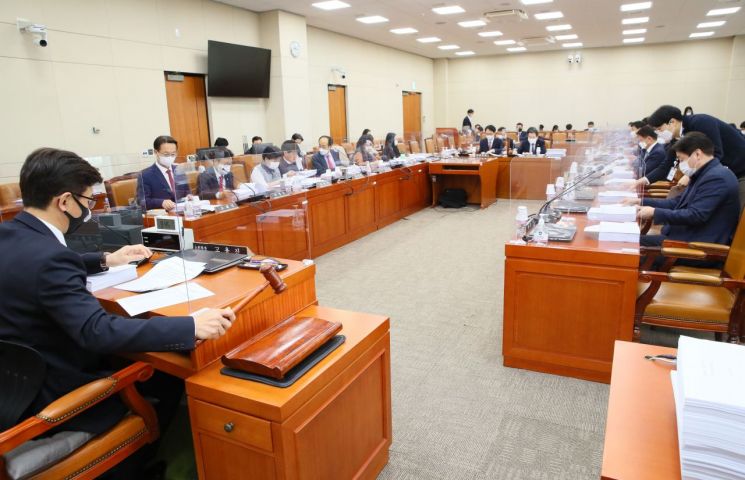
On the 30th, the National Assembly's Planning and Finance Committee passed an amendment to the Comprehensive Real Estate Tax Act with this content as the main point during a plenary session. The ruling and opposition parties agreed to handle a committee-level alternative that supplemented the bill originally proposed by Yoon Heesook of the People Power Party.
The amendment allows couples who own one house jointly to either receive a deduction of 600 million KRW each and pay tax on the portion exceeding the official price of 1.2 billion KRW, or pay tax on the portion exceeding 900 million KRW like a single household owner, while choosing the method that is more advantageous to them between receiving elderly or long-term holding deductions.
Once the Comprehensive Real Estate Tax Act is amended and enforced, from next year, couples who have jointly held one house for a long period are expected to see their comprehensive real estate tax burden reduced by up to 80%. Under the current law, elderly deductions apply 20-40% for those aged 60 or older, and long-term holding deductions apply 20-50% for holdings over 5 years.
An amendment to increase the tax burden on ultra-high-income earners was also passed. The amendment to the Income Tax Act establishes a new tax bracket for comprehensive income exceeding 1 billion KRW, raising the income tax rate for that bracket from the existing 42% to 45%.
Among other amendments to the Restriction of Special Taxation Act, the application period for the "Good Landlord Tax Credit" (a 50% tax credit on the reduction amount against landlord income tax and corporate tax) was extended from the end of this year to June 30, next year. The scope of diesel fuel tax reduction for coastal cargo ships was expanded from converted fuel ships to all ships. For construction rental housing, the special application period for long-term holding special deductions for long-term general private rental housing was maintained until December 31, 2022.
Meanwhile, the amendment to the Restriction of Special Taxation Act, which included the introduction of a "retained earnings tax" aimed at taxing excess retained earnings of individual similar corporations with high major shareholder shareholding ratios?planned to be implemented from 2022?was not passed. The introduction of a tax credit system for investment in stock market stabilization funds, the establishment of a tax reduction limit for local relocation companies, and the setting of an application period (~December 31, 2022) for the self-tax credit system were also deferred.
© The Asia Business Daily(www.asiae.co.kr). All rights reserved.

















