End of 52-Hour Workweek Exemption Nears, Government Says No 'Additional Extension'
83.9% of Overtime Companies Unprepared for System Introduction, Survey by Korea Federation of SMEs
Gap with Government Claim of Over 80% Compliance with 52-Hour Workweek
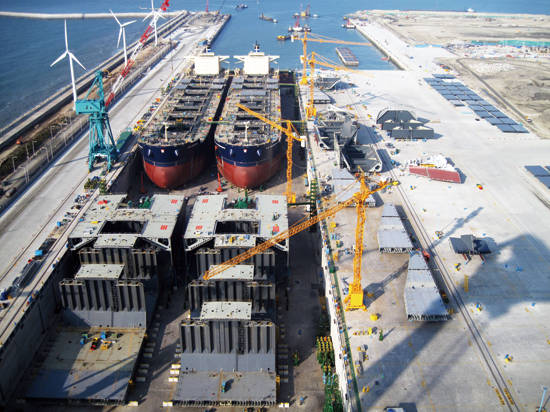 With the exemption period for the 52-hour workweek system ending in one month, the government has stated that there will be no further extensions. According to a survey by the Korea Federation of SMEs, 83.9% of companies with overtime work have not even prepared for the system's implementation. Photo by Asia Economy DB
[Asia Economy Reporters Kim Heeyoon and Kim Bokyung] "It's maddening. Deadlines are fixed, so how can we find people in such a short time? If we can't find them, does that mean we are supposed to just die?"
Kim Sunho (pseudonym), CEO of automotive parts manufacturer Company A in Siheung-si, Gyeonggi-do, expressed frustration about the upcoming implementation of the '52-hour workweek system' in one month, calling it "frustrating" and "comments made without understanding the field." His business employs 60 people and is a small to medium-sized enterprise with 50 to 299 workers, subject to the 52-hour workweek system starting January 1 next year.
Unlike the first half of the year when production volume decreased due to the COVID-19 pandemic, production has recently been gradually recovering. Kim expressed reluctance about the imminent introduction of the 52-hour workweek system. He said, "To meet deadlines, overtime work is inevitable, but it's frustrating to suddenly find skilled workers and deploy them on site. If the introduction cannot be stopped, we must at least implement a flexible working hours system simultaneously, or our company might lose all its business relationships," he pleaded.
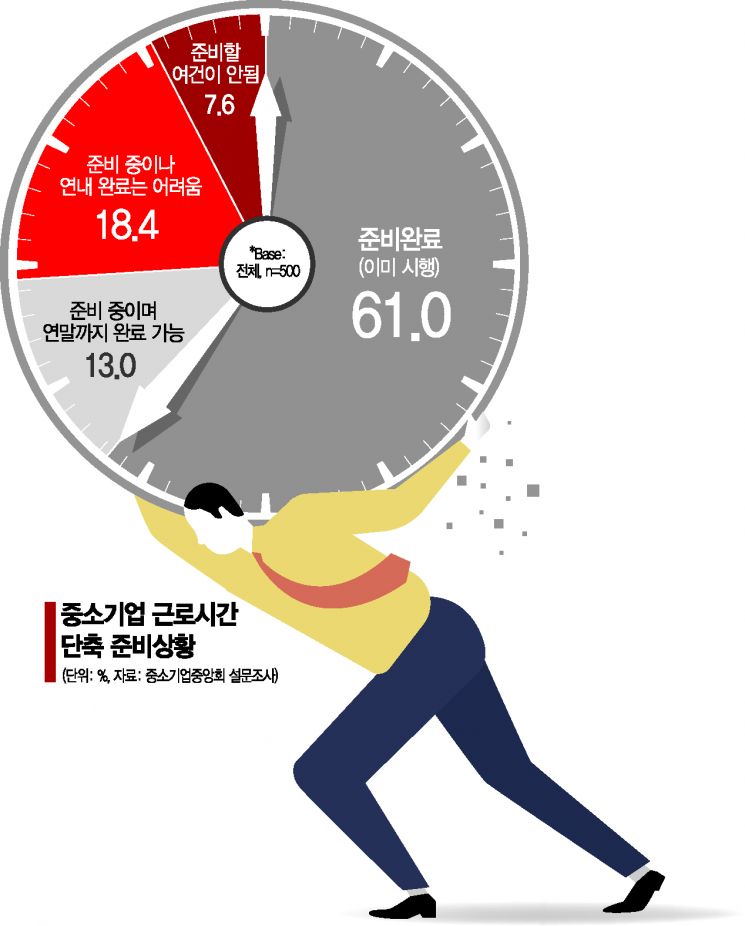
According to data released by the Korea Federation of SMEs on the 16th of last month (surveying 500 workplaces with 50 to 299 employees), 61% of the surveyed SMEs have completed preparations for the 52-hour workweek system, while the remaining 39% have not and are appealing for an extension of the grace period. In particular, among companies exceeding 52 hours of weekly work (218 companies), 83.9% reported being unprepared for the system's introduction, and 90.4% of these companies responded that an extension of the grace period is necessary.
Significant Gap Between Ministry of Employment’s Basis and Reality... Statistical Figures Also Differ
The Ministry of Employment and Labor cited the results of a full survey conducted in September on about 24,000 workplaces with 50 to 299 employees as the basis for implementing the 52-hour workweek system. Compared to the survey conducted in November last year, the preparation status of companies has greatly improved.
Minister Lee Jae-gap of the Ministry of Employment said in a briefing, "In the full survey in September, over 80% of companies responded that they are 'complying' with the 52-hour workweek system, and over 90% forecast that they will be 'able to comply' next year." He added, "Considering that in the November survey last year, 57.7% of companies were 'complying,' and 83.3% said they could 'prepare by the end of last year,' there has been a significant improvement over the past year." The percentage of companies that have not completed preparations decreased from 42.3% in November last year to 19.0%.
The revised Labor Standards Act applies the 52-hour workweek system sequentially according to workplace size. Workplaces with 300 or more employees have been subject since July 2018, those with 50 to 299 employees since January this year, and those with 5 to 49 employees will be subject starting July next year. Considering the law was amended in March 2018, workplaces with 50 to 299 employees have had a total preparation period of 2 years and 9 months.
Minister Lee stated that during the grace period, various efforts such as consulting, wage support, and policy fund support were made to help companies prepare for the 52-hour workweek system. Early this year, supplementary measures were also implemented considering the COVID-19 situation, allowing special extended work hours for sudden situations and surges in workload.
"The Real Problem Begins When Production Recovers"
However, the SME sector says there is a large gap between the Ministry of Employment’s judgment and the reality on the ground. Park Jongsu (pseudonym), factory manager of shipbuilding subcontractor Company B in Ulsan, explained, "Due to the sharp decline in orders caused by COVID-19, applying the 52-hour workweek system was rather easy recently." But with the weather improving next year, he is unsure how to meet the construction period (gonggi, 工期). Park said, "In shipbuilding, most workers are paid hourly or daily wages, and if they cannot work overtime during peak periods, their pay drops by more than half. It is difficult to find experienced workers willing to work for that pay, and if those positions are vacant, who else would want to come? Because of the nature of the work where one delay causes a chain reaction, I am deeply worried about how to find workers and meet deadlines next year."
According to a survey conducted by the Korea Shipbuilding & Offshore Plant Association targeting subcontractors of five shipbuilders?Hyundai Heavy Industries, Samsung Heavy Industries, Daewoo Shipbuilding & Marine Engineering, Hyundai Samho Heavy Industries, and Hyundai Mipo Dockyard?about 78% of all companies exceed 52 working hours per week, and 76% frequently work overtime. Researcher Hwang Kyungjin of the Korea Small Business Institute pointed out, "This is due to the nature of shipbuilding, including continuous processes, design changes by shipowners, delays caused by weather, and the importance of meeting construction periods. With subcontractor workers frequently changing jobs due to low wages, the introduction of the 52-hour workweek system could reduce annual salaries by up to 40% in some jobs related to assembly and jokjang (a shipyard term for temporary scaffolding installed to work at heights)."
Professor Lee Jung of the Department of Law at Hankuk University of Foreign Studies emphasized, "With SMEs struggling due to COVID-19, the introduction of the 52-hour workweek system will make new hiring more difficult, and the deployment of foreign workers is also restricted due to immigration issues, further worsening the economic difficulties of SMEs. The side effects will gradually appear in the industry starting next year, so to mitigate the shock of the system's introduction, a flexible working hours system must be implemented simultaneously."
© The Asia Business Daily(www.asiae.co.kr). All rights reserved.

















