Clarifying Breast Cancer Liver Metastasis Process Using Artificial Liver
Breast Cancer Nanovesicles Increase Adhesion Between Cancer Seeds and Blood Vessels
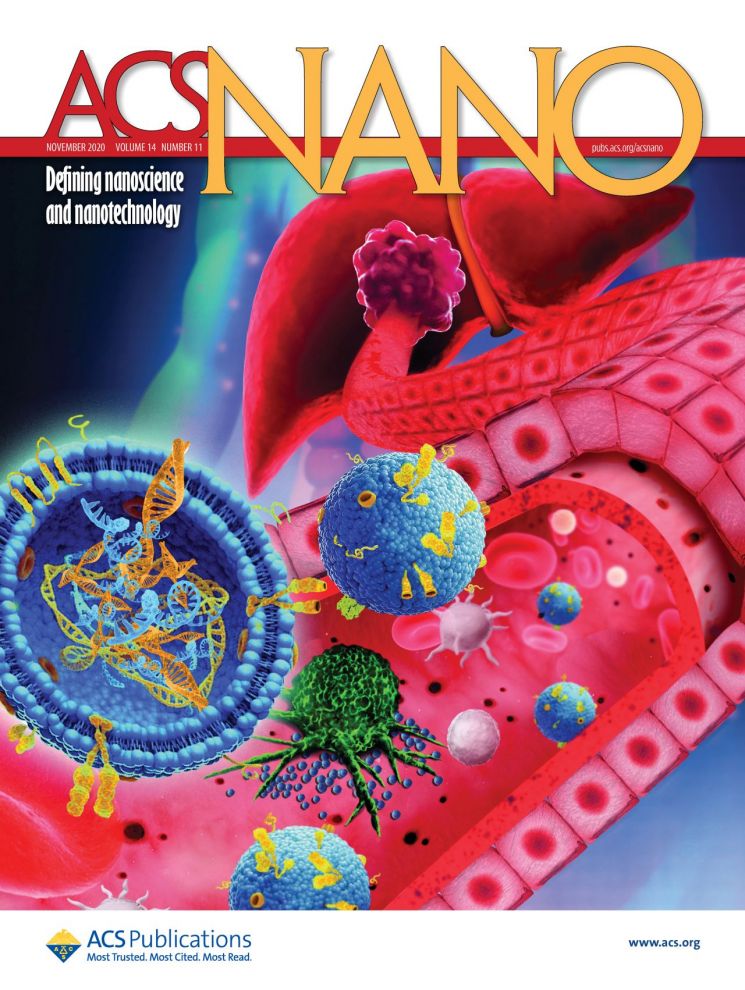
[Asia Economy Reporter Junho Hwang] The process by which breast cancer metastasizes to the liver has been newly uncovered. It has been confirmed that nanovesicles secreted by breast cancer play a role in making breast cancer seeds adhere more effectively to other organs. The research team expects to also elucidate the metastasis processes of pancreatic cancer, colorectal cancer, and others, which have a high frequency of liver metastasis.
Professor Yoonkyung Cho's team from the Department of Biomedical Engineering at Ulsan National Institute of Science and Technology (UNIST) (Group Leader of the Center for Soft and Living Matter at the Institute for Basic Science) recently published these research findings as a cover article in the international journal ACS Nano, announced on the 30th.
Revealing Breast Cancer Metastasis Process Using a 3D Liver Chip
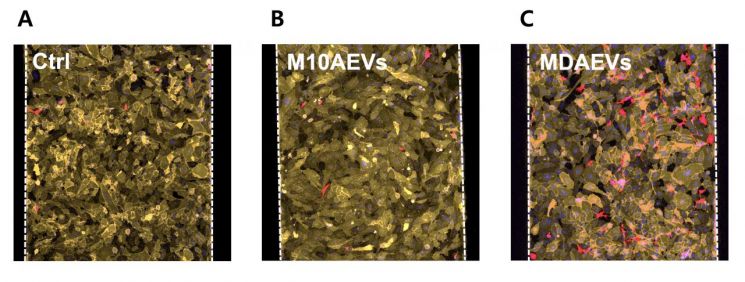 The number of breast cancer cells adhering to liver vascular endothelial cells increases due to breast cancer-derived nanovesicles.
The research team uncovered the role of nanovesicles secreted by cancer cells in the cancer metastasis process. Nanovesicles are nanometer-scale (1nm, 10^-9) vesicles secreted by cells. Cells communicate by encapsulating various protein information inside these vesicles. Although cancer cells also secrete nanovesicles, their specific role had not been clarified.
To verify the hypothesis that nanovesicles secreted by cancer cells play an important role in cancer metastasis, the team utilized a chip cultured with liver cells. Through this, they observed that nanovesicles derived from breast cancer make the liver’s vascular walls stickier. This is because the tumor growth factor (TGFβ1) on the surface of the nanovesicles increased the amount of fibronectin, a sticky protein in the vascular walls. As a result, breast cancer seeds (circulating tumor cells) adhered to the vascular walls more than three times better.
Professor Yoonkyung Cho explained, "The 'soil and seed' hypothesis, which suggests that an environment favorable for cancer cells to take root in organs facilitates metastasis, has been strengthened by this study. Nanovesicles act as 'fertilizer' that enriches the soil in this process."
Dr. Junyoung Kim, first author of this study and a researcher in the Department of Life Sciences at UNIST, said, "We applied Organ-on-a-Chip technology for the first time to understand the cancer metastasis process mediated by nanovesicles. By co-culturing various cells that make up the liver, the chip not only closely mimics human liver tissue but also allows blood flow, enabling a proper understanding of the role of nanovesicles contained in the blood."
Pancreatic Cancer Nanovesicles Also Act as Fertilizer in Cancer Metastasis
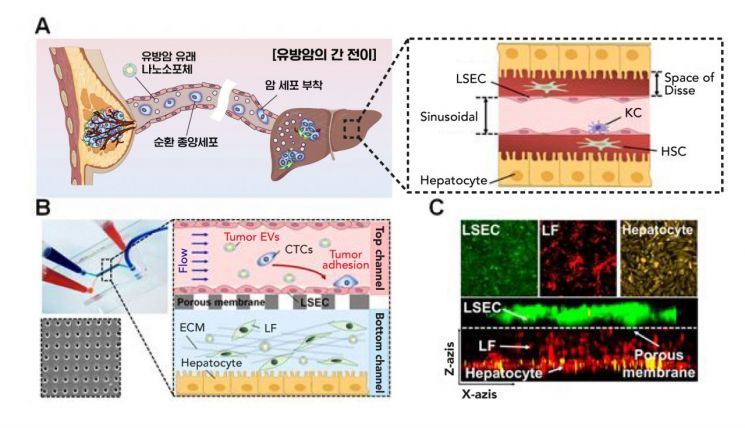
The research team specifically demonstrated the role of nanovesicles by using control groups including nanovesicles from cancers that frequently metastasize to the liver, cancers that do not metastasize to the liver, and healthy individuals. Nanovesicles derived from pancreatic cancer, which frequently metastasizes to the liver, exhibited the same function as those derived from breast cancer. Additionally, breast cancer patients with liver metastasis showed higher expression levels of tumor growth factors in their nanovesicles compared to breast cancer patients without liver metastasis or healthy individuals. This indicates a strong correlation between tumor growth factor expression in nanovesicles and the increased adhesion of circulating tumor cells.
Professor Cho stated, "Based on the understanding of the liver metastasis process of breast cancer, we expect to elucidate the metastasis processes of pancreatic cancer, colorectal cancer, and others, which have a high frequency of liver metastasis. Considering that the liver has a very high incidence of metastatic cancer and that mortality rates sharply increase when metastatic cancer occurs, this research holds great significance."
© The Asia Business Daily(www.asiae.co.kr). All rights reserved.



















