Weakening Buying Momentum... Recently "Let's Buy Houses Again"
Seoul Apartment Buyer Dominance Index Continues to Rise
Tenants Disappointed with Jeonse Measures Switch to Buying
However, Effects of 'Measures and Comprehensive Real Estate Tax' Need Further Observation
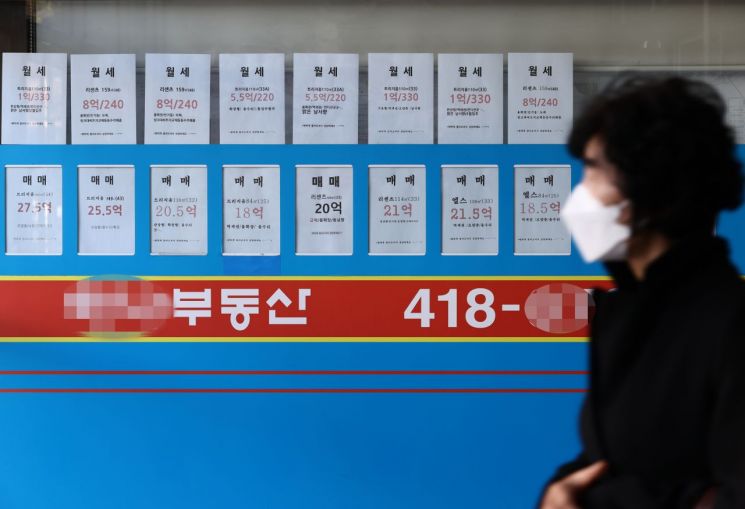 Information on sales, jeonse, and monthly rent posted at a real estate agency in Seoul (Photo by Yonhap News)
[Asia Economy Reporter Moon Jiwon] The appetite for purchasing apartments in Seoul, which had weakened due to successive government regulations, is recently showing signs of revival. Analysts suggest that the buying demand is increasing mainly among tenants disappointed with the contents of the government's 24th real estate measure announced to stabilize the real estate market.
According to the weekly KB Housing Market Trend data from KB Kookmin Bank's Real Estate LiveOn on the 28th, the apartment purchase dominance index in Seoul recorded 94.5 in the fourth week of this month, showing an upward trend for three consecutive weeks. This index is calculated based on surveys conducted by KB Kookmin Bank targeting frontline real estate agencies, where a value above 100 indicates more buyers, and below 100 indicates more sellers.
In Seoul, the purchase dominance index peaked at 154.5 on July 6, the highest this year, and then continued to decline. This was because the government announced strong regulations such as the July 10 measures, August 4 measures, the plan to realize official prices, and the three lease laws, which weakened the buying sentiment in the Seoul metropolitan area, including Seoul.
However, recently, the jeonse (long-term lease) crisis caused by low interest rates and the three lease laws has significantly spread, and the government's jeonse measures have fallen short of expectations, leading to a resurgence in buying demand. Seoul's purchase dominance index hit a low of 80.3 on the 2nd, then rose to 81.1 → 90.2 → 94.5. Although it remains below 100, indicating a stronger selling trend, considering the recent trend, analysts suggest that the buying and selling forces may soon reverse.
Looking at the weekly apartment price trend data from the Korea Real Estate Board under the Ministry of Land, Infrastructure and Transport, Seoul's sales supply-demand index fell to 96.0 on the 19th of last month, then continued to rise to 97.6 → 98.0 → 98.7. This week, it recorded 99.8, approaching the baseline of 100.
The Korea Real Estate Board analyzed, "As market stabilization policies continue and concerns about comprehensive real estate tax burdens increase, a wait-and-see attitude persists mainly in high-priced complexes, while prices are rising mainly in mid- to low-priced complexes or those with favorable reconstruction progress." The sales supply-demand index for the metropolitan area, including Seoul, Gyeonggi Province, and Incheon, also rose for five consecutive weeks after falling to 103.5 on the 19th of last month, reaching 107.4 this week.
Experts explain that the recent revival in buying sentiment is because the government's jeonse measures announced on the 19th did not have a significant impact on the market.
Yeo Kyung-hee, chief researcher at Real Estate 114, said, "In the jeonse measures announced on the 19th, the government stated it would increase short-term jeonse-type rental housing, but most of the supply is expected to be multi-family houses or officetels rather than apartments," adding, "This has led to disappointment and a continued atmosphere of tenants switching to buying due to a shortage of listings."
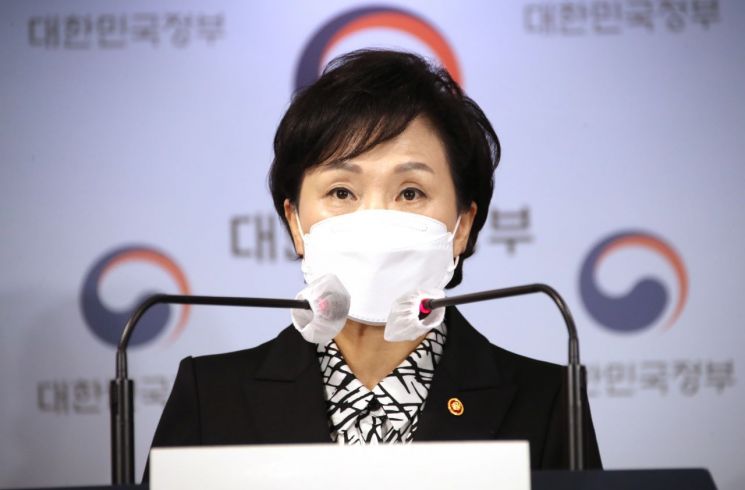 Minister of Land, Infrastructure and Transport Kim Hyun-mi is announcing support measures for housing stability for low-income and middle-class citizens at the government Seoul office briefing room on the 19th. (Photo by Yonhap News)
However, since only about a week has passed since the measures were announced, some opinions suggest that the market atmosphere should be observed a little longer. There is also an analysis that housing supply may increase in the first half of next year, especially among those who recently received comprehensive real estate tax bills, due to the perception that "owning a house means a tax bomb."
In particular, the government has prepared incentives to increase private housing supply, such as prioritizing the supply of apartment land in public housing sites like the 3rd New Town to construction companies with good records of supplying quality rental housing starting next year.
This measure considers concerns that the number of apartments desired by demanders among the 114,000 jeonse-type rental houses to be supplied nationwide by 2022 is only a small portion, which may limit the policy's effectiveness. The government expects construction companies aiming for priority supply of public housing sites to build and supply many high-quality rental houses equipped with community facilities.
A Ministry of Land official emphasized, "As the housing market has been reorganized around actual demanders, we are focusing policy efforts on expanding private-led housing supply in urban areas through expanding public housing site supply and regulatory improvements."
© The Asia Business Daily(www.asiae.co.kr). All rights reserved.


















