7 out of 10 Consumers Have Experience Buying Secondhand Goods
Junggonara's Cumulative Transaction Amount Reaches 3.5 Trillion Won in Q3
Experts Say "Popular Due to Convenient Selling and Buying Structure"
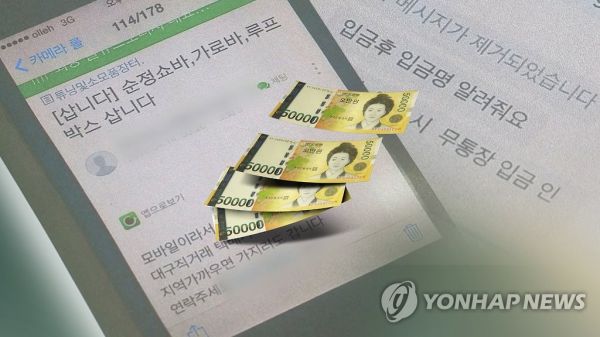
[Asia Economy Reporter Kim Suwan] "I often use it because I can buy the products I want at a cheap price."
Recently, consumer resistance to used goods has decreased, and the overall secondhand market is becoming more active as more people gain experience in secondhand transactions.
As consumers who pursue social value along with rational consumption increase, changes are also occurring in transaction methods. Experts analyze that the reason for the activation of the secondhand market is that both sellers and buyers can conveniently conduct transactions. However, they pointed out that negative aspects such as fraud occurring during transactions remain challenges to be resolved.
A office worker A (29), who recently purchased necessary items through a secondhand trading app, said, "My pet dog damaged one side of my wireless earphones, and I was wondering whether to buy a new product when I heard that I could buy the needed earphone at a reasonable price." He added, "When I looked it up, the condition was good and the price was reasonable, so I bought it immediately. It was my first time using secondhand trading, and I am really satisfied."
According to a survey, 7 out of 10 consumers have experience purchasing secondhand goods.
Market research firm Embrain Trend Monitor recently conducted a perception survey on 'secondhand trading' and 'secondhand trading platforms' targeting 1,000 male and female office workers aged 19 to 59, revealing that 76% of consumers have experience purchasing secondhand goods.
Additionally, more than half of the respondents, 54.9%, answered that they had purchased secondhand goods within the past year.
The reasons for purchasing secondhand goods included △being able to buy at a low price (65.3%, multiple responses allowed) △the perception that buying secondhand goods is 'rational consumption' (49.1%) △feeling burdened by buying new products (37.1%) △and the fact that secondhand trading has become easy and convenient recently (32.6%).
Moreover, the number of people selling secondhand goods has also increased. The main purpose of selling secondhand goods was to dispose of products with decreased usage. Office worker B (28) said, "I sold a keyboard and glasses on a secondhand trading site," adding, "I didn't use them much, but the condition was good, so I felt it was a waste to just leave them. I listed them slightly cheaper than the original price, but they sold quickly."
The background of this phenomenon is interpreted as the growth of secondhand trading platforms along with increased convenience in secondhand trading.
 On the 25th, the secondhand trading platform Jungonara announced that the cumulative secondhand transaction amount for the third quarter of this year surpassed 3.9 trillion won, a 47% increase compared to the same period last year (2.6 trillion won). Photo by Yonhap News
Currently, there are various secondhand trading platforms such as Junggonara, Bungaejangter, and Danggeun Market. Especially, as person-to-person transactions through online platforms have become active, the market is rapidly growing.
The region-based community-type secondhand trading platform Danggeun Market recently announced that its number of users exceeded 10 million (as of last September). Launched in 2015, Danggeun Market had a cumulative app download count of 19 million as of the first half of the year, and its transaction volume steadily grew, achieving △4.6 billion KRW in 2016 △50 billion KRW in 2017 △200 billion KRW in 2018 △700 billion KRW in 2019.
As for Junggonara, the largest secondhand trading platform in Korea, the cumulative transaction amount exceeded 3.5 trillion KRW in the third quarter of this year. Junggonara recorded 23 million integrated members and 390,000 daily secondhand product listings.
On the other hand, concerns have been raised that the risk of fraud cannot be excluded when trading secondhand goods. According to the previous survey, the biggest concerns when purchasing secondhand goods were the risk of transaction fraud (62.7%, multiple responses allowed) and the possibility of poor product condition (60.4%). There were also many opinions that compensation would be difficult if problems arise in the future (49.8%) and that it is hard to trust sellers (49.3%).
Experts pointed out the need for improvements to create a safe secondhand trading environment within platforms.
Professor Lee Eunhee of Inha University’s Department of Consumer Studies explained regarding secondhand trading platforms, "From the seller's perspective, it is advantageous because it is easy to find demanders and to sell unused items for money," adding, "Buyers can also gain satisfaction by purchasing needed items at reasonable prices."
However, she also noted, "There is a possibility of exposure to crimes such as fraud or drug transactions," and suggested, "To solve these problems, the platform itself should use algorithms to filter out inappropriate sales posts or prevent them through strong sanctions and monitoring."
© The Asia Business Daily(www.asiae.co.kr). All rights reserved.
![Clutching a Stolen Dior Bag, Saying "I Hate Being Poor but Real"... The Grotesque Con of a "Human Knockoff" [Slate]](https://cwcontent.asiae.co.kr/asiaresize/183/2026021902243444107_1771435474.jpg)

















