Domestic Population Movement in October and Population Trends in September
Largest Net Outflow Since November 2018
Population Decline for 8 Consecutive Months Since March This Year
September Births Down by 524 Compared to Last Year, Deaths Up by 791
Marriages Decrease · Divorces Increase
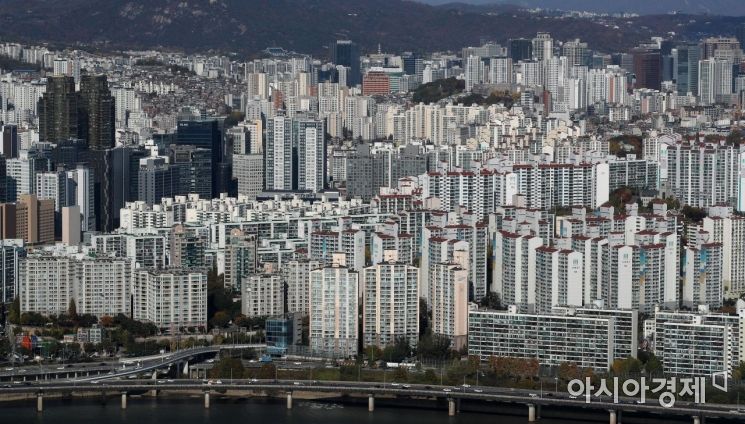
[Asia Economy Reporter Joo Sang-don] The 'Seoul Exodus' has recorded its largest scale in the past two years. Last month, Seoul experienced a net population outflow of over 10,000 people.
According to the domestic population movement data for October released by Statistics Korea on the 25th, the number of movers was 604,000, an increase of 1.7% (10,000 people) compared to the same month last year.
Among total movers, 69.6% moved within the same province or city, while 30.4% moved between provinces or cities. The population movement rate, which is the number of movers per 100 people, was 13.9%, up 0.3 percentage points from the same month last year.
By region, net migration (inflow - outflow) showed net inflows in nine provinces including Gyeonggi (10,985 people), Sejong (2,844 people), and Gangwon (1,111 people). Eight provinces including Seoul (-10,312 people), Daegu (-2,351 people), and Daejeon (-1,494 people) recorded net outflows. Seoul's net population outflow has continued for eight consecutive months since March this year (-3,404 people). The scale of net outflow is the largest in about two years since November 2018 (11,300 people).
The net migration rate, calculated by dividing net movers by the total population, showed net inflows in Sejong (9.6%), Jeju (1.3%), and Gyeonggi (1.0%), while Seoul (-1.3%), Daejeon (-1.2%), and Daegu (-1.2%) experienced net outflows.
On the same day, Statistics Korea also released the September population trends. According to this, the number of births in September this year reached a record low. Since the number of births was less than the number of deaths, the population decline has continued for 11 months, marking the longest period of decrease on record.
The number of births in September was 23,566, down 524 (2.2%) from the same month last year. This is the lowest since related statistics began in 1981. By region, five provinces including Busan, Gangwon, and Chungbuk saw increases, while 12 provinces including Seoul, Daegu, and Incheon saw decreases.
As of the third quarter this year, the number of births was 69,105, down 4,578 (-6.2%) compared to the same period last year. Accordingly, the total fertility rate for the third quarter was 0.84, a decrease of 0.05 from one year ago.
The number of deaths in September was 24,361, an increase of 791 (3.4%) compared to the same month last year. Fourteen provinces including Seoul and Busan saw increases, while Ulsan, Gyeonggi, and Chungnam saw decreases. The total number of deaths in the third quarter was 73,608, up 3,115 (4.4%) from the same period last year.
The natural population decrease, calculated by subtracting deaths from births, has continued for 11 consecutive months since November last year (-1,685 people).
The number of marriages in September was 15,324, down 474 (-3.0%) compared to the same month last year, while the number of divorces was 9,536, up 526 (5.8%).
© The Asia Business Daily(www.asiae.co.kr). All rights reserved.
![Clutching a Stolen Dior Bag, Saying "I Hate Being Poor but Real"... The Grotesque Con of a "Human Knockoff" [Slate]](https://cwcontent.asiae.co.kr/asiaresize/183/2026021902243444107_1771435474.jpg)
















