Announced Higher Efficacy in Subjects Who Accidentally Received Half Dose of First Injection
No Age or Race Distinction Among Clinical Subjects...Mixed Data from Various Countries
US and UK Health Authorities Also Withhold Approval..."Under Ongoing Review"
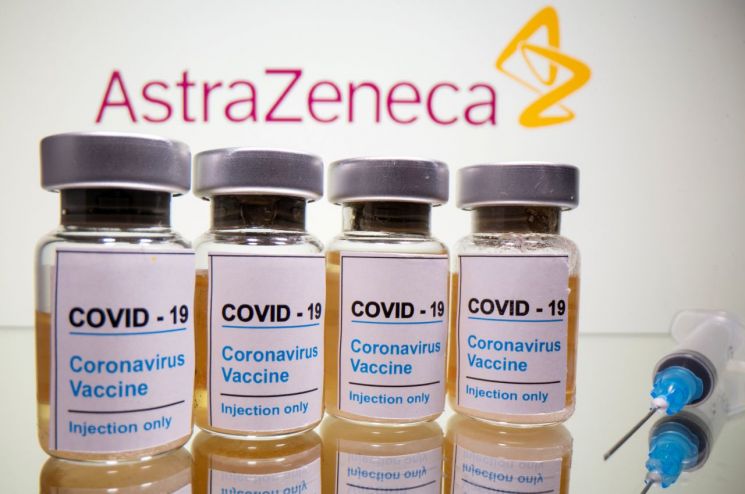
[Asia Economy Reporter Hyunwoo Lee] British pharmaceutical company AstraZeneca announced plans to conduct additional global clinical trials to prove the efficacy of the novel coronavirus (COVID-19) vaccine it is co-developing with the University of Oxford. This has sparked controversy as it is expected to significantly delay the vaccine's approval by U.S. health authorities. AstraZeneca recently announced that the vaccine's average preventive efficacy is 70%, reaching up to 90%, but various doubts have been raised regarding the Phase 3 clinical trial data released as evidence, greatly undermining confidence in its efficacy.
On the 26th (local time), Pascal Soriot, CEO of AstraZeneca, stated in an interview with Bloomberg News, "We need to prove the efficacy of the vaccine that is causing controversy, and additional research is necessary," adding, "We will conduct further global clinical trials." He also said, "We expect that approval in the UK and the European Union (EU) will not be delayed, but it will likely take more time for approval in the United States."
Earlier, AstraZeneca's vaccine faced significant credibility issues after various doubts were raised about the Phase 3 clinical trial data released immediately following the announcement of immune efficacy on the 23rd. According to CNBC, the immune efficacy of 8,895 clinical trial participants who received two full doses of the vaccine was 62%. In contrast, among 2,741 participants who mistakenly received half a dose for the first shot followed by a full second dose, the immune efficacy was found to be 90%. Mene Pangallos, Vice President of AstraZeneca, stated at a press conference that "it was fortunate that we administered half a dose for the first shot," indicating that the 90% efficacy resulted from an unintended error. The research team has yet to determine the cause of the differing immune responses based on dosage.
Subsequently, the controversy began to spread not only in the United States but also throughout the global medical community. According to CNN, on the 25th, Moncef Slaoui, Chief Advisor of the U.S. government's vaccine development project Operation Warp Speed, announced at a press conference that "there were no participants aged 55 or older among those who showed 90% immune efficacy," further intensifying the controversy. CNN pointed out that AstraZeneca's released data lacked distinctions by age and race, and that clinical results from the UK and Brazil were combined without separation.
As a result, the UK health authorities are also expected to delay approval. According to The Guardian, June Raine, Chief Executive of the UK's Medicines and Healthcare products Regulatory Agency (MHRA), stated at a press conference that day, "We are continuing to review the approval of the AstraZeneca vaccine."
© The Asia Business Daily(www.asiae.co.kr). All rights reserved.
![Clutching a Stolen Dior Bag, Saying "I Hate Being Poor but Real"... The Grotesque Con of a "Human Knockoff" [Slate]](https://cwcontent.asiae.co.kr/asiaresize/183/2026021902243444107_1771435474.jpg)
















