Sporadic Cluster Infections Nationwide
High Activity and Asymptomatic Rates Among Young People
Possibility of Unaware Transmission to Others
Cluster Infection Cases Increasing in Churches, Kids Cafes, Hospitals, and More
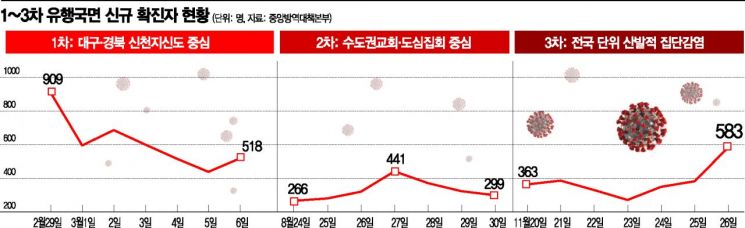
[Asia Economy Reporter Choi Dae-yeol] "It has become a situation where it would not be surprising for anyone, regardless of age or gender, to be infected anywhere in our daily lives." Before the Central Disaster and Safety Countermeasures Headquarters meeting held on the 26th, Park Neung-hoo, the 1st Deputy Director (Minister of Health and Welfare), emphasized the nationwide risk of infection spread in this way.
Recently, new confirmed cases of the novel coronavirus infection (COVID-19) have been sporadically emerging nationwide in groups and gatherings where it is difficult to identify the source of infection. Since the links have not been cut off in time, additional patients are rapidly increasing within each group. If the number of patients surges in a short period as during the past outbreak in Daegu and Gyeongbuk, there could be situations where patients cannot be hospitalized or treated promptly, raising red flags for hospital bed management.
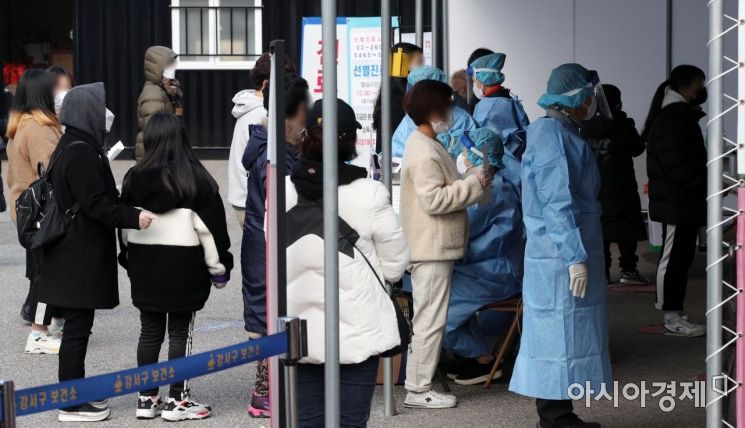 On the 26th, when the number of new confirmed cases of the novel coronavirus infection (COVID-19) in South Korea exceeded 500, citizens lined up to receive diagnostic tests at the screening clinic of the Gangseo-gu Public Health Center in Seoul. Photo by Hyunmin Kim kimhyun81@
Unusual Spread Among Young People
Highest Daily New Cases in 8 Months
New Cases Among 20s and 30s Around 30%
The 583 new confirmed cases identified that day (including 30 imported cases) represent the highest daily new cases since the first wave centered on Shincheonji Church members in Daegu and Gyeongbuk in February and March. During the second wave in mid to late August, the highest number of patients in a day was 441 on August 27. What is more concerning now is that despite having information about the virus and knowing the preventive measures over the past ten months, the spread is as severe as before.
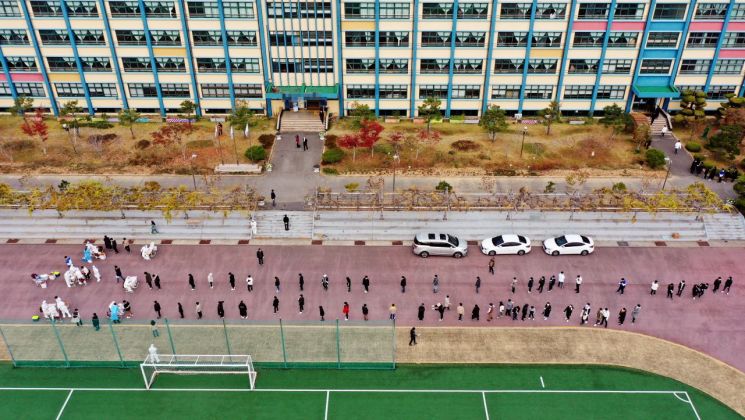 On the morning of the 26th, when the first in-school infection case was confirmed in Gwangju and Jeonnam, a student at a middle school in Seo-gu, Gwangju, who had contact with a confirmed case family attending another school, was additionally infected. Students at the school are undergoing comprehensive COVID-19 testing.
 The rapid spread among young people is because many of them engage in group activities such as schools and workplaces, have high activity levels, and often show no or mild symptoms, making them unaware of their infection and increasing the likelihood of transmitting the virus to others. According to health authorities, the proportion of patients in their 20s and 30s during the second wave was around 20%, but recently it has increased to about 30%.
Although young patients have a lower likelihood of worsening conditions, it is not a situation to be complacent about. As of the previous day, there were 81 critically ill patients, with 9 patients aged 50 or younger. Among them, two patients in their 30s are receiving high-flow oxygen therapy.
Cases of cluster infections have also increased significantly in multi-use facilities such as schools, academies, churches, and kids' cafes, as well as in isolated places like the military, prisons, and hospitals. Multi-use facilities had either been closed or subjected to strengthened preventive measures due to social distancing, but the prolonged COVID-19 situation and the lowering of social distancing to level 1 since last month have likely reduced vigilance. Deputy Director Park said, "The spread of infection among young people is serious."
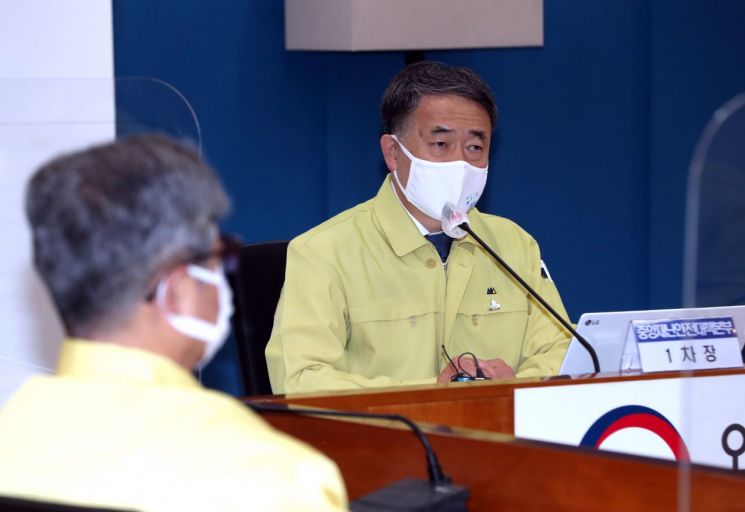 Park Neung-hoo, Minister of Health and Welfare and First Deputy Head of the Central Disaster and Safety Countermeasures Headquarters, is presiding over the Central Disaster and Safety Countermeasures Headquarters meeting on the response to the novel coronavirus infection (COVID-19) held at the Government Seoul Office Annex on the afternoon of the 26th.
 Government Considers Additional Measures Including Raising Social Distancing Levels
Experts Warn "Arbitrary Raising Lowers Policy Credibility"
Urgent Need to Secure Additional ICU Beds and Establish Home Treatment Guidelines
Although penalties have been strengthened, including fines for facility managers and users and business restrictions if preventive measures are not followed, there is a problem that these are not clearly enforced on the ground. Local government officials are conducting field inspections, but for facilities that do not comply, only on-site guidance has been given, and no fines have been imposed even after about two weeks.
While social distancing levels have been raised in some areas with many new cases, including the metropolitan area, the government remains cautious about additional measures. Son Young-rae, head of strategic planning at the Central Disaster and Safety Countermeasures Headquarters, said the day before, "Currently, strong control of the metropolitan area is the most important task," and added, "After assessing the effect of the social distancing level increase on the 24th, nationwide additional measures can be considered."
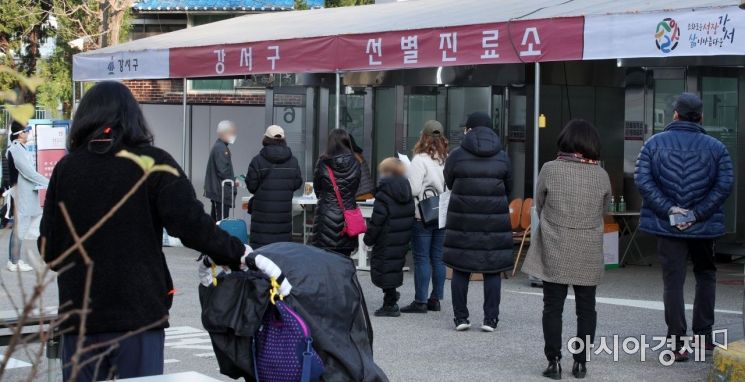 On the 26th, when the number of new confirmed cases of the novel coronavirus infection (COVID-19) in South Korea exceeded 500, citizens lined up to receive diagnostic tests at the screening clinic of the Gangseo-gu Public Health Center in Seoul. Photo by Hyunmin Kim kimhyun81@
Health authorities expect new cases to remain around 300 to 400 for the time being and are securing ICU beds accordingly. However, with nearly 600 new cases reported that day and the possibility of this trend continuing, there is an emergency to secure additional beds. Initially, medical staff treating COVID-19 patients anticipated some leeway in ICU beds for 1 to 2 weeks, and the government expected this to last up to 2 to 3 weeks.
However, if cases increase to 500 to 600 per day, this timeline will inevitably be shortened. Critical patients require not only beds but also intensive nursing and medical staff, so without prior preparation, rapid response is difficult. Joo Young-soo, head of the COVID-19 Joint Response Situation Room, said, "Since there is a high risk of a rapid increase in patients this month and early next month, it is necessary to prepare home treatment guidelines even if they are not immediately applied on-site," adding, "If this continues beyond next month or into next year, it will place a significant burden on the medical system."
© The Asia Business Daily(www.asiae.co.kr). All rights reserved.



















