Over 13 Billion Won in Excess Transport Fees Uncollected Due to Missed Bond Deadlines Despite Contractor Sales
Among 7 Involved, 6 Except a Retiring Manager Receive Mild Disciplinary Actions Like Reprimands and Warnings
Audit Office and Personnel Co
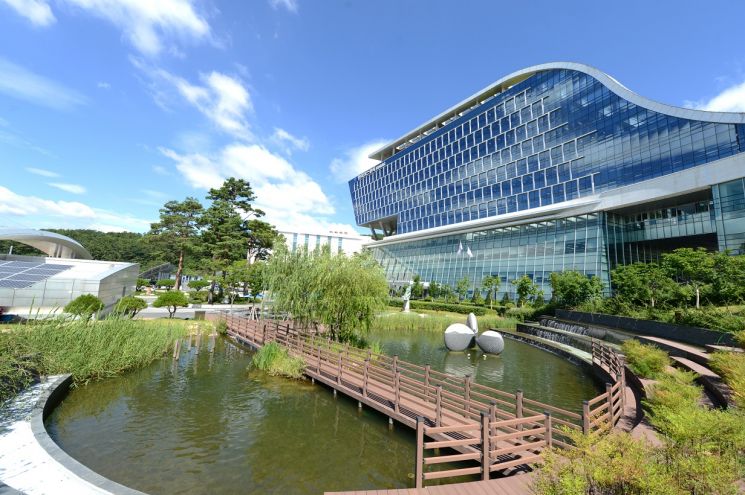
[Asia Economy Yeongnam Reporting Headquarters, Reporter Park Dong-wook] Korea Gas Corporation (President Chae Hee-bong) is facing ongoing internal turmoil after failing to recover 13 billion KRW in overpaid transportation fees from a shipping company due to the expiration of the statute of limitations (contractual exclusion period), resulting in receiving nothing.
In particular, criticism has arisen that the Gas Corporation hastily protected its own staff by imposing only light disciplinary measures (reprimands or less) on most employees who failed to handle even the basic contractual duties. Meanwhile, the corporation’s audit office has demanded further disciplinary action against certain employees, leading to resistance and drawing attention to the outcome.
According to the Gas Corporation on the 24th, around mid-June, the audit office referred seven employees from the transportation department involved in the so-called 13 billion KRW disappearance incident to the personnel committee. The audit office requested disciplinary actions including dismissal for the department head, two suspensions, one pay reduction, and three reprimands.
Initially, even this disciplinary request from the audit office sparked rumors within the company that all responsible officials in the reporting chain, such as the general manager and section chief, were excluded from disciplinary action, leaving only the "small fry" implicated. (The related general managers and section chiefs who were in charge during the period when debt recovery was possible had all retired by the time of the audit.)
However, at the standing personnel committee meetings held in July and August, all six employees except the dismissed department head received only reprimands (3 people) or warnings (3 people), resulting in extremely lenient punishments. A reprimand is the lowest level of disciplinary action, followed by dismissal, pay reduction, suspension, demotion, dismissal, and expulsion. Warnings are generally not considered disciplinary actions in most companies.
Even in the case of the dismissed department head, who is set to retire at the end of this year, there are widespread rumors that all responsibility was shifted onto him. It is said that the transportation and debt recovery tasks, which could be seen as simple and repetitive, were regarded as "policy decision matters," and the department head, with less than four months until retirement, was made a scapegoat.
Audit Office Investigates Employee Who Leaked Audit-Related Information Immediately After Personnel Committee’s 'Lenient' Disciplinary Actions
Regarding Korea Commercial Arbitration Board’s Debt Confirmation Ruling, the Corporation Files Injunction Lawsuit to Cancel the Judgment
In this situation, it has been confirmed that the audit office conducted an additional investigation into a manager-level employee who received a final reprimand from the personnel committee and requested a pay reduction disciplinary action from the corporation. This employee is suspected of spreading false information by publicly releasing a statement outside the company claiming that audit-related information was leaked to a third party by the audit office during the investigation conducted in May.
In particular, this employee is known to have conveyed opinions about problems in the audit process to personnel who could influence the audit, which is expected to cause considerable repercussions in the future.
The corporation explained regarding the disciplinary actions and arbitration ruling related to the individuals involved, "Disciplinary actions for the seven employees have already been finalized according to the personnel committee’s decision," and added, "Although the Korea Commercial Arbitration Board’s ruling on the 13 billion KRW outstanding debt is a first-instance decision, we consider it a matter subject to appeal and are currently proceeding with an injunction lawsuit to cancel the judgment."
Meanwhile, the 13 billion KRW transportation fee outstanding debt incident at Korea Gas Corporation originated in June 2014 when Hyundai Merchant Marine, which was experiencing a liquidity crisis, sold its LNG transportation business to Hyundai LNG Shipping for 500 billion KRW.
At the end of 2015, the corporation notified Hyundai Merchant Marine to return the 13 billion KRW difference in freight charges for 2014 during settlement, but Hyundai Merchant Marine resisted, claiming that the debt was also transferred to Hyundai LNG Shipping simultaneously with the business transfer contract.
Ultimately, judging that it would not be able to receive the freight charges from Hyundai Merchant Marine, the Gas Corporation withheld payment of 26 billion KRW in transportation fees to both companies in 2016 and only applied for arbitration with the Korea Commercial Arbitration Board, a private court, in November 2018.
In December 2019, the Korea Commercial Arbitration Board ruled that the claim had expired due to exceeding the two-year legal validity period (exclusion period) of the debt, effectively extinguishing the Gas Corporation’s claim. The arbitration board’s ruling holds the same effect as a final judgment by the Supreme Court.
© The Asia Business Daily(www.asiae.co.kr). All rights reserved.

















