[Asia Economy Reporter Hwang Yoon-joo] Japan is creating an environment nationwide where electric vehicles and hybrid cars can operate.
According to Japan's Energy White Paper 2020 on the 22nd, as part of policy support for structural changes in new secondary energy (such as hydrogen), Japan is implementing a subsidy system for the maintenance of distribution infrastructure for electric vehicles and plug-in hybrid vehicles. The budget allocated last year for creating electric vehicle and plug-in hybrid vehicle infrastructure nationwide reached 1.1 billion yen.
In addition to electric vehicle infrastructure, a subsidy system for hydrogen refueling station maintenance is also being implemented. The budget for hydrogen refueling station maintenance subsidies is 10 billion yen (as of 2019), which is ten times larger than the subsidy for purchasing and construction costs of electric vehicle chargers. Currently, the hydrogen vehicle competition in Japan is dominated by Toyota and Honda as the two leading companies.
There are two main reasons why Japan is focusing on creating electric vehicle infrastructure. First, it is to diversify secondary energy supply methods such as combined heat and power or electric vehicles. Since natural disasters like earthquakes are frequent in Japan, the connectivity of transmission and distribution networks is extremely important.
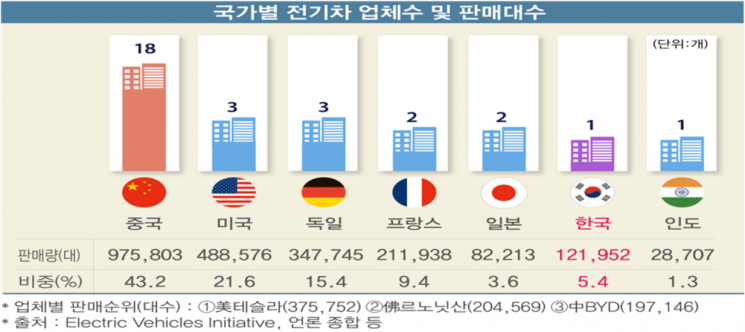
Another reason is the judgment that expanding customized charging infrastructure for consumers is essential to strengthen the competitiveness of electric vehicles. The number of electric vehicle charging facilities in Japan is 227,000, about ten times more than South Korea's 23,000.
An electric vehicle battery official said, "If electric vehicle production is a policy for manufacturers, the subsidy policy for electric vehicle charging facilities is a policy for consumers," adding, "To expand electric vehicle demand, South Korea also needs more effective measures such as expanding subsidies for electric vehicle charging installation and infrastructure creation or supporting infrastructure within apartment complexes."
© The Asia Business Daily(www.asiae.co.kr). All rights reserved.
![Clutching a Stolen Dior Bag, Saying "I Hate Being Poor but Real"... The Grotesque Con of a "Human Knockoff" [Slate]](https://cwcontent.asiae.co.kr/asiaresize/183/2026021902243444107_1771435474.jpg)
















