Development of Electrical Conductivity Enhancement Technology for Conductive Polymers
Application as Skin-Attached and Implantable Bioelectrode Electronic Devices
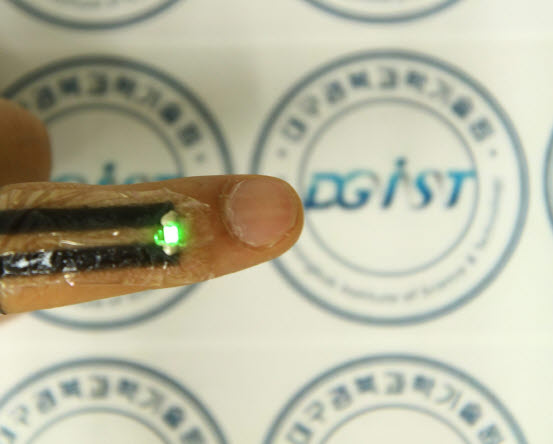
[Asia Economy Reporter Junho Hwang] A bioelectrode with electrical conductivity 250 times higher than existing ones has been developed. The research team expects that within 2 to 3 years, it can be used as electrodes for wearable devices that obtain biometric information such as heart rate by being implanted in the body or attached to the skin.
The research team led by Professor Seongwon Lee of the Department of New Materials Science at Daegu Gyeongbuk Institute of Science and Technology (DGIST) announced on the 17th that they developed a conductive polymer fabrication technology with these characteristics, and their research results were introduced in the international journal Biosensors and Bioelectronics.
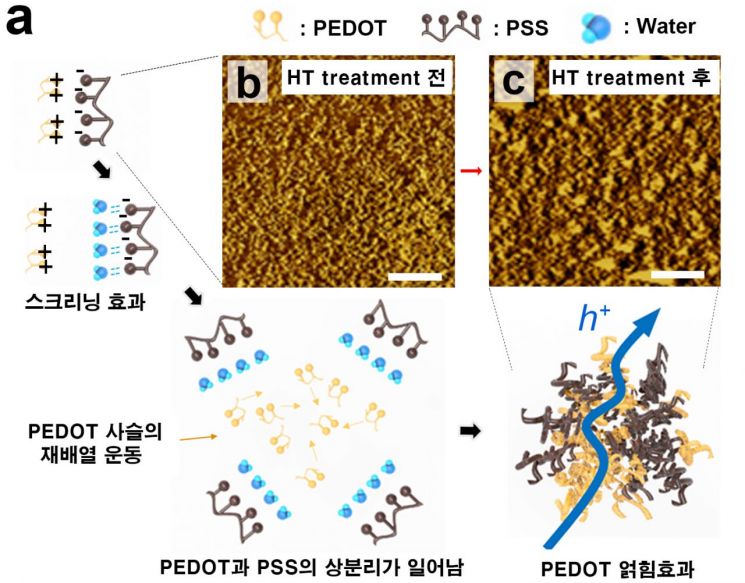
The research team developed a new conductive polymer fabrication technology that increases electrical conductivity. This technology enhances electrical conductivity through hydrothermal treatment that controls temperature and humidity. The team discovered that when heat above 70 degrees Celsius is applied at a relative humidity of over 80%, the bonding force between PEDOT cations and PSS anions inside the conductive polymer weakens, causing phase separation. They also confirmed that entanglement of the conductive material PEDOT cations occurs, resulting in increased conductivity.
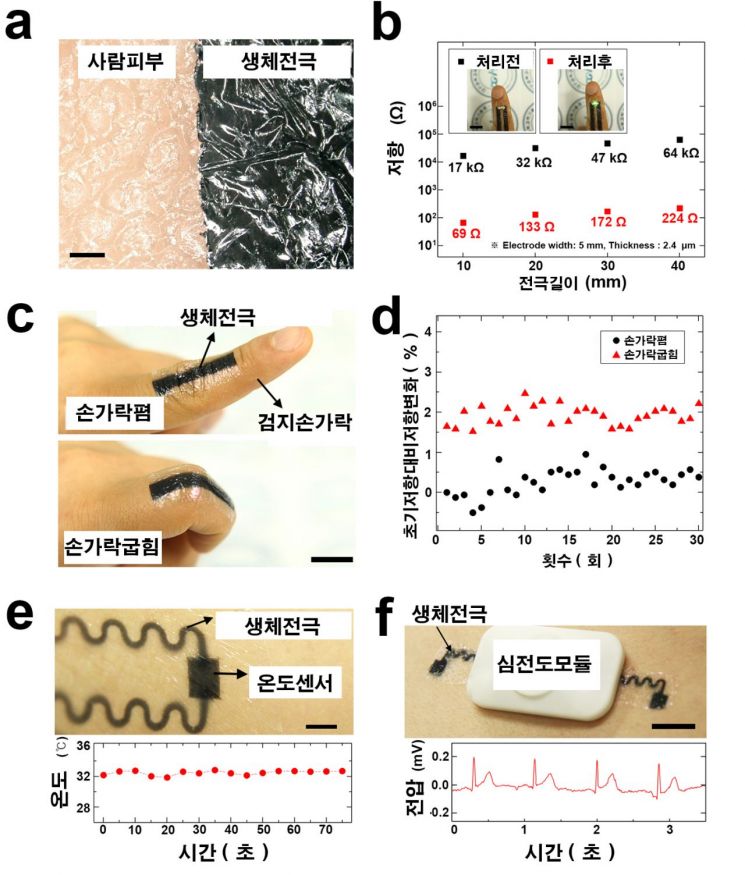
Using this process, the research team created bioelectrodes from conductive polymers with enhanced electrical conductivity and measured an electrical conductivity of 125.367 Siemens per centimeter (S/cm-1), approximately 250 times higher than existing materials. They also demonstrated high potential for practical use as bioelectrodes through various experiments such as skin temperature measurement and electrocardiogram (ECG) measurement linked with ECG modules.
Professor Seongwon Lee stated, "We have dramatically improved electrical conductivity in a harmless and simple way using biocompatible conductive polymers." He added, "Applying this technology can reduce electrode resistance by more than 100 times, increasing energy efficiency and expanding its applications in the medical field."
© The Asia Business Daily(www.asiae.co.kr). All rights reserved.



















