Excessive Hydrogen Peroxide Production in Severe Reactive Astrocytes
Oxidative Stress as a Cause of Dementia Onset

[Asia Economy Reporter Junho Hwang] Domestic researchers have identified the cause of dementia. They discovered that oxidative stress caused by hydrogen peroxide produced by reactive astrocytes in our brain induces dementia. This research is expected to lay the foundation for early diagnosis and the development of new treatments for dementia.
The international academic journal Nature Neuroscience published the research results on the 17th by a team led by Changjoon Lee, head of the Cognitive and Sociality Research Group at the Institute for Basic Science, senior researcher Heejeong Jeon, and a research team led by Hun Ryu, director of the Brain Science Institute under the Korea Institute of Science and Technology.
Unveiling the Cause of Dementia
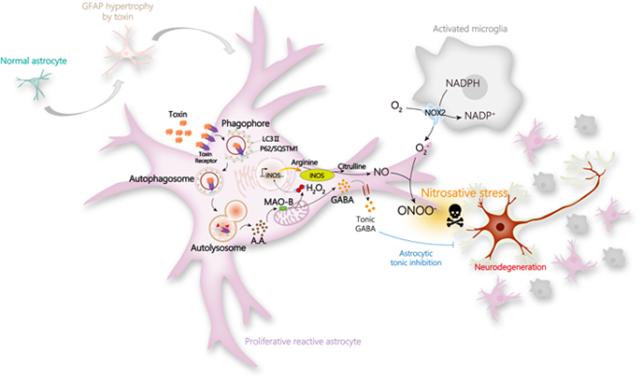
The research team revealed for the first time the principle by which neuronal cell death caused by reactive astrocytes appearing in the early stages of dementia induces dementia symptoms. They focused on the fact that reactive astrocytes, which appear during the brain’s process of decomposing toxic substances, also appear in the early stages of dementia. Through this, they experimentally proved that severe reactive astrocytes induce neuronal cell death and dementia.
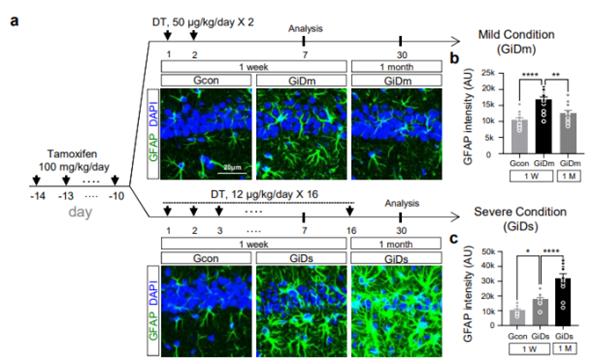
The team developed an animal model that regulates the reactivity of astrocytes. Through this, they confirmed that mild reactive astrocytes naturally recover, whereas severe reactive astrocytes irreversibly cause neuronal cell death and progress dementia. This is because monoamine oxidase B (MAO-B) protein activated during the toxic substance decomposition process by astrocytes and the hydrogen peroxide, a type of reactive oxygen species excessively produced as a result, induce severe reactive astrocytes. In particular, oxidative stress caused by hydrogen peroxide also induces neuroinflammation, nitrative stress, tauopathy, and leads to neuronal cell death. The team observed the same mechanism in a three-dimensional (3D) human cell dementia model and in the brains of postmortem dementia patients.
Senior researcher Heejeong Jeon stated, "Severe reactive astrocytes can occur due to increased oxidative stress caused by toxic substances in the brain, stress, brain injury, and viral infection, and blocking this can halt the progression of dementia."
Dementia, Potential for New Treatment Development
This study is significant in that it identifies the core cause of dementia. Over the past several years, the development of dementia treatments has mainly been based on the hypothesis that amyloid beta, a toxic amyloid substance, is the cause of dementia. However, even after removing amyloid beta with antibody treatments, severe dementia often persisted, or dementia did not appear despite increased amyloid beta levels.
The research team expects that by utilizing the reactivity of astrocytes, early diagnosis or new treatments for dementia can be found. They revealed that simply reducing hydrogen peroxide targeting reactive astrocytes was able to suppress dementia progression, and they plan to establish and implement new diagnostic and therapeutic strategies for dementia targeting MAO-B or hydrogen peroxide.
Director Hun Ryu said, "In the brains of dementia patients, reactive astrocytes act as a cause of neuronal damage, so research controlling the abnormal activation of these reactive astrocytes is important." Group leader Changjoon Lee added, "We are pleased to newly reveal that reactive astrocytes, previously considered only a byproduct of Alzheimer’s dementia, are the main cause of neuronal cell death," and expressed hope that "this will help patients suffering from dementia even a little."
© The Asia Business Daily(www.asiae.co.kr). All rights reserved.
![Clutching a Stolen Dior Bag, Saying "I Hate Being Poor but Real"... The Grotesque Con of a "Human Knockoff" [Slate]](https://cwcontent.asiae.co.kr/asiaresize/183/2026021902243444107_1771435474.jpg)

















