Despite China's Leadership in RCEP Agreement Finalization... 'Trade' Missing from Incoming Administration's Top National Tasks
[Asia Economy New York=Correspondent Baek Jong-min, Reporter Naju-seok] With the conclusion of the Regional Comprehensive Economic Partnership (RCEP), involving 15 countries including China, Korea, Japan, and the Association of Southeast Asian Nations (ASEAN), concerns are emerging that the United States may become isolated in free trade. However, given the rapid spread of the novel coronavirus disease (COVID-19), the prevailing analysis is that the incoming Biden administration is not in a position to focus its capabilities on foreign affairs.
On the 15th (local time), U.S. media outlets uniformly expressed concerns about the conclusion of RCEP. While the U.S. withdrew from the Trans-Pacific Partnership (TPP), China has expanded its influence over trade in the Asia-Pacific region through RCEP.
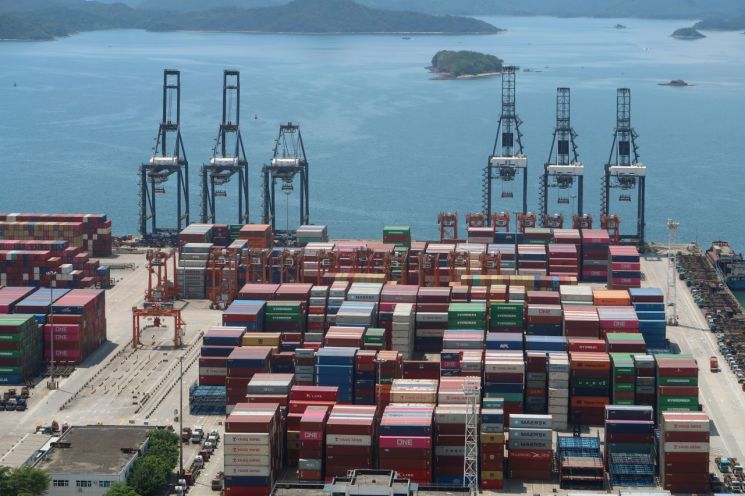
The New York Times (NYT) emphasized that the RCEP agreement was concluded four years after U.S. President Donald Trump withdrew from the TPP immediately upon taking office. Citing experts, the NYT reported, "The world is no longer waiting for the U.S. and has begun forming new trade agreements," adding, "The European Union (EU) is also aggressively pursuing free trade agreements."
The NYT also introduced analyses suggesting that the RCEP agreement will inevitably lower export barriers for Chinese products, which President Trump had sought to restrict through tariffs. Senior researcher Marie Lovely of the Peterson Institute for International Economics stated, "Thanks to RCEP, companies can respond more flexibly between the U.S. and China, the two major powers," and added, "As tariffs within the Asian region decrease, the value of business within the region has increased. Due to rules of origin, it is now possible to maintain transactions with China while separating the fact that products were manufactured in mainland China."
The Wall Street Journal (WSJ) noted that RCEP allows member countries to avoid high tariffs from raw materials to final finished products, suggesting that RCEP's influence will be significant. The launch of RCEP has also drawn attention to the U.S.'s response. The WSJ pointed out that pressure on the U.S. in Asia-Pacific trade is bound to increase. Until last year, President-elect Biden criticized President Trump's trade policies and showed an active stance toward multilateral trade agreements. Last year, he emphasized rejoining the TPP, stating, "If the U.S. does not set the rules, China will."
However, the dominant view is that it will be difficult for President-elect Biden to take immediate action on the global trade order changes brought by the launch of RCEP, which includes China. This is because the COVID-19 crisis has worsened the U.S.'s health and economic situation this year, making internal problem-solving urgent.
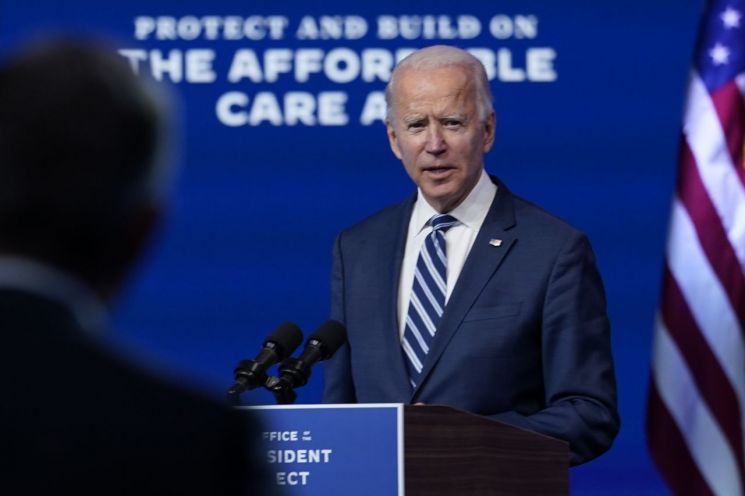
There has also been a shift in President-elect Biden's statements. Unlike last year, when he showed a strong willingness for active trade negotiations, in March this year, through a Foreign Affairs article, he stated, "The beginning of U.S. trade policy must start domestically," and emphasized, "Strengthening the middle class and increasing investment in infrastructure." In other words, he intends to address trade issues only after resolving domestic matters.
International trade issues are also absent from the top priority national tasks announced by Biden's transition team after his election victory. The transition team identified the highest priority national tasks as responding to the COVID-19 crisis, economic recovery, racial equality, and climate change. President-elect Biden is scheduled to hold a briefing on economic matters on the 16th. However, it is expected that trade will not be mentioned there either. U.S. media such as CNN anticipate that Biden will present opinions on rebuilding the economy devastated by the COVID-19 crisis.
The COVID-19 infection situation in the U.S. continues to worsen daily. According to data compiled by Johns Hopkins University, the number of new infections on the 14th was approximately 166,000. The previous day saw over 170,000 new infections. The cumulative number of cases has surpassed 11 million. Anthony Fauci, director of the U.S. National Institute of Allergy and Infectious Diseases (NIAID), expressed concern in an interview with CBS on the same day, stating, "President Trump is harming U.S. public health by refusing to cooperate with the Biden transition amid a surge in COVID-19 infections."
© The Asia Business Daily(www.asiae.co.kr). All rights reserved.


















