E-commerce Companies Threaten Offline Markets
Traditional Retailers Build Integrated Online-Offline Models
Bold Structural Changes... Mergers and AI Talent Acquisition
[Asia Economy Reporters Minyoung Cha, Seungjin Lee] 'Customers do not distinguish between channels'
The novel coronavirus disease (COVID-19) is accelerating the launch of integrated online and offline systems for traditional distribution companies facing crises. This is because e-commerce-born distribution companies like Amazon and Naver are breaking down the boundaries of traditional offline channels and expanding infinitely. Following Shinsegae and Lotte, even GS Group, a traditional company, has embarked on a bold structural transformation centered on online rather than offline.
GS Retail's GS Home Shopping Announces 'Surprise' Merger
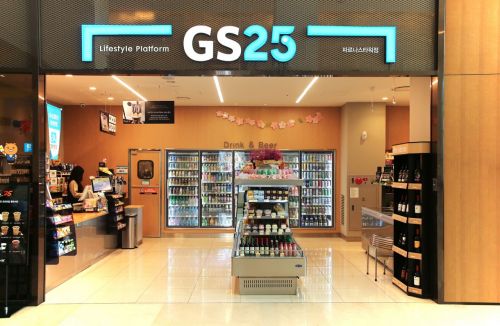
According to industry sources on the 14th, there was a surprise announcement that shook the distribution sector this week. It concerns the absorption merger of GS Home Shopping by GS Retail, which focuses on convenience stores, supermarkets, and hotel businesses. The boards of directors of both GS Retail and GS Home Shopping unanimously approved the merger proposal at a meeting on the morning of the 10th. After regulatory corporate merger reviews and the shareholders' meetings of both companies scheduled around May next year, the merger is planned to be completed by July.
By combining the customer databases (DB) that were previously separate, they can secure vast big data rapidly emerging in the online commerce market. GS Retail and GS Home Shopping have 14 million and 18 million membership subscribers respectively; even after excluding overlapping customers, they can enjoy a net inflow effect of 26 million members. Additionally, GS Retail, whose main channel is convenience stores, has a customer base mainly in the 10-20 age group, while GS Home Shopping's main channel targets the middle-aged 40-50 age group, resulting in a company-integrated DB evenly distributed across all age groups. More than 30 million TV viewers of GS Home Shopping, not included in the count, are a bonus. GS Retail aims to complete the merger by July next year and achieve a transaction volume of 25 trillion won by 2025. Mobile commerce transaction volume will also increase about threefold from the current 2.8 trillion won to 7 trillion won.
Shinsegae and Lotte Also Strive for Survival

Shinsegae and Lotte, traditional offline distribution giants, are also accelerating their online and offline integration. Shinsegae Group is strengthening the group's overall online capabilities through its integrated online mall SSG.com. Recently, it established a Data and Infrastructure Headquarters within SSG.com. The inaugural head is Executive Director Yuseong Jang, a Ph.D. in computer science and an AI (artificial intelligence) expert. Executive Director Jang is expected to focus on enhancing synergy through big data analysis of integrated online and offline customer DBs.
Lotte Group, which is pushing for offline restructuring, is supporting its integrated online mall Lotte ON. Vice Chairman Heetae Kang recently launched a direct data governance task force (TF) and appointed Executive Director Youngsun Yoon, formerly of Lotte Information & Communication, as Chief Data Officer (CDO). Notably, Lotte, which had never hired external executives before, brought in big data expert Executive Director Yoon, who has experience at SK and KT, signaling a commitment to online and offline integration. The TF will create a data business roadmap for Lotte Group over the next year, collect and analyze data across distribution, logistics, and manufacturing sectors, and build related systems. The data analysis results will be used to upgrade Lotte ON services, strengthen hyper-personalization capabilities, and extend them to offline stores.
Beyond e-Commerce... Offline's Counterattack
The bold structural reforms of traditional distribution companies are a kind of counterattack against the destruction of distribution boundaries by e-commerce companies born from online and portal sites. E-commerce companies have also judged that it is impossible to completely replace offline channels with online alone. They are experimenting offline across various sectors such as convenience stores, marts, bookstores, and cafes based on vast customer DBs.
The leading example, Amazon in the U.S., is expanding into offline stores such as Amazon Go, Amazon Fresh, and Whole Foods by combining artificial intelligence (AI) and data capabilities. China's Alibaba Group has also introduced unmanned convenience stores and 'Tao Cafe.' Domestically, Coupang has differentiated itself with fulfillment services combined with large-scale logistics and delivery infrastructure. Coupang operates 17 logistics centers nationwide. Naver Shopping, which had concerns about the lack of logistics centers, devised an integration plan through a share swap with CJ Logistics, a delivery specialist.
Professor Yonggu Seo of Sookmyung Women's University’s Department of Business Administration said, "The change of era is so rapid that it can be described as e-commerce shifting from the passenger seat to the driver's seat in a car," adding, "As expansions into omni-channel services such as live commerce and O4O increase, large-scale distribution companies are feeling a sense of crisis and it seems an internal consensus has formed that they must now face change."
© The Asia Business Daily(www.asiae.co.kr). All rights reserved.
![Clutching a Stolen Dior Bag, Saying "I Hate Being Poor but Real"... The Grotesque Con of a "Human Knockoff" [Slate]](https://cwcontent.asiae.co.kr/asiaresize/183/2026021902243444107_1771435474.jpg)

















