Special Envoy Role Expected at Korea-Japan Summit... Lawmaker Kim Jin-pyo Also Scheduled to Visit Japan on the 12th
Transitional US Administration Continues Contacts with Korea-Japan Governments and Political Circles
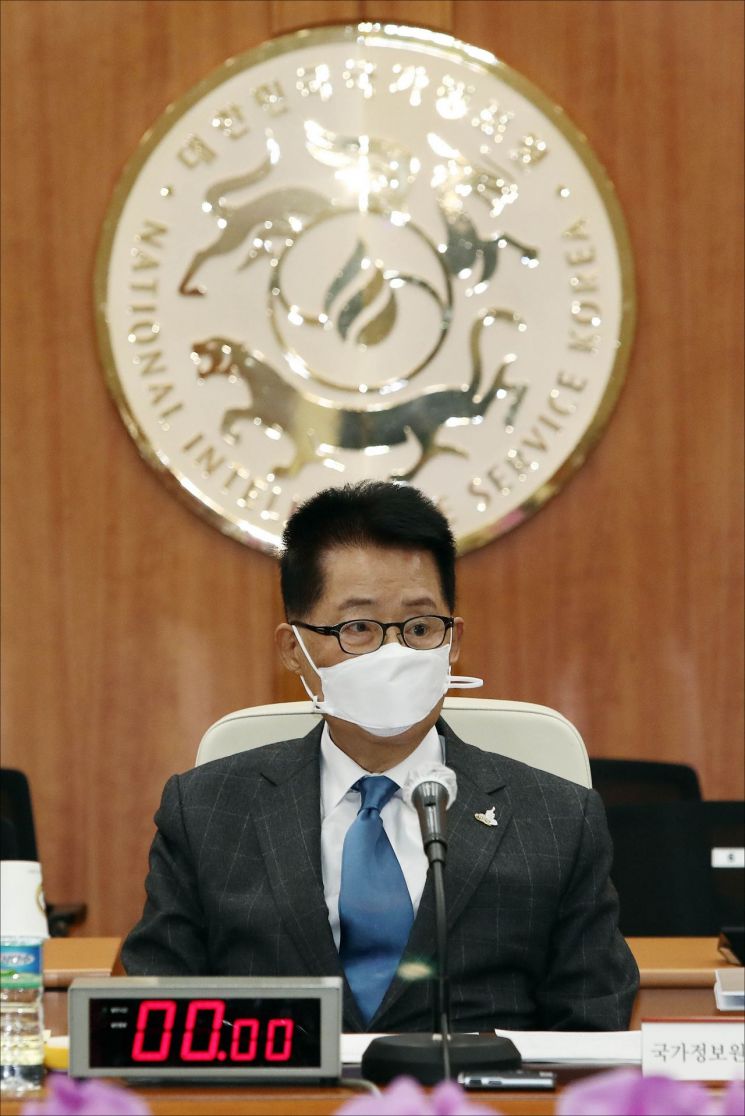
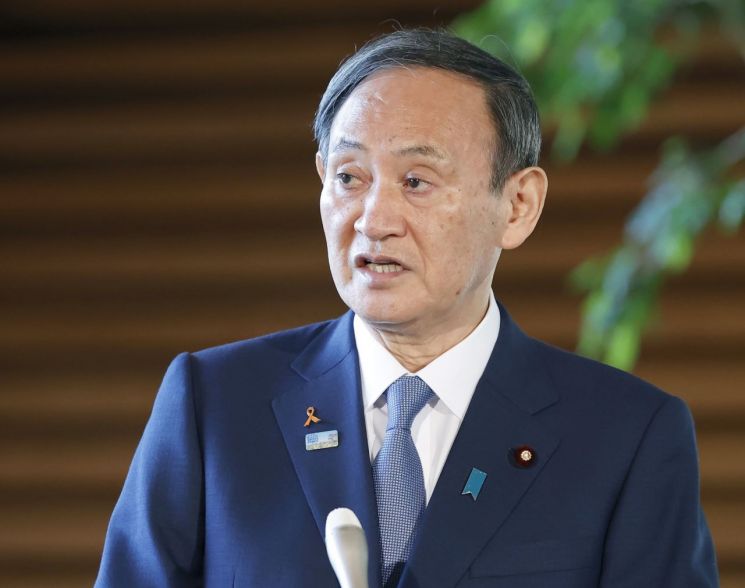
[Asia Economy Reporter Lim Cheol-young] With Joe Biden, the Democratic Party's president-elect, securing victory in the U.S. presidential election and likely to actively intervene in the strained Korea-Japan relations under the pretext of 'strengthening trilateral cooperation among Korea, the U.S., and Japan,' both the Korean and Japanese governments and political circles are engaging in behind-the-scenes efforts. Park Ji-won, Director of the National Intelligence Service, is visiting Japan and coordinating a meeting with Japanese Prime Minister Yoshihide Suga, while Kim Jin-pyo, a member of the Democratic Party of Korea and chairman of the Korea-Japan Parliamentary League, is also scheduled to visit Japan soon.
According to government sources on the 10th, Director Park visited Japan the previous day and held talks with Toshihiro Nikai, Secretary-General of the Liberal Democratic Party, with whom he has a long-standing friendship. This high-level exchange, which had been virtually suspended due to the strained bilateral relations during the Abe administration and the spread of COVID-19, was the first to take place since the launch of the Suga administration. Some speculate that Director Park is acting as a special envoy to facilitate the first Korea-Japan summit meeting since Prime Minister Suga took office. There is also a high possibility that Director Park will personally deliver a letter from President Moon Jae-in.
Following his meeting with Secretary-General Nikai, Director Park is reportedly coordinating a schedule to meet Prime Minister Suga. His visit to Prime Minister Suga is interpreted as a preparatory move in anticipation of the Biden administration's active involvement in Korea-Japan issues under the trilateral cooperation framework after Biden's inauguration in January next year. Considering the possibility of pressure from the Biden administration to improve Korea-Japan relations, it appears necessary to coordinate positions on pending issues such as the forced labor issue during Japanese colonial rule, export restrictions, and the Korea-Japan General Security of Military Information Agreement (GSOMIA).
Choi Eun-mi, Associate Research Fellow at the Asan Institute for Policy Studies, explained, "The Biden administration is likely to engage in Korea-Japan relations because it values alliances," adding, "Considering the restoration of the liberal international order, the resumption of multilateral cooperation with allies, and differentiation from the Trump administration, they will want to resolve the Korea-Japan conflict."
Professor Hosaka Yuji of Sejong University appeared on tbs Radio's Kim Eo-jun's News Factory on the same day and said, "Regarding Director Park's visit to Japan, the Japanese side sees it as an attempt to find a breakthrough for improving relations," and analyzed, "Especially since Biden was elected, it is expected that there will be demands for relationship improvement similar to the Obama era, and efforts are underway to narrow mutual differences."
In political circles, voices have begun to emerge calling for a "comprehensive resolution" of the complex Korea-Japan issues. Kim Jin-pyo, chairman of the Korea-Japan Parliamentary League and member of the Democratic Party of Korea, is scheduled to visit Japan from the 12th for a 2-night, 3-day trip with six lawmakers from both ruling and opposition parties. This is with the intention of establishing a 'Special Committee for Olympic Exchange and Cooperation' to strengthen exchanges and cooperation ahead of the Tokyo Olympics next year and to contribute to resolving the piled-up issues comprehensively.
In an interview with Japan's Asahi Shimbun, Representative Kim said, "Political determination from both Korea and Japan is necessary. I want to resolve the issues, including the forced labor problem and economic issues, as a package," adding, "Both sides need to make concessions, create solutions, and persuade the public to understand."
Associate Research Fellow Choi also emphasized that before the full launch of the Biden administration, "The Korean government needs to clearly understand the U.S. Northeast Asia policy, including North Korea issues, externally and make the U.S. understand Korea's principles and positions, while internally making efforts to gain public understanding for resolving Japan-related issues."
© The Asia Business Daily(www.asiae.co.kr). All rights reserved.
![Clutching a Stolen Dior Bag, Saying "I Hate Being Poor but Real"... The Grotesque Con of a "Human Knockoff" [Slate]](https://cwcontent.asiae.co.kr/asiaresize/183/2026021902243444107_1771435474.jpg)












