'Daebanggwangwon Gaksudarayogyeong (Eonhae) Volume 1-2' · 'Bunryudugongbusi (Eonhae) Volume 11'
'Gyeongjin Year Yeonhaengdojeop' · 'Mungyeong Bongamsa Maaemireukyeoraejwasang' · 'Mireukwonmyeong Cheongdongbuk' Also Scheduled for Designation
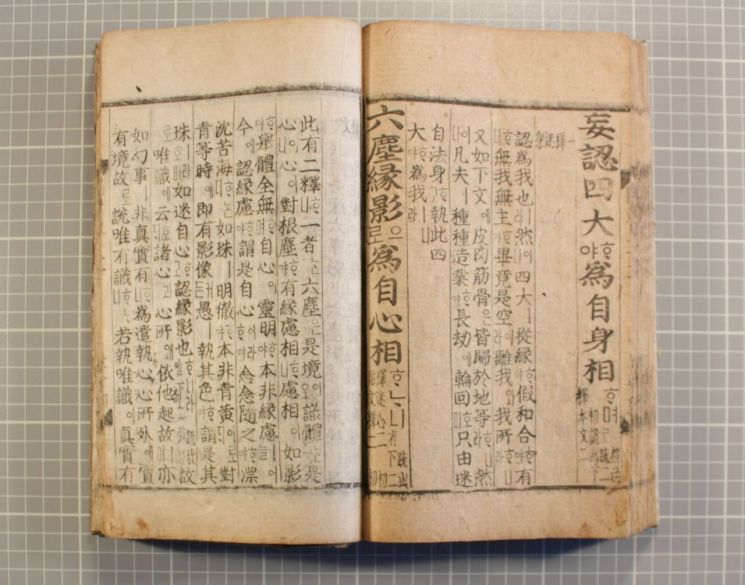
‘Daebanggwangwon-gak-sudarayo-ui-gyeong (大方廣圓覺修多羅了義經)’ is a scripture in which Sakyamuni clarifies the profound principle (妙理) and practice (觀行) of Great Perfect Enlightenment (大圓覺) through a dialogue with the Twelve Bodhisattvas (十二菩薩). It contains teachings on cultivating the mind to attain complete enlightenment. During the Goryeo Dynasty, it was widely circulated as a curriculum for monastic training in temples.
The ‘Daebanggwangwon-gak-sudarayo-ui-gyeong (Eonhae) Volume 1-2 (大方廣圓覺修多羅了義經(諺解) 卷上一之二)’ held by the Sejong the Great Memorial Association is based on the original manuscript (?) by the Tang Dynasty monk Jongmil (780?841) and a version annotated with Korean Gugyeol by King Sejo. It was printed in 1465 at the Jujaso (鑄字所) using the metal type ‘Eulyuja (乙酉字)’.
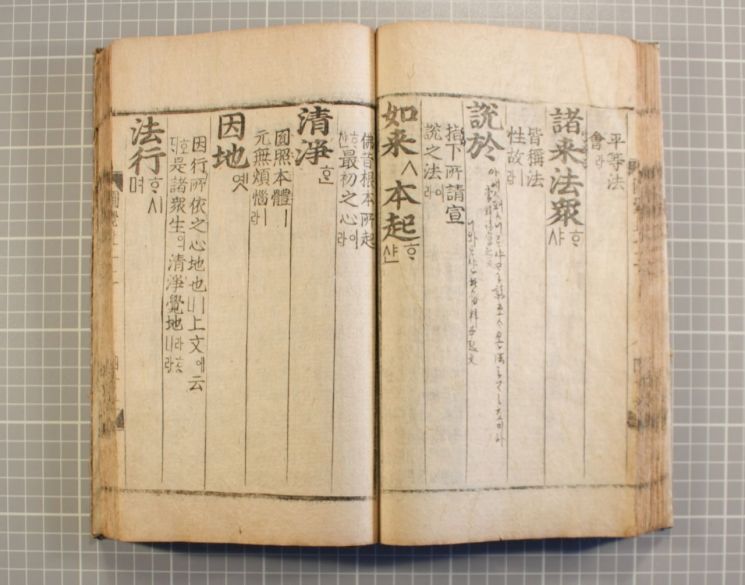
The Cultural Heritage Administration announced on the 29th that it will designate this book, also known as ‘Wongakgyeong (圓覺經)’, along with ‘Bunryudugongbusi (Eonhae) Volume 11’, ‘Gyeongjin-nyeon Yeonhaengdocheop’, ‘Mungyeong Bongamsa Ma-ae Mireuk Yeorae Jwasang’, and ‘Mireukwonmyeong Bronze Drum’ as treasures. Opinions from various sectors will be collected for a month, and the designation will be finalized after review by the Cultural Heritage Committee.
The printing of ‘Daebanggwangwon-gak-sudarayo-ui-gyeong (Eonhae) Volume 1-2’ used a separate Korean metal type. It is the ‘Eulyuja’ metal type cast in 1465. The type was not neat and thus was not used for long. It was melted down when the ‘Gapjinja (甲辰字)’ was cast in the 15th year of King Seongjong’s reign (1484), making related artifacts rare.
The situation of ‘Daebanggwangwon-gak-sudarayo-ui-gyeong (Eonhae)’ is similar. Since a complete volume has not been preserved, very few copies exist. Regarding the barely preserved ‘Daebanggwangwon-gak-sudarayo-ui-gyeong (Eonhae) Volume 1-2’, the Cultural Heritage Administration stated, “It is not only a precious copy but also a valuable resource for the study of 15th-century Korean linguistics, bibliography, and metal type printing history.”
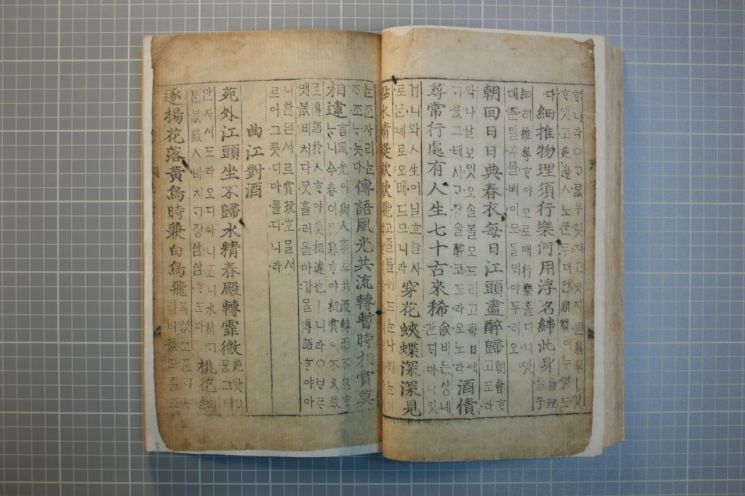
‘Bunryudugongbusi (Eonhae) Volume 11 (分類杜工部詩(諺解) 卷十一)’ is a book compiled in 1481 (the 12th year of King Seongjong’s reign) by scholars of the Hongmungwan (弘文館) such as Ryu Yungyeom and Jo Wi, along with the monk Uichim, under royal command. It contains poems by Du Fu (712?770) of the Tang Dynasty translated into Korean using Hangul. The poems were classified by content with reference to various annotations. The printing used the metal type ‘Eulhaeja (乙亥字)’ cast in the first year of King Sejo’s reign (1455). The Hangul metal type ‘Eulhae Hangulja’ produced at the same time was also used, making it an important resource for the study of Joseon metal type printing history.
This book is also cited as a representative example of Korean translation during the Joseon Dynasty because it is the first translated poetry collection published after the creation of Hunminjeongeum. The Volume 11, which is announced for treasure designation, is the first edition printed with a combination of Eulhaeja and Eulhae Hangulja metal types. It supplements parts missing from previously known materials. It even contains features of early Hangul such as half consonants (半齒音·ㅿ), side dots (傍點), and guttural sounds (牙音·ㆁ), thus highly valued for its linguistic significance.
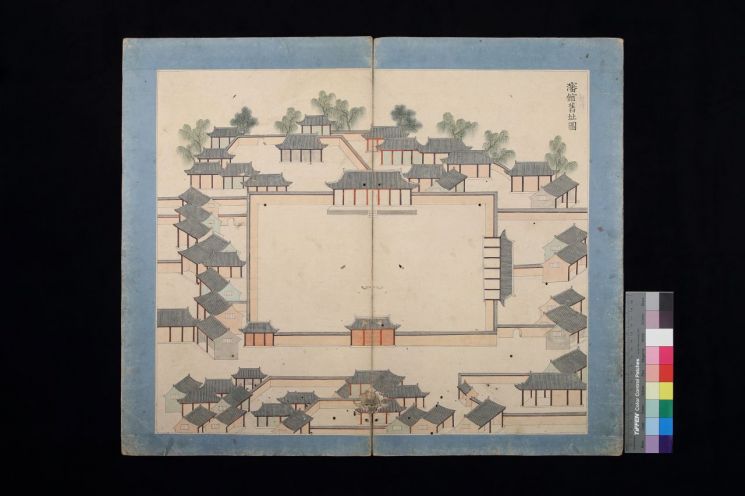
‘Gyeongjin-nyeon Yeonhaengdocheop (庚辰年 燕行圖帖)’ is an imperial viewing album created so that King Yeongjo could review the contents of the Dongji diplomatic mission. The Dongji mission refers to the annual sending of envoys from Joseon to the Ming and Qing around the winter solstice. About forty people including the chief envoy, deputy envoy, secretary, messenger, medical officer, and painters traveled to Shenyang and other places. The ‘Gyeongjin-nyeon Yeonhaengdocheop’ covers the journey from November 2, 1760, to April 6, 1761. The chief envoy was Hong Gyehui (洪?禧), the deputy envoy Jo Yeongjin (趙榮進), and the secretary Lee Huijung (李徽中), as recorded respectively.
In Hong Gyehui’s preface, it is mentioned that King Yeongjo summoned him before the mission departed and ordered him to carefully inspect the old sites of Shenyanggwan (瀋陽館), where Crown Prince Sohyeon and Prince Bongrim were held captive. Hong Gyehui took painters to depict Shenyanggwan, Sanhaegwan, and the Wenmiao (文廟) in Beijing. Shenyanggwan, also called Goryeogwan, was Joseon’s overseas diplomatic office established in Shenyang in the 15th year of King Injo’s reign (1637). Crown Prince Sohyeon and Prince Bongrim were held hostage in Qing from 1637 until 1644. Sanhaegwan is a strategic transportation and military point at the eastern end of the Great Wall. It is widely known as the site where Qing general Wu Sangui’s allied forces clashed with Li Zicheng’s rebel army in 1644.
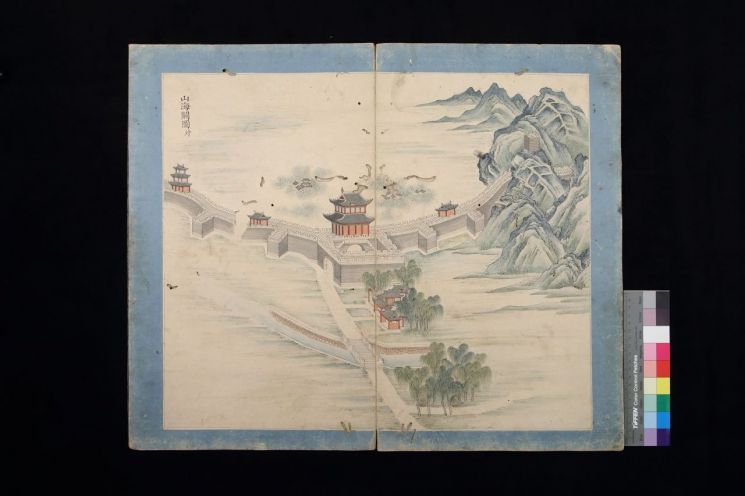
The paintings in the ‘Gyeongjin-nyeon Yeonhaengdocheop’ are divided into landscapes and architectural maps. The latter employ various perspectives such as bird’s-eye view (俯瞰法) and parallel perspective. The building shapes are depicted meticulously and three-dimensionally, indicating the high level of 18th-century court record painting. The Cultural Heritage Administration stated, “It is a very important work in art history,” and added, “It comprehensively shows the aspects of the era’s society, politics, diplomacy, and culture, making it highly valuable as visual material.”
‘Mungyeong Bongamsa Ma-ae Mireuk Yeorae Jwasang (聞慶 鳳巖寺 磨崖彌勒如來坐像)’ is a rock-carved Buddha statue created in the 4th year of King Hyeonjong’s reign (1663). It is located on the Okseokdae cliff at Bongamsa Temple in Gyeongbuk. According to the collected works ‘Punggyejip (楓溪集)’ of Punggye Myeongchal (楓溪 明察), it was commissioned by his teacher Hwanjeokdang Uicheon (幻寂堂 義天).
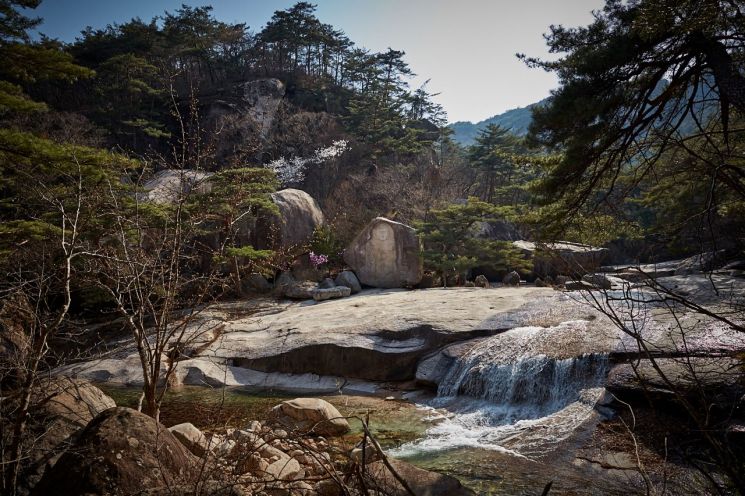
The statue measures 539.6 cm in height and 502.6 cm in width. It has a round and slender face, a prominent nose bridge, soft eyes, and a neatly closed mouth, giving a compassionate and benevolent impression. The Cultural Heritage Administration noted, “Elements of 17th-century hanging Buddha paintings such as ‘Naju Jukrimsa Sejon Gwaebultang’ and ‘Gurye Hwaeomsa Yeongsanhoe Gwaebultang’ are found in the detailed expressions of the face, posture, and drapery.”
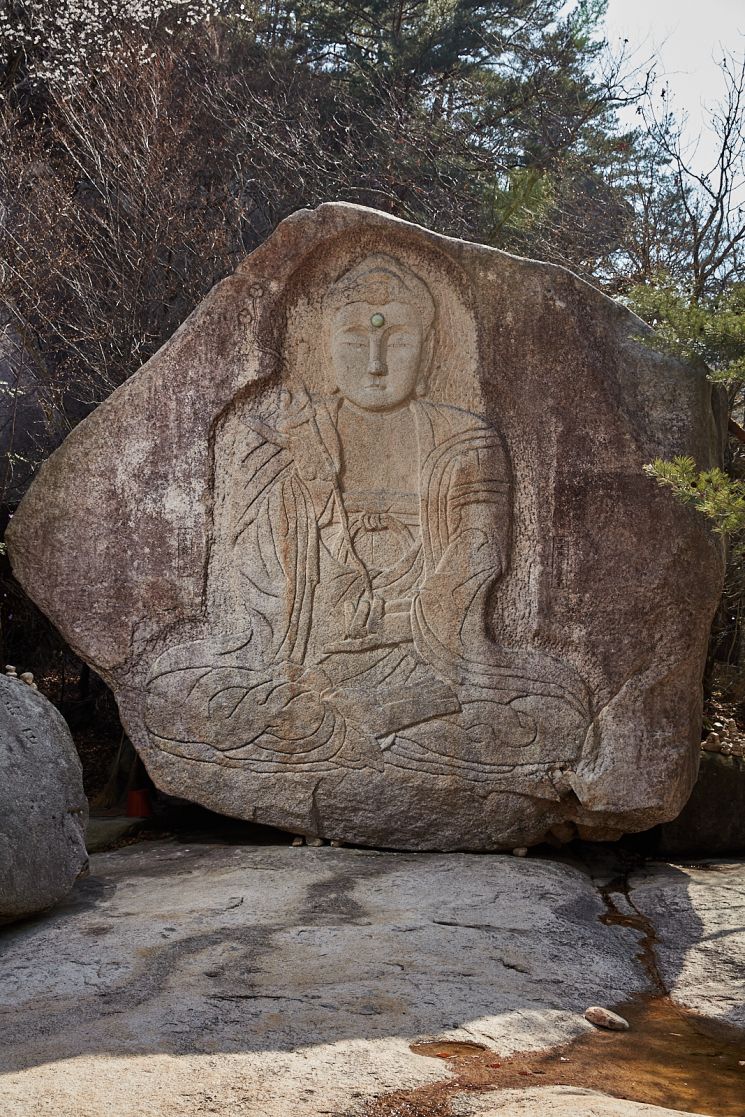
The hand gesture symbolizing the Buddha and Bodhisattvas is the Yonghwashuin (龍華手印). Both hands hold a long bundle-shaped flower branch. The realistic carving technique combined with creative expressions related to contemporary Buddhist paintings contributes to its high artistic value.
‘Mireukwonmyeong Bronze Drum’ is a metal drum made in the 20th year of King Myeongjong’s reign in Goryeo (1190) to be hung at Mireukwon (彌勒院). Mireukwon was the successor of Injaewon (仁濟院), a temple located in Gongju, Chungnam. The bronze drum is a Buddhist ritual instrument and a Brahmanical sound instrument used in Buddhist ceremonies. It is also called guk (禁口), banja (盤子), or so-buk (쇠북). It was mainly used to signal the time for offerings or to gather people.
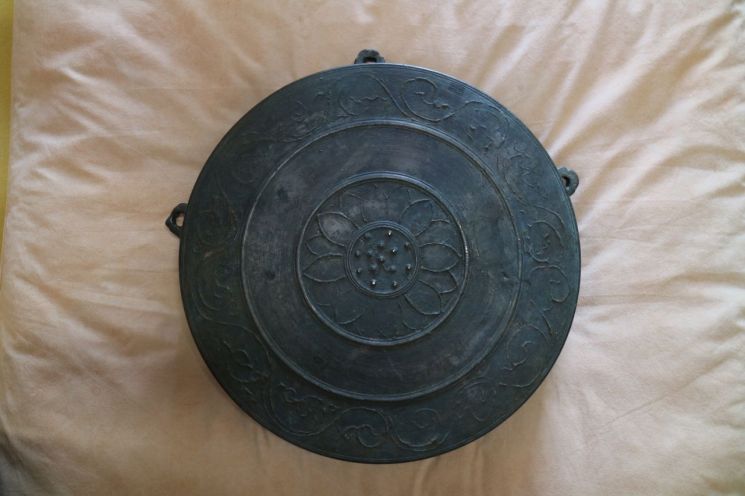
The ‘Mireukwonmyeong Bronze Drum’ has a banja (盤子) shape with an open back. It has three handles, and inside, sixteen lotus petals are arranged around the striking base (撞座). Fourteen lotus seeds are embossed inside the petals. The Cultural Heritage Administration stated, “The carving craftsmanship of the patterns is excellent, and the casting techniques can be confirmed, making it a precious work.”
© The Asia Business Daily(www.asiae.co.kr). All rights reserved.



















