On the morning of the 29th, Lee Do-hoon, Head of the Korean Peninsula Headquarters, consulted and then discussed current issues with Kim Jeong-han, Director of the Asia-Pacific Bureau
Attention on progress in talks... Japanese government insists by the 28th "South Korea must propose a solution to forced labor"
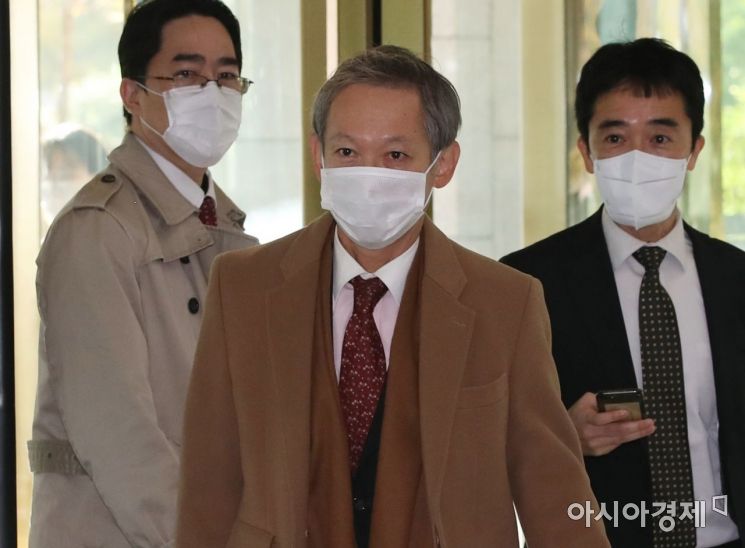 Takizaki Kigeki, Director-General for Asia and Oceania at the Japanese Ministry of Foreign Affairs, is entering the Ministry of Foreign Affairs building in Jongno-gu, Seoul on the 29th to attend the Korea-Japan director-general level diplomatic talks. Photo by Kang Jin-hyung aymsdream@
[Asia Economy Reporter Lim Cheol-young] Amid persistent differences between South Korea and Japan over pressing issues such as forced labor compensation during Japanese colonial rule, export controls, and the discharge of contaminated water from the Fukushima nuclear plant into the ocean, senior-level diplomatic officials from both countries held a face-to-face meeting for the first time in eight months.
According to the Ministry of Foreign Affairs on the 29th, from 10:30 a.m., Kim Jeong-han, Director-General of the Asia-Pacific Bureau at the Ministry of Foreign Affairs, and Takizaki Shigeki, Director-General of the Asia and Oceania Bureau at Japan’s Ministry of Foreign Affairs, conducted director-general level consultations at the Ministry of Foreign Affairs building in Doryeom-dong, Jongno-gu, Seoul. This was the first in-person director-general level consultation between South Korea and Japan since February 6, eight months ago. In June, consultations were held via video conference due to the spread of COVID-19, but no progress was made in narrowing differences. Director-General Takizaki is scheduled to depart on the 30th after completing consultations with key Korean counterparts.
As this is the first director-general level consultation since Prime Minister Suga took office, attention is focused on whether there will be any progress in the talks. However, given the significant differences between the two countries on outstanding issues, it is considered unlikely that a dramatic turning point will be reached.
Interest centers on whether the South Korean and Japanese diplomatic officials can open the door to dialogue through this face-to-face meeting. In particular, despite Prime Minister Suga’s repeated tough remarks regarding the forced labor compensation issue, expectations are low, but there is curiosity about whether the Japanese side will present any advanced proposals.
Ahead of the resumption of director-general level consultations after eight months, remarks dampening hopes for improved relations continued within Japan. At a regular press conference the previous day, Kato Katsunobu, Chief Cabinet Secretary of Japan, said that they plan to exchange views on issues including forced labor during Japanese colonial rule, emphasizing, "We have consistently stated that all procedures related to the South Korean Supreme Court ruling clearly violate international law, and we are strongly demanding that South Korea promptly present a solution acceptable to Japan."
It is also of interest whether discussions were held during this face-to-face consultation regarding the trilateral summit between South Korea, China, and Japan, which the Moon Jae-in administration aims to hold in December. Japan has already requested South Korea to resolve the forced labor issue and has indirectly indicated that Prime Minister Suga’s visit to South Korea would be difficult if an appropriate response is not made. Additionally, issues such as export controls unilaterally imposed by the Japanese government since July last year and the discharge of contaminated water from Fukushima are also believed to have been on the discussion table.
Meanwhile, Takizaki, who also serves as Japan’s chief representative for North Korea nuclear negotiations, met with Lee Do-hoon, Director-General of the Ministry of Foreign Affairs’ Office for Peace and Security Affairs on the Korean Peninsula, at 9 a.m. before the director-general level consultations. The two chief representatives likely shared assessments of the situation on the Korean Peninsula and exchanged views on Japan’s concerns regarding the abduction of Japanese nationals by North Korea.
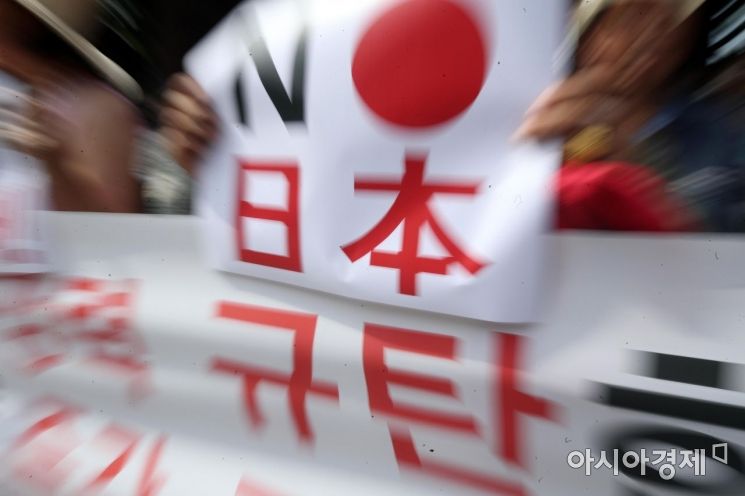 Officials from the Korea Senior Citizens Association of the New Era held a rally on the 6th in front of Tapgol Park in Seoul, condemning the Japanese government and urging the cessation of economic retaliation, as well as an apology and compensation for forced labor victims. Photo by Kim Hyun-min kimhyun81@
© The Asia Business Daily(www.asiae.co.kr). All rights reserved.


















