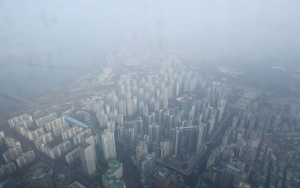
Government Announces 'Cheongnyangni Station Metropolitan Transfer Center Comprehensive Plan'
Introduction of Proven Convenient Transportation Facilities
Implementation of GTX-B and C Line Horizontal Transfers, Promotion of Underground Bus Transfer Center
Integrated Concourse for User Convenience
Plans to Develop the Area as an Economic and Living Hub Beyond a Transportation Center
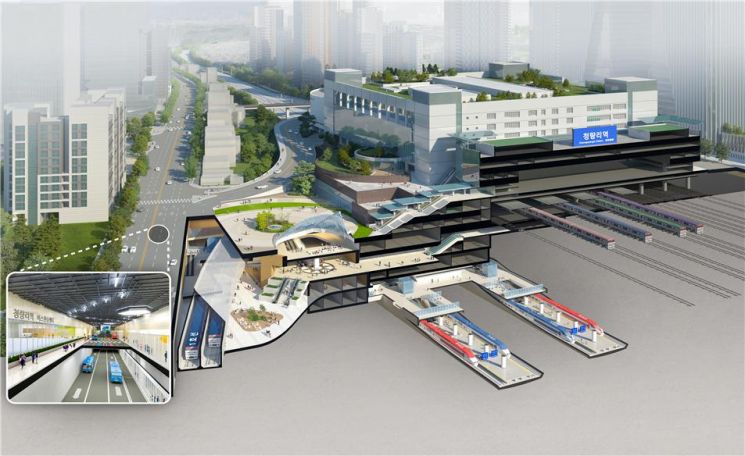 Cheongnyangni Station Metropolitan Transfer Center Comprehensive Plan (Provided by the Ministry of Land, Infrastructure and Transport)
[Asia Economy Reporter Lee Chun-hee] Cheongnyangni Station is set to be reborn as a transportation hub in the northeastern region with convenient transfer conditions following the opening of the Seoul Metropolitan Area’s Great Train Express (GTX) B and C lines. Numerous transportation facilities proven for convenience in other areas, such as horizontal transfers between lines and an underground integrated transfer center, will be introduced.
The Ministry of Land, Infrastructure and Transport’s Metropolitan Transportation Committee, together with the Seoul Metropolitan Government, Korea Rail Network Authority, and Korea Railroad Corporation (KORAIL), announced the "Comprehensive Plan for Cheongnyangni Station Metropolitan Transfer Center" on the 27th.
This plan was prepared to proactively respond to the change in status of Cheongnyangni Station, which will become a key node in metropolitan transportation with the opening of GTX-B and C lines, to establish a revolutionary transfer system, and furthermore, to develop the area into a northeastern metropolitan hub where jobs, culture, and housing coexist.
Currently, Cheongnyangni Station, which connects various railway lines including the Gangneung Line and Yeongdong Line KTX, Gyeongchun Line, Jungang Line, Taebaek Line, Gyeongwon Line, Seoul Metropolitan Subway Line 1, Gyeongui-Jungang Line, and Suin-Bundang Line, as well as 46 bus routes, is a large-scale transfer station used by an average of 150,000 people daily.
However, the underground platform for Line 1 and the aboveground railway platforms are separated, and due to the discontinuity of the central bus lanes and the absence of a turnaround facility for metropolitan buses, user convenience and safety are seriously compromised. According to the Ministry of Land, Infrastructure and Transport, the current transfer time between transportation modes at Cheongnyangni Station is 3 to 5 minutes, with a service level rated D to E.
Additionally, around Wangsanno Road in front of Cheongnyangni Station, 22 bus routes (operating 2,400 times daily) detour around the station for turnarounds, resulting in an average speed of about 20 km/h during rush hours. This area was also identified in 2018 as the location with the highest number of pedestrian accidents involving elderly people in Seoul.
Platform design enabling 'immediate transfers'... Underground bus transfer center enhances both convenience and safety
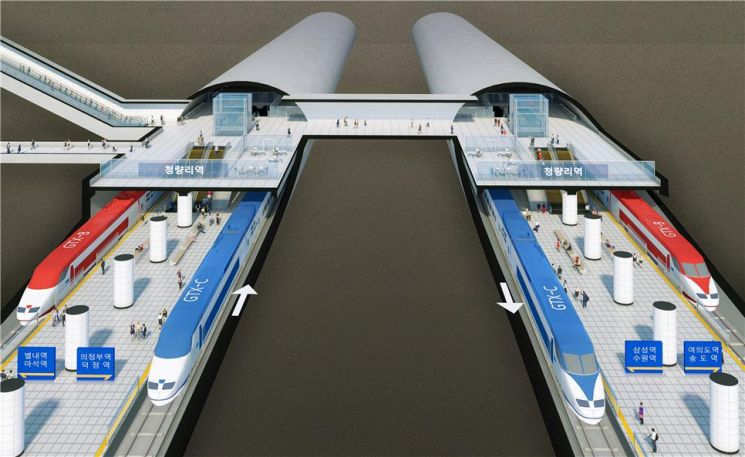 Cheongnyangni Station GTX-B·C Horizontal Transfer Conceptual Diagram (Provided by the Ministry of Land, Infrastructure and Transport)
The government plans to address these issues, which could worsen with the opening of GTX, by implementing this plan as a turning point and developing Cheongnyangni Station into the transportation, economic, and living center of the northeastern region.
The most notable plan is the introduction of horizontal transfers between GTX-B and C lines. This system allows transfers without separate movement by distinguishing directions toward Seoul city and Gyeonggi Province, similar to the transfer systems currently implemented at Gimpo Airport Station (Airport Railroad-Line 9) and Geumjeong Station (Line 1-Line 4).
The government especially plans to adjust GTX operation times and intervals to minimize transfer waiting times, establishing a 'second-level' transfer system. This is expected to dramatically improve accessibility between northern and eastern Gyeonggi and southern Seoul and Gyeonggi. The Ministry of Land, Infrastructure and Transport forecasts that travel from GTX-B Maseok Station to GTX-C Government Complex Gwacheon Station will take only 32 minutes.
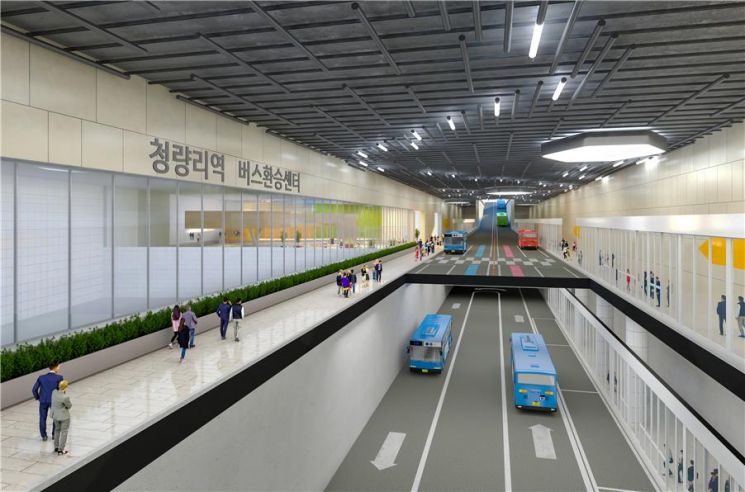 Conceptual diagram of the underground bus transfer center at Cheongnyangni Station. The upper level is used by buses passing through Cheongnyangni Station, while the lower level is used by buses turning around for travel to the eastern Gyeonggi region. (Provided by the Ministry of Land, Infrastructure and Transport)
The connecting transportation system centered on GTX will also be newly reorganized. According to the Ministry of Land, Infrastructure and Transport, transfer demand at Cheongnyangni Station is expected to reach 140,000 by 2030, with 84% of that demand related to GTX.
The government plans to reorganize the surface transportation system by focusing bus stops around Wangsanno Road into a bus transfer center to reduce transfer routes between buses and railways, improve traffic congestion, and enhance pedestrian safety. In particular, by establishing a bus transfer center, the currently disconnected central bus lanes at Cheongnyangni Station will be reconnected, enabling use of the central bus lanes from Hapjeong Station to the Guri city boundary, while also providing detour facilities for metropolitan buses heading to eastern Gyeonggi to reduce traffic congestion.
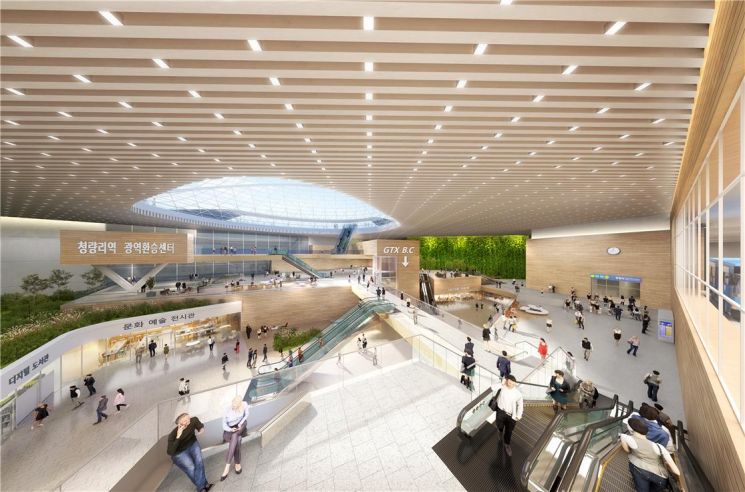 Cheongnyangni Station Metropolitan Transfer Center Integrated Waiting Room Conceptual Diagram (Provided by the Ministry of Land, Infrastructure and Transport)
The government plans to install an integrated waiting hall in this bus transfer center to optimize transfer routes. The integrated waiting hall will be designed as an open space, including lounges for transfer passengers as well as spaces for culture and arts. Additionally, the government is carefully considering constructing the bus transfer center underground to further smooth traffic flow. Through this, the average transfer time is expected to be reduced to the 2-minute range (grade C).
Cheongnyangni Station to be developed not only as a transportation hub but also as an economic and living center
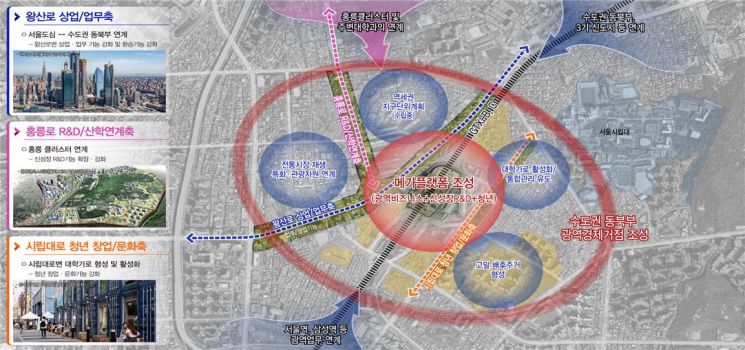 Conceptual Diagram of the Cheongnyangni Station Area Space (Provided by the Ministry of Land, Infrastructure and Transport)
Along with the creation of the metropolitan transfer center, plans are underway to develop the Cheongnyangni Station area into a metropolitan transportation, economic, and living hub that drives balanced development and growth in the northeastern region.
Currently, the Cheongnyangni Station area is densely populated with about 10 universities including Korea University and the University of Seoul, as well as research institutions such as the Hongneung Bio Cluster, showing high potential for new growth development. However, infrastructure for employment and culture is considered very weak. According to the 2017 survey on the job-residence balance index, the northeastern region (Cheongnyangni Station area) scored 74, which is very low compared to 364 in the downtown area and 207.5 in the southeastern region. Furthermore, more than half of the buildings are over 30 years old, indicating severe aging, and cultural facilities are also very insufficient.
The government plans to strengthen commercial and business functions to create specialized jobs and foster new growth industries by leveraging synergies with the Hongneung Research Complex and nearby universities, while also introducing youth housing and cultural facilities in connection with these efforts. To this end, the government will establish a preemptive management plan for the surrounding area alongside the complex development of the Cheongnyangni Station area to manage the area integrally and enhance connectivity between regions. Additionally, plans are being considered to create a 'commercial and business axis' connecting to the city center centered on Cheongnyangni Station, an 'R&D and industry-academia collaboration axis' connecting to the Hongneung Cluster, and a 'youth entrepreneurship and culture axis' connecting to the University of Seoul.
Choi Ki-joo, Chairman of the Metropolitan Transportation Committee, said, "The opening of GTX is expected to significantly change the transportation paradigm in the metropolitan area. In preparation, it was necessary to plan both the GTX-linked transportation system and the spatial plan for the surrounding area simultaneously, so we prepared a comprehensive plan together with the Seoul Metropolitan Government." He added, "We will work more closely with related organizations such as the Seoul Metropolitan Government and KORAIL to ensure that the plans conceived this time are implemented smoothly in connection with GTX."
© The Asia Business Daily(www.asiae.co.kr). All rights reserved.

![User Who Sold Erroneously Deposited Bitcoins to Repay Debt and Fund Entertainment... What Did the Supreme Court Decide in 2021? [Legal Issue Check]](https://cwcontent.asiae.co.kr/asiaresize/183/2026020910431234020_1770601391.png)