Rep. Yoon Mi-hyang Points Out Issues with Caregivers' Break Conditions at National Audit
Monthly Payment Reduced by 310,000 KRW Compared to Standard Fee...Break Spaces Also Insufficient
Minister Lee Jae-gap of Employment Ministry: "Will Coordinate with Welfare Ministry to Prepare Measures"
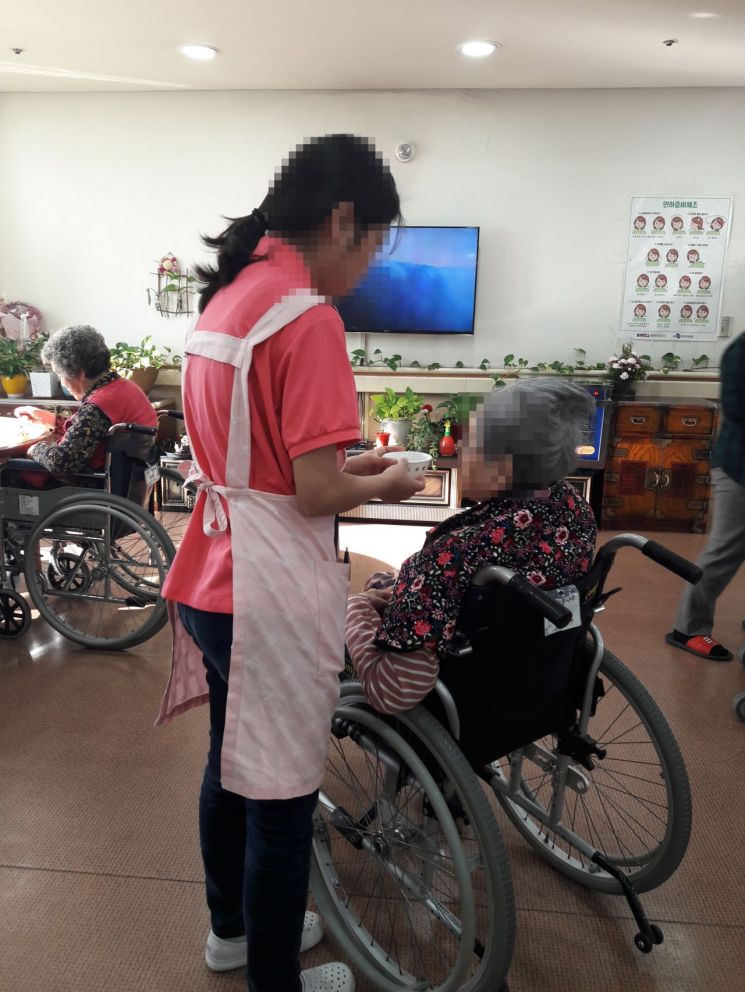
[Asia Economy Reporter Kim Bo-kyung] It has been revealed that care workers providing elderly care labor at facility nursing institutions are being forced to take extended break times far beyond the legally mandated rest periods, yet in reality, they are unable to rest even during these breaks.
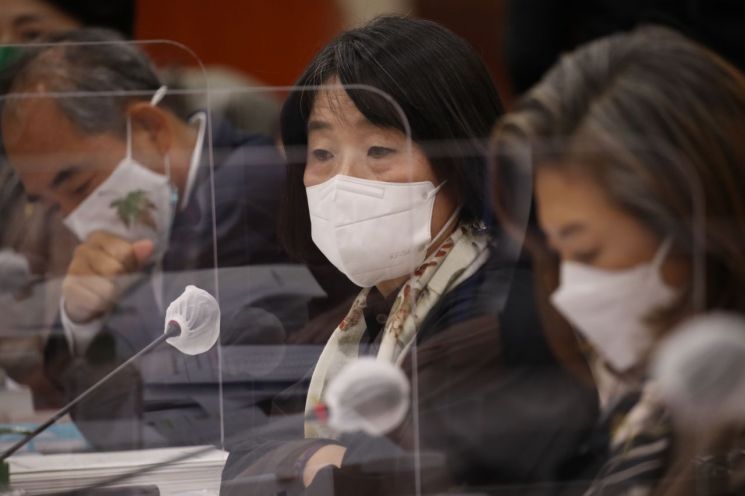
On the 26th, Yoon Mi-hyang, a member of the National Assembly's Environment and Labor Committee from the Democratic Party of Korea, criticized the break time conditions and the issue of "unpaid labor" of care workers during the Ministry of Employment and Labor's comprehensive audit.
Based on an 8-hour workday, the legal break time is one hour, and for 24-hour shifts, it is 30 minutes for every 4 hours. However, it was found that each facility nursing institution arbitrarily assigns break times, resulting in break periods ranging from 6 to as much as 11 hours during 24-hour shifts.
Despite these extended break times, schedules are arranged so that workers often have to perform tasks during breaks. Facilities increase their profits by only extending unpaid break times on contracts.
Care worker Lee Mi-young, who appeared as a witness at the audit, claimed, "Because the break times are so long, the monthly working hours become insufficient, and sometimes forced use of annual leave is applied."
Unpaid labor becomes even more severe during night shifts. During night work, one care worker may be responsible for multiple elderly individuals, and even if there is break time, they must check on the care recipients every 30 minutes and respond to calls frequently. However, rather than improving this situation, unlimited unpaid break times are being applied, including significantly extended break periods during nighttime hours.
According to a 2018 survey conducted by the Ministry of Health and Welfare, care workers were found to be paid 13.91% less than the standard wage. This means they are missing out on approximately 314,000 KRW per month compared to the standard rate. Care worker Lee expressed that the reality is far below the wages set by the government standards.
The lack of independent rest spaces for care workers was also raised as an issue. It was found that proper rest rights are not guaranteed, with workers resting by spreading mats between beds or lying down on several chairs lined up.
This situation also leads to safety concerns for the elderly. Care worker Lee said, "Recently, during a night break when one care worker was responsible for 35 elderly individuals, there was a case where an elderly person swallowed something they should not have and passed away," adding, "Care workers want to provide dignified care, but the reality does not allow it."
Care workers could not stop their caregiving labor during the COVID-19 pandemic, but it was also pointed out that care workers at facility nursing institutions were not included in the essential worker categories designated by the government.
Assemblywoman Yoon said, "Safe care comes from safe jobs. Although the scope and importance of care in our society are gradually expanding, if care workers themselves do not receive care from society, the quality of public care will inevitably decline."
She continued, "The government must establish and implement plans to improve treatment, including labor supervision and workforce supplementation, so that the difficulties care workers face in the field can be resolved."
In response, Minister of Employment and Labor Lee Jae-gap stated, "The Essential Workers Task Force will actively cooperate with the Ministry of Health and Welfare to prepare measures that ensure actual rest during break times."
© The Asia Business Daily(www.asiae.co.kr). All rights reserved.


















