[Asia Economy Reporter Seongpil Jo] The retrial of Samsung Electronics Vice Chairman Lee Jae-yong's bribery case related to the state affairs manipulation scandal will resume on the 26th. It has been nine months since the special prosecutor team led by Park Young-soo filed a motion to disqualify the presiding judges. The motion was dismissed by the Supreme Court last month. The retrial, which is restarting, is expected to see even fiercer legal battles over sentencing, as the effectiveness of the Compliance Committee, which both sides have disputed, and the variable of a separate indictment related to suspicions of management succession are intertwined.
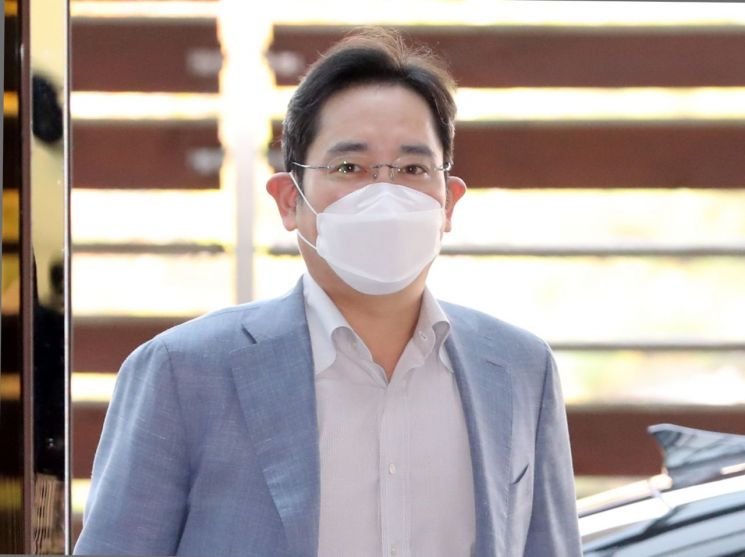
Lee Jae-yong's Retrial Battles Over Sentencing
The Seoul High Court Criminal Division 1 (Chief Judge Jung Jun-young) will hold a preparatory hearing for Vice Chairman Lee's retrial of the state affairs manipulation case on the afternoon of the 26th. The preparatory hearing is a procedure before the formal trial where the court listens to both parties' plans for evidence presentation and selects necessary evidence and witnesses. Although the defendant is not obligated to attend, Lee is expected to appear in court as the court has issued a summons.
This trial does not dispute guilt or innocence. Earlier, the Supreme Court's full bench overturned the second trial's ruling that considered the three horses provided by Samsung to Choi Seo-won (formerly Choi Soon-sil), the "secret figure" of the Park Geun-hye administration, and the support funds for the Winter Sports Gifted Center as not bribery, and judged these parts as guilty, sending the case back to the Seoul High Court. Since the Supreme Court issued a guilty verdict, the retrial must accept the appellate court's judgment as is, due to binding force (the binding power that prevents arbitrary withdrawal or change of the Supreme Court's ruling).
The key issue is the sentence. Lee was originally sentenced to 2 years and 6 months in prison with a 4-year probation. However, since the full bench judged the amount of embezzlement and bribery to be 8.6 billion KRW, more than the original 3.6 billion KRW, Lee's sentence is likely to change. Under the Act on the Aggravated Punishment of Specific Economic Crimes, if the embezzlement amount exceeds 5 billion KRW, a life sentence or imprisonment of 5 years or more must be imposed. Probation can only be given for imprisonment of 3 years or less, so it is practically impossible for Lee to receive a suspended sentence for imprisonment.
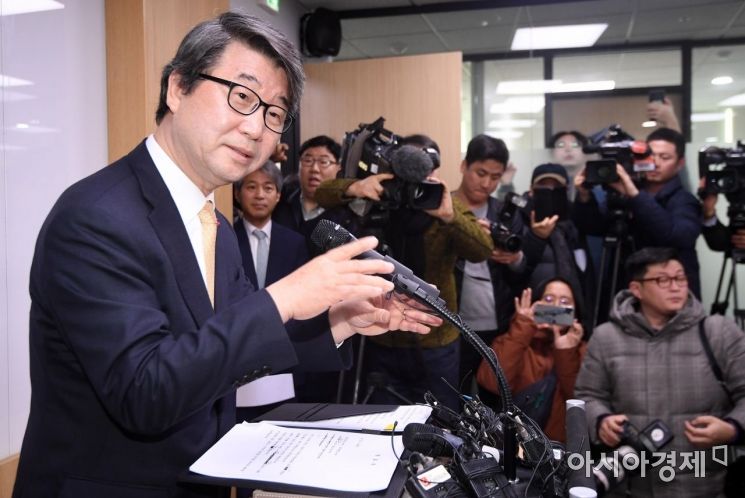
Trial Halted for 9 Months Over Compliance Committee Card
In this unfavorable situation, Lee's side has been making every effort to obtain a suspended sentence in the retrial. They established the Compliance Committee as proposed by the court and issued a public apology in May following its recommendations. According to the court's sentencing guidelines, if the defendant shows "sincere remorse" in the embezzlement charge, which is Lee's core allegation, this can be taken into account to decide a favorable sentence for the defendant. If the Compliance Committee is judged to have been established and operated as a reflective measure to prevent Lee from committing crimes again, it could be a mitigating factor in sentencing.
After Samsung set up the Compliance Committee, the court said it would examine whether it is effectively operated and reflect this in determining Lee's sentence. The court has gained attention for applying so-called "therapeutic jurisprudence" in various criminal trials. Therapeutic jurisprudence means that the court should not only judge guilt or innocence and punish but also play a healing role. The court indicated it would use the Compliance Committee for a similar purpose in Lee's case.
The special prosecutor immediately opposed this. They argued that using the effectiveness of the Compliance Committee as a mitigating factor in sentencing has no comparative legal basis. They contended that applying standards that are limited to companies, not individual executives, as in the U.S., to this case's sentencing is inconsistent and biased, showing prejudgment. When the court did not accept these claims, the special prosecutor filed a motion to disqualify the judges in February.
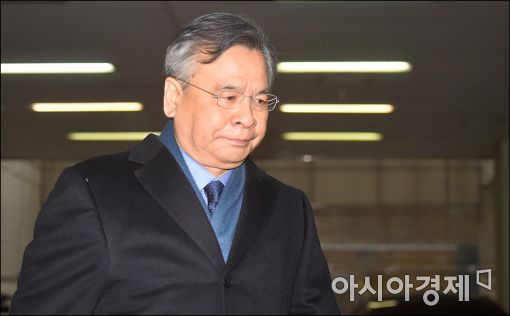 Special Prosecutor Park Young-soo
Separate Indictment Over Management Succession Suspicion Could Be a Variable
With the Supreme Court finally dismissing the special prosecutor's motion to disqualify, the retrial of Lee Jae-yong is expected to continue the intense dispute over the Compliance Committee. Earlier, on the 15th, the court decided to appoint former Constitutional Court Justice Kang Il-won as a professional investigator to evaluate Samsung's Compliance Committee operation. The special prosecutor opposed this and requested the decision be revoked. A special prosecutor official said, "The presiding judge twice requested the defendant to establish the Compliance Committee, and now a professional investigator appointed by the judge is evaluating it, raising doubts about whether a fair trial can be conducted."
Lee's separate indictment over suspicions of management succession is also expected to be a variable. Depending on the situation, the retrial of the state affairs manipulation case and the first trial of the Samsung merger and succession suspicion case may proceed in parallel. Both cases share the common background of prosecution and indictment based on Lee's management succession. Previously, the special prosecutor also requested to submit records from the Samsung BioLogics accounting fraud suspicion case as evidence in this retrial. However, the court rejected this evidence, stating it did not align with the Supreme Court's retrial purpose.
© The Asia Business Daily(www.asiae.co.kr). All rights reserved.


















