'Deaths After Vaccination' News Continues to Emerge
Scattered Outbreaks of Cluster Infections from Metropolitan Area Hospitals
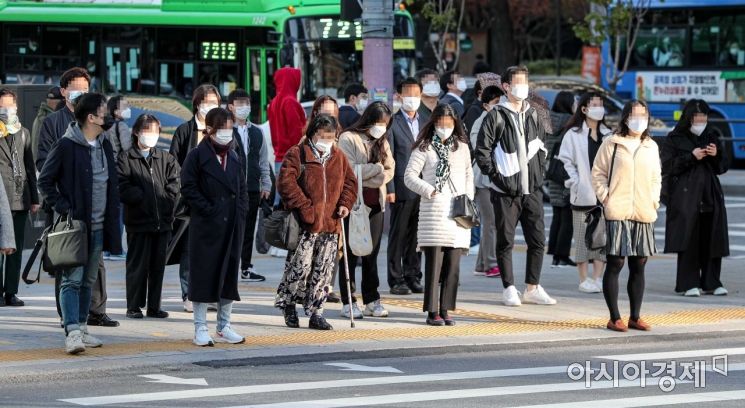 On the 23rd, marking Sanggang (霜降), the solar term when frost falls, and the coldest day of this autumn so far, office workers are heading to work near the Sejongno intersection in Jongno-gu, Seoul. Photo by Jinhyung Kang aymsdream@
[Asia Economy Reporter Choi Dae-yeol] The number of new daily confirmed cases of the novel coronavirus infection (COVID-19) exceeded 150 for the first time in a month and a half. This was due to cluster outbreaks centered around hospitals. As the weather has become colder, making it easier for infectious diseases to spread, recent concerns about the flu vaccine have sparked fears of simultaneous outbreaks of other infectious diseases, so-called twin-demic. Twin-demic is the worst-case scenario feared by health authorities as it increases the burden on frontline medical systems and can cause confusion among the general public.
New COVID-19 Cases at 151... Cluster Infections Persist
According to the Central Disaster and Safety Countermeasures Headquarters for COVID-19 on the 23rd, as of midnight, 151 new confirmed cases were reported domestically. This is an increase from the previous day (121 cases), continuing a two-day streak of triple-digit cases. Among them, 138 cases are presumed to be domestic transmissions, and 17 are imported cases.
The number of new daily cases exceeding 150 is the first time in 42 days since October 11. The problem is that this trend is likely to continue for some time, with patients continuing to emerge mainly in high-risk group facilities such as nursing and rehabilitation hospitals. Although it has been about ten days since social distancing was lowered to level 1, the patient trend has not eased, making the authorities' slogan of 'harmony between daily life and quarantine' seem hollow.
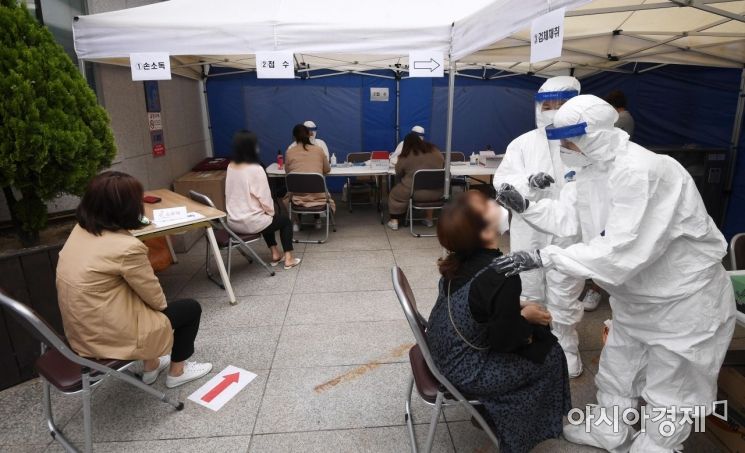 On the 21st, academy instructors in the district are undergoing diagnostic tests at a temporary screening clinic for the novel coronavirus disease (COVID-19) installed in front of the Daechi 2-dong Community Service Center in Gangnam-gu, Seoul. Photo by Hyunmin Kim kimhyun81@
After launching large-scale testing mainly in facilities where vulnerable groups such as nursing hospitals and welfare facilities in the metropolitan area gather, additional cluster infections are being identified. Such cluster infections within these facilities have a high potential to lead to casualties, causing health authorities to remain vigilant. According to the authorities, the nationwide occupancy rate of beds in infectious disease-dedicated hospitals is less than 20%, and in regions like the metropolitan area or Gyeongsang area where recent cluster infections have occurred, more than half of the beds dedicated to severe patients remain available, indicating sufficient capacity to treat patients. However, since cluster outbreaks like the recent ones can cause a rapid concentration of elderly patients with underlying diseases or weakened immunity, the situation cannot be viewed with complacency.
"Elderly Should Receive Vaccinations in Comfortable Environments"
While concerns about sporadic cluster infections of COVID-19 persist, the spread of uncertain anxiety surrounding flu vaccinations is another issue worrying health authorities. COVID-19 and the flu have similar outward symptoms, making it difficult for medical staff to distinguish between them before diagnostic testing. If simultaneous outbreaks occur, the burden on frontline medical facilities will increase, and in the worst case, it could lead to the collapse of the medical system. Therefore, health authorities are mobilizing all policy measures to suppress the flu epidemic, which has vaccines and treatments available.
Although reports of deaths following vaccination have been pouring in, it takes several weeks to determine the cause of death, so anxiety among citizens remains high. The prolonged COVID-19 situation, lasting over ten months, has increased fatigue among frontline epidemiological investigators, making investigations into flu vaccines less smooth, which is also a concerning factor.
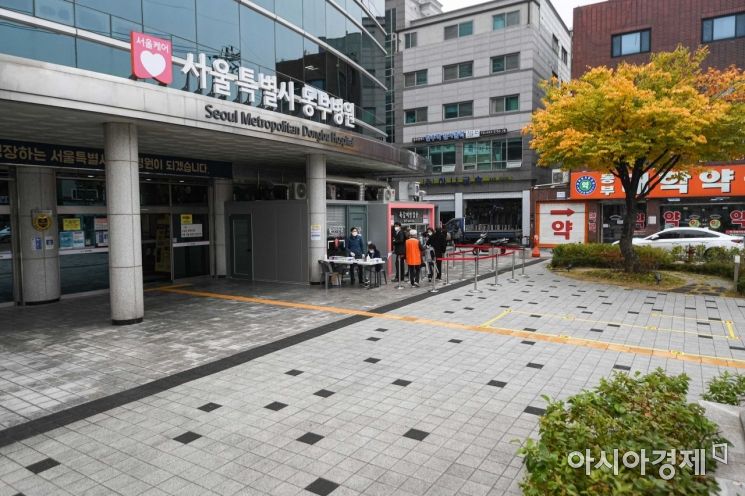 On the 22nd, cases of death due to flu vaccines have been occurring nationwide. At Seoul Dongbu Hospital in Dongdaemun-gu, Seoul, fewer people than usual are registering to receive the flu vaccination. Photo by Jinhyung Kang aymsdream@
Regarding the flu vaccine, which has been administered for a long time with proven safety, the medical community views the recent controversy over 'deaths after vaccination' as unusual. Professor Jeong Jae-hoon of Gachon University College of Medicine (Preventive Medicine) stated on his social network service (SNS), "Concerns about vaccine distribution and deaths after vaccination stem from distrust in vaccine management, but the special circumstances of COVID-19 and excessive attention are making the situation extreme."
Professor Kim Woo-joo of the Department of Infectious Diseases at Korea University Guro Hospital said, "Every year, about 3,000 people die from severe pneumonia or worsening underlying diseases caused by the flu due to not getting vaccinated. For the elderly, it is best to get vaccinated in a relaxed and comfortable environment, such as getting a good night's sleep the day before vaccination, dressing warmly, making a reservation, and not waiting long before vaccination."
© The Asia Business Daily(www.asiae.co.kr). All rights reserved.
![Clutching a Stolen Dior Bag, Saying "I Hate Being Poor but Real"... The Grotesque Con of a "Human Knockoff" [Slate]](https://cwcontent.asiae.co.kr/asiaresize/183/2026021902243444107_1771435474.jpg)


















