32 Deaths After Flu Vaccination
Imported Vaccine Causing Shortage After 1 Death
Experts Say "No Difference in Safety and Efficacy"
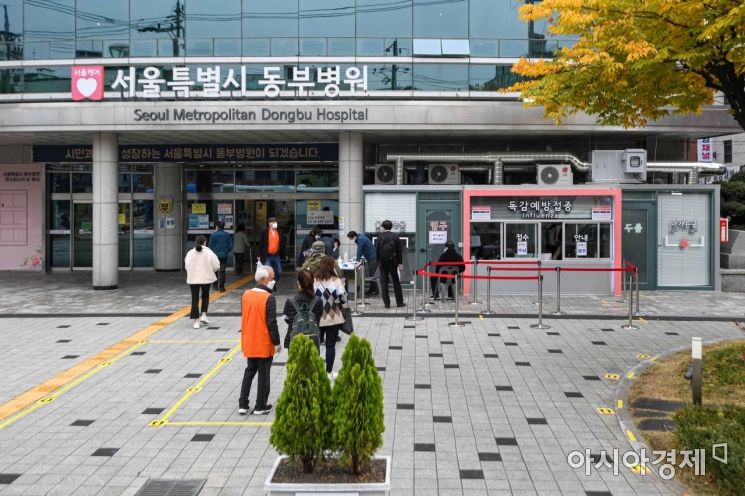 On the 22nd, cases of death due to flu vaccines have been occurring nationwide. At Seoul Dongbu Hospital in Dongdaemun-gu, Seoul, fewer people than usual are registering to receive the flu vaccination. Photo by Jinhyung Kang aymsdream@
[Asia Economy Reporters Seo So-jeong and Jeong Dong-hoon] As cases of death following influenza vaccination continue to occur, public anxiety has reached its peak. Twenty people lost their lives in just one day yesterday. Since most cases involved 'domestic vaccines,' citizens are wandering around clinics in search of imported vaccines, which seem relatively safer. Although experts say there is no evidence that imported vaccines are safer, it seems unlikely that this social atmosphere will change.
At 9 a.m. on the 23rd at an internal medicine hospital in Mapo-gu, Seoul, elderly people over 70 and children who appear to be kindergarteners are waiting in line holding their mothers' hands. Although children and the elderly are eligible for free vaccination, these people are choosing to pay out of pocket to receive imported vaccines to avoid domestic ones. Choi Seo-hee (37), who visited the hospital with her 8-year-old son, said, "Yesterday, I couldn't find any place that was administering vaccinations at all, so today I have been waiting since 8 a.m." A hospital official said, "We are receiving many calls asking about the vaccine manufacturer, and imported vaccines sell out on the day they arrive."
There are 10 companies supplying influenza vaccines: 8 domestic and 2 foreign. There are 12 vaccine products. According to the Korea Disease Control and Prevention Agency (KDCA), the number of deaths by manufacturer is as follows: SK Bioscience 10, Boryung Biopharma 5, GC Green Cross 5, LG Chem 3, Korea Vaccine 1, and Sanofi 1. After a death occurred following vaccination with Sanofi's imported vaccine (Paxigrip Tetra) on the afternoon of the previous day, deaths related to imported vaccines have also been reported.
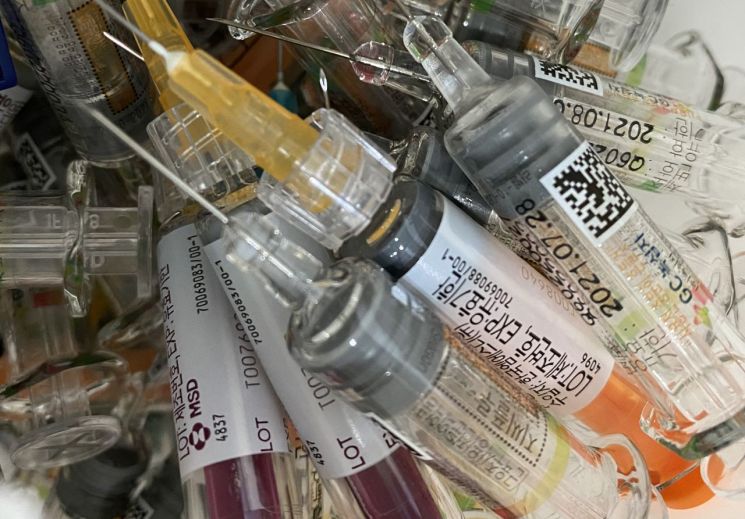
Experts generally agree that there is no difference in safety or efficacy between domestic and imported vaccines. The components, raw materials, and distribution processes are also similar. Some experts have raised the possibility that 'toxins' may have entered during the manufacturing process of egg-based vaccines, but epidemiological investigations are still ongoing. Professor Kim Woo-joo of the Department of Infectious Diseases at Korea University Guro Hospital said, "Most of the deceased are elderly, and due to the seasonal characteristics of the changing seasons, deaths among the elderly and influenza vaccinations may have coincidentally overlapped. However, since citizens are anxious, it is necessary to reduce the number of vaccinations and quickly determine the cause of death."
Meanwhile, as of midnight on the 23rd, the number of deaths following influenza vaccination nationwide has reached 32. This is an increase of 20 from 12 deaths as of midnight the previous day. It is also 7 more than the 25 officially counted by the KDCA at 4 p.m. on the 22nd. After a 17-year-old died in Incheon on the 16th, deaths have been rapidly occurring nationwide, mainly among the elderly, prompting health authorities to act urgently.
Health authorities are investigating the correlation between vaccination and death, and since a causal relationship has not yet been concretely established, they plan to continue vaccinations. However, considering the increased public anxiety, the KDCA will hold an expert meeting on the 23rd to devise countermeasures. The KDCA plans to hold the 'Vaccination Damage Investigation Team Meeting' and the 'Vaccination Expert Committee' via video conference on the same day to comprehensively review and conclude on the relationship between vaccination and death, as well as whether to maintain the national vaccination program.
© The Asia Business Daily(www.asiae.co.kr). All rights reserved.


















