"Considering Earnings Improvement Outlook and Financial Buffer
Not at a Level to Downgrade Long-Term Credit Rating"
If Kona EV Battery Pack Replacement Is Inevitable, Costs May Increase
[Asia Economy Reporter Minji Lee] Regarding the large-scale quality cost occurrence at Hyundai Motor Company and Kia Motors, opinions have emerged that the debt repayment ability of the two companies will not significantly deteriorate. On the 22nd, NICE Credit Rating stated, “The quality cost issue is not a negative factor that would lead to a downgrade of Hyundai and Kia’s long-term credit ratings.”
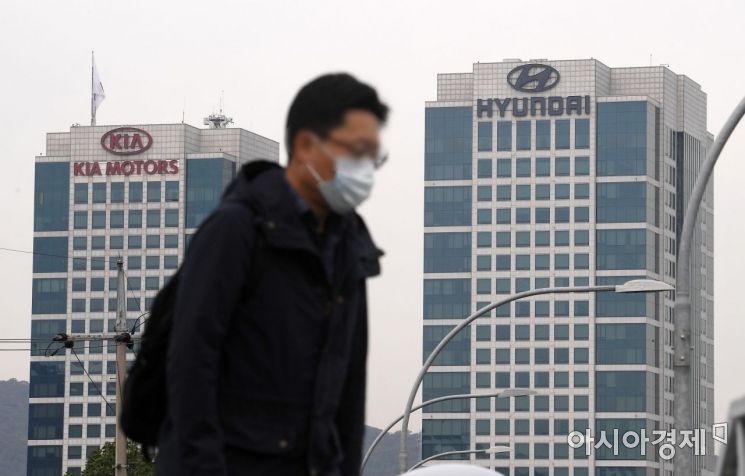
In the first half of this year, as the global automobile market sharply contracted due to the novel coronavirus (COVID-19) and fixed cost burdens increased, most finished car manufacturers recorded losses. However, Hyundai Motor Company and Kia Motors showed differentiated performance due to expanded domestic market sales and favorable exchange rate effects. Since last year, they have increased market share in major automobile markets such as the United States and Europe, recording operating profitability above the competitor average, indicating a trend of improving business competitiveness. Considering the scale of quality cost occurrence, a loss in the third quarter seems inevitable, but on an annual basis, pre-tax operating profit is estimated to remain positive.
Jaeho Choi, a researcher at the Corporate Evaluation Headquarters, emphasized, “This quality cost is a non-cash expense that will be reflected in cash flow over a long period, and considering the performance improvement outlook due to market demand recovery and solid financial buffers, it is not at a level to warrant a credit rating downgrade.”
However, concerns about the risk of the U.S. prosecutors’ investigation into the adequacy of the Theta engine recall and contingent costs are expected to persist. Researcher Choi said, “Contrary to the positions Hyundai and Kia have disclosed so far, engine-related quality costs have been occurring annually since 2017,” adding, “The two companies apply conservative standards and expect the risk of additional future costs to be resolved, but if the actual exchange rate increases more than predicted, costs are expected to rise further.”
Additionally, regarding the Kona EV recall, if it is determined that battery pack replacement is unavoidable, costs amounting to several hundred billion won are expected to occur. Researcher Choi diagnosed, “Cost sharing will be carried out depending on the level of responsibility between LG Chem and Hyundai Motor Company,” and “The Kona EV is currently the best-selling electric vehicle model within the group, so if quality issues expand, brand competitiveness will deteriorate.”
Finally, he added, “The credit ratings of Hyundai Motor Company and Kia Motors will be reviewed at the point when uncertain factors such as the automobile market’s response level to the COVID-19 resurgence, the recovery speed of the finished car market, and whether fines related to strengthened European environmental regulations are imposed become concrete.”
© The Asia Business Daily(www.asiae.co.kr). All rights reserved.