①Why Have Adverse Reactions Increased This Year?
②How Many People Have Died So Far?
③Can Vaccines Be the Cause of Death?
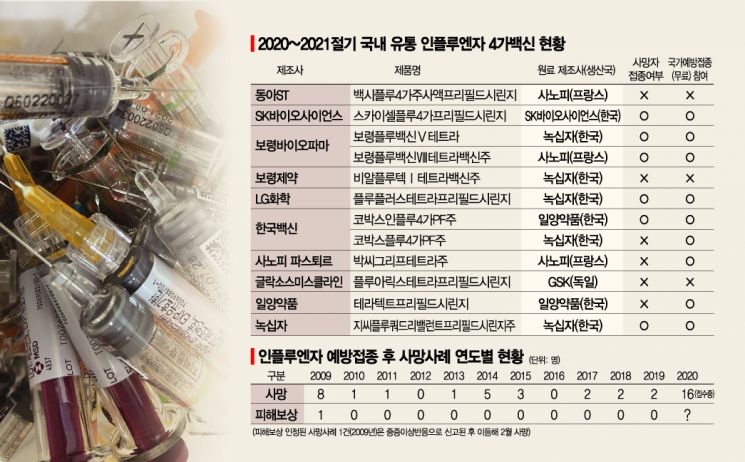
[Asia Economy Reporter Choi Dae-yeol] As deaths following influenza (flu) vaccinations continue to occur, vaccine phobia is spreading. The Korea Disease Control and Prevention Agency (KDCA) has decided to examine the exact cause of death through autopsy results of some deceased individuals and expert reviews. It is expected to take several weeks or more to determine the precise cause based on the autopsy results. However, health authorities stated that since 12.97 million flu vaccinations had been administered since last month (as of the 21st), which is an increase compared to previous years, and since deaths and adverse reaction cases have continuously occurred in past years as well, there is no need for excessive anxiety.
How many have died... 17 cases in the past 10 years with no causal relationship
First compensation case in 2009 involving one person
According to the KDCA and local governments, as of the morning of the 22nd, 16 people have died after receiving flu vaccinations. On the 16th, a high school student living in Incheon died 42 hours after vaccination, and since the start of free vaccinations for the elderly, 3 people died on the 20th, 6 on the 21st, and 6 more on the morning of the 22nd. Except for the high school student and a woman in her 50s who died the previous day, all were elderly aged 60 or older.
As death reports have been received consecutively, the authorities conducted epidemiological investigations on the recently deceased together with the vaccination damage investigation team composed of experts, and performed a primary review of medical records. So far, it has been judged that it is unlikely that the vaccine directly caused harm leading to death.
Kim Jung-gon, head of the pediatric department at Seoul Medical Center and leader of the damage investigation team, explained, "Many people who received the same vaccine showed no particular problems," and added, "We have ruled out issues with the vaccine itself."
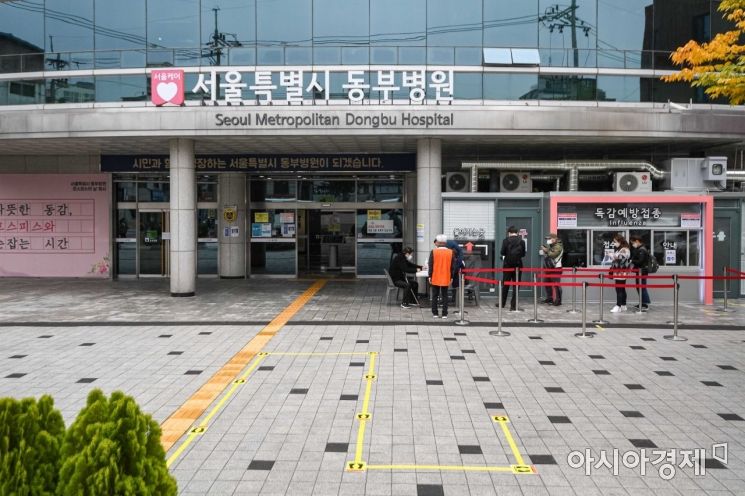 On the 22nd, cases of death due to flu vaccines are occurring nationwide, and at Seoul Dongbu Hospital in Dongdaemun-gu, Seoul, fewer people than usual are registering to receive the flu vaccination. Photo by Jinhyung Kang aymsdream@
Why are there so many adverse reactions this year?
Fever and allergy symptoms are typical
Impact of temperature exposure on follow-up management
According to the KDCA, 17 deaths have occurred after vaccinations in the past 10 years. All were concluded to have no causal relationship between vaccination and death. In 2009, eight people died after vaccination, and one of them was reported to have experienced a severe adverse reaction. That patient showed symptoms of weakness in the arms and legs about two days after vaccination and was later diagnosed with Miller-Fisher syndrome, a rare neurological disorder. During hospitalization, the patient developed aspiration pneumonia, which did not improve, and died about four months later in February of the following year. There were no underlying diseases. Except for this patient, there have been no cases recognized for compensation due to death after vaccination.
Typically, after flu vaccination, mild adverse reactions such as soreness at the injection site, fever, or cough may occur. Redness and swelling may develop, and Guillain-Barr? syndrome, an inflammatory disease caused by the immune system attacking nerves, can rarely occur. Anaphylaxis, an allergic hypersensitivity reaction, is also one of the rare but severe adverse reactions that can occur with all vaccines, including the flu vaccine.
This winter, 431 adverse reaction cases have been reported to authorities after flu vaccination (as of the 20th), with most being mild, including local reactions (111 cases), allergies (119 cases), and fever (93 cases). Considering that the number of reported adverse reactions was under 200 annually over the past three years, this is an increase compared to the past. However, this is more due to active monitoring by authorities rather than changes or problems with the vaccine. Previously, there were incidents where temperature control during transportation was inadequate or vaccines with white precipitates were recalled, prompting health authorities to directly call recipients to check for abnormalities. The large number of vaccinations early in the free vaccination program, driven by concerns about COVID-19 and shortages, also influenced this.
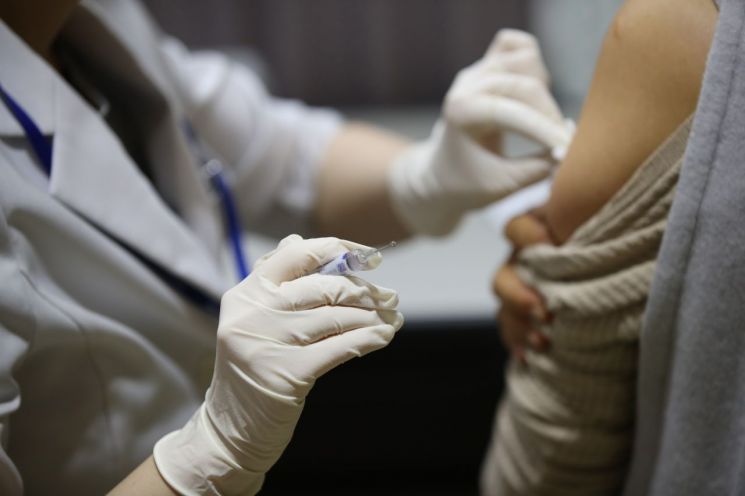 On the morning of the 22nd, a citizen is receiving a flu vaccination at the Seoul Eastern Branch of the Korea Association of Health Promotion in Seoul.
 Can 'death caused by vaccine' be confirmed?
Two cases possibly due to acute hypersensitivity
Other deaths require autopsy review
Authorities and the damage investigation team initially considered that two of the deceased might have died due to acute hypersensitivity reactions, as they died about 2 hours 30 minutes and 12 hours after vaccination. However, one family declined an autopsy, believing the death was due to illness, and the other was later found to have died from asphyxiation, making it more difficult to establish a causal relationship with the vaccine.
Most other deaths occurred more than a day after vaccination. In the case of a man in his 70s from Gochang, Jeonbuk, who was found dead second after vaccination, the National Forensic Service reportedly gave an initial opinion of unknown cause of death. Authorities plan to examine causal relationships by reviewing autopsy results of other deceased individuals and medical records that can reveal underlying diseases. The results are expected to take at least two weeks or more.
© The Asia Business Daily(www.asiae.co.kr). All rights reserved.
![Clutching a Stolen Dior Bag, Saying "I Hate Being Poor but Real"... The Grotesque Con of a "Human Knockoff" [Slate]](https://cwcontent.asiae.co.kr/asiaresize/183/2026021902243444107_1771435474.jpg)


















