Establishment of 'Internal Corruption Investigation Unit' in All Regional Police Agencies
Triple Review System for Cases Involving Current and Former Police Officers
Prohibition of Case Inquiries Among Fellow Officers
Mandatory Anti-Corruption and Integrity Education... Adoption of U.S.-Style Education Model
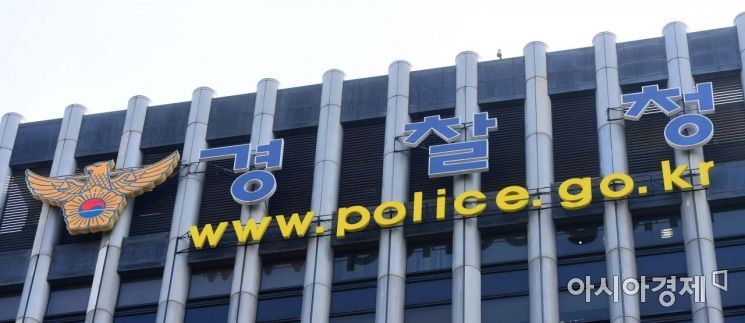
[Asia Economy Reporter Lee Gwan-ju] An ‘Internal Corruption Investigation Unit’ will be established in provincial police agencies nationwide, and an Anti-Corruption Council involving external experts will be formed at the National Police Agency. Additionally, an evaluation system for police chiefs at the superintendent level and above, as well as a regular rotation personnel system, will be introduced.
On the 22nd, the National Police Agency announced a comprehensive anti-corruption plan based on these measures. Woo Cheol-moon, head of the National Police Agency’s People-Centered Police Reform Team, explained the purpose, saying, "With the reform of investigative authority, the role and responsibility of the police have increased, and there is a need to meet the public’s expectations for a higher level of integrity."
First, the police will operate an Anti-Corruption Council at the National Police Agency headquarters, involving academia, the legal community, media, and civic groups. The council will establish a mid- to long-term five-year basic anti-corruption plan and will play a role in inspecting and diagnosing policy implementation. It will also discuss follow-up measures when corruption cases occur and decide whether to disclose punishment cases.
Measures to eradicate corruption among senior officers at the superintendent level and above have also been prepared. A ‘Police Chief Performance Evaluation System’ will be introduced to assess the integrity, work performance, and execution capabilities required of police chiefs, and those deemed unfit will be excluded from police chief positions. In addition, long-term assignments of senior officers at the superintendent level and above to specific provincial police agencies will be restricted, and police officers promoted from investigative departments to the rank of senior superintendent or superintendent will be prohibited from working in investigative departments at the promoted provincial police agency for two years.
An Internal Corruption Investigation Unit directly under the provincial police chief will be established in provincial police agencies nationwide. This is to directly investigate and strictly respond to corruption and misconduct cases that could provoke public criticism. Furthermore, for cases related to current and former police officers, a ‘triple review system’ will be strengthened, where police station investigation reviewers must conduct mandatory reviews before case closure, provincial police chief responsible investigators will inspect cases handled by their jurisdiction police stations, and the audit function will conduct final inspections.
The police also plan to strengthen eligibility screening requirements for investigative and enforcement personnel and completely block those suspected of corruption from working in investigative and enforcement departments. When contacting parties involved in cases, such as police officer-turned-lawyers, prior reporting will be mandatory, and inquiries about all investigation and enforcement cases among police colleagues will be prohibited.
Anti-corruption and integrity education will also be made mandatory to raise awareness among individual police officers. In particular, the ‘Korean Young EPIC Program,’ which encourages colleagues to intervene and prevent corruption situations, will be introduced. The EPIC program is a peer intervention training program devised by the New Orleans Police Department in the United States, consisting of lectures, discussions, and role-playing that present familiar situations and encourage intervention in colleagues’ illegal or corrupt acts.
The police plan to form the Anti-Corruption Council by next month and apply the police chief performance evaluation system and regular rotation personnel system for senior officers starting from the first half of next year’s regular personnel appointments. A National Police Agency official said, “This will solidify the foundation for the anti-corruption measures we have been promoting and serve as an opportunity to further enhance the fairness and transparency of senior police officers and investigative departments.”
© The Asia Business Daily(www.asiae.co.kr). All rights reserved.
![User Who Sold Erroneously Deposited Bitcoins to Repay Debt and Fund Entertainment... What Did the Supreme Court Decide in 2021? [Legal Issue Check]](https://cwcontent.asiae.co.kr/asiaresize/183/2026020910431234020_1770601391.png)