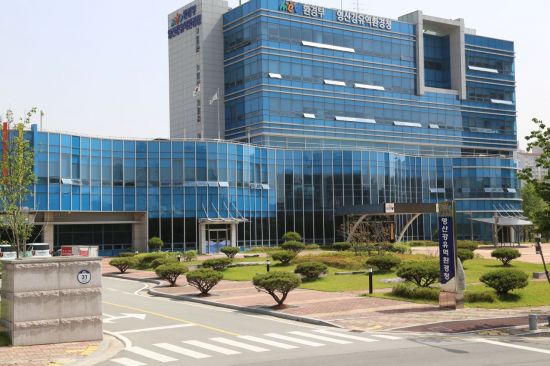
[Asia Economy Honam Reporting Headquarters Reporter Yoon Jamin] The Yeongsangang River Basin Environmental Office (Director Ryu Yeon-gi) is making an all-out effort with related agencies in response to the discovery of larvae in tap water around Seogwipo City, Jeju Island.
On the 22nd, the Yeongsangang Office announced that it shared the response status of each agency and discussed measures to prevent the spread of larvae together with the Jeju Special Self-Governing Province Waterworks Headquarters and Korea Water Resources Corporation the day before.
First, to prevent the spread of larvae at the Gangjeong Water Purification Plant, strainers will be installed at the sedimentation basin outlet and the front end of the inflow pipe to the water storage tank, and measures will be taken to ensure that no more larvae occur in the area by strengthening the backwash cycle of the filtration basin (from 1-2 times a month to once daily) and cleaning the water storage tank.
In addition, to prevent the spread of the tap water larvae incident throughout Jeju Island, a full inspection of the remaining 16 water purification plants will be conducted jointly by related agencies within this week.
Since the Gangjeong Water Purification Plant uses similar processes (slow or rapid filtration) and surface water, a detailed inspection will be promptly conducted on five water purification plants where larvae detection is a concern, and inspections of other plants using groundwater as a source or operating with membrane filtration methods will be completed by tomorrow.
Meanwhile, Jeju Island has sent disaster alert messages to ease residents' anxiety and urged them to refrain from drinking the tap water, and since the afternoon of the previous day, bottled water using Jeju Samdasoo has been provided at community support centers.
Furthermore, to accurately tally larvae-related complaints and resolve them quickly, a dedicated complaint response team has been formed and activated within the province, and a survey of local residents will be conducted to investigate any past similar complaints.
The Yeongsangang Office is actively operating a joint response team for the Jeju tap water larvae incident, referring to the response case of larvae occurrence in Incheon tap water.
The response team consists of 76 members across five teams, including the Jeju Waterworks Headquarters, Korea Water Resources Corporation Yeongseom River Basin Water Support Center, and experts in water treatment and ecology, and is carrying out activities such as identifying the cause of larvae occurrence, monitoring the supply system, and blocking the source of occurrence.
Ryu Yeon-gi, Director of the Yeongsangang River Basin Environmental Office, said, “I will do my best to be stationed in the Jeju area and lead on-site so that tap water supply can be normalized as soon as possible.”
© The Asia Business Daily(www.asiae.co.kr). All rights reserved.

















