Government "Impact on Youth Smoking" vs Convenience Stores "Need to Consider Convenience Store Characteristics"
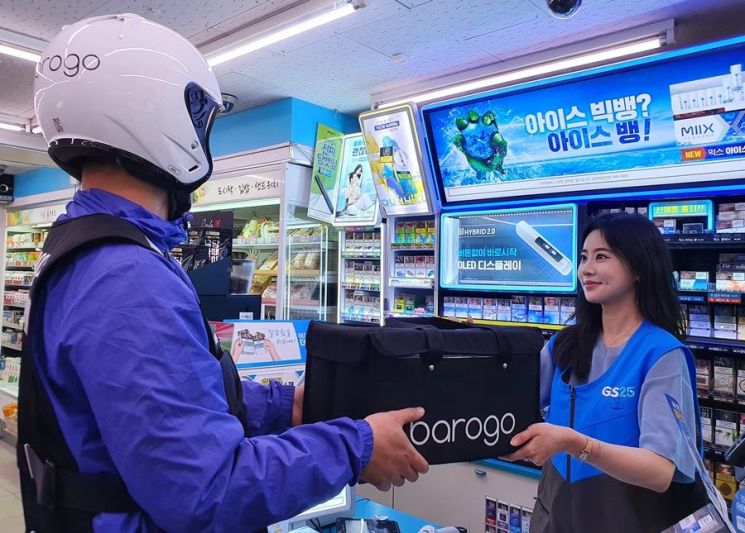
[Asia Economy Reporter Lim Hye-sun] The government and convenience store owners are at odds over the crackdown on the external exposure of tobacco advertisements. While the government insists that related laws must be followed, citing the possibility that tobacco ads could influence youth smoking, convenience store owners argue that it is difficult to comply with the crackdown standards due to the glass walls characteristic of their stores.
According to the convenience store industry on the 22nd, the Ministry of Health and Welfare plans to conduct a two-month grace period starting next month and then enforce a crackdown on tobacco retailers whose tobacco advertisements are visible from outside beginning January next year. Under the current National Health Promotion Act and Tobacco Business Act, tobacco advertisements inside tobacco retail stores must not be visible from outside. Violations can result in imprisonment of up to one year or fines of up to 10 million won. Failure to comply with correction orders may lead to suspension of business for up to one year.
This regulation has been ineffective since its introduction in 2011 due to lack of enforcement. However, following a 2018 audit by the Board of Audit and Inspection, the government announced plans to enforce the crackdown. Yet, it was postponed several times due to opposition from retailers. The Ministry of Health and Welfare is determined to implement the tobacco advertisement crackdown this time, citing its potential influence on youth smoking. According to a survey conducted last year by the Ministry and the Korea Health Promotion Institute’s National Smoking Cessation Support Center, 20% of 1,500 surveyed university students responded that exposure to tobacco advertisements or promotions sparked curiosity about smoking. In Seoul alone, there is an average of seven tobacco retail stores within a 200-meter radius of elementary, middle, and high schools in educational environment protection zones.
However, convenience store owners are protesting, calling it a "typical desk-bound administration that does not consider the characteristics of convenience stores." According to the Ministry of Land, Infrastructure and Transport’s "Crime Prevention Design Guidelines for Buildings," convenience store design standards require the building facade to be unobstructed to ensure visibility. This is to prevent crimes that may occur during late-night operations. This is why the front of convenience stores is made of glass. A store owner who has operated a convenience store in Yeongdeungpo, Seoul for five years said, "Since the front is made of glass, advertisements are visible from outside, so most stores will inevitably be subject to crackdowns," adding, "I don’t understand why a law that hasn’t been enforced for over a decade is now being enforced when we are struggling with losses due to COVID-19." Currently, tobacco retailers, including convenience stores, receive support payments of about 300,000 to 500,000 won per month from tobacco manufacturers in exchange for displaying tobacco products and advertisement boards. Moreover, tobacco sales account for more than 40% of total sales in convenience stores, raising concerns that eliminating advertisements will reduce sales. There is no solution at the convenience store headquarters level either.
The 21st National Assembly has recognized these issues and is actively proposing amendments to the law. Yoon Young-seok, a member of the People Power Party, proposed an amendment to the Tobacco Business Act specifying that tobacco advertisements must be displayed only inside business premises. Kang Ki-yoon, also from the People Power Party, proposed an amendment to the National Health Promotion Act stating that the location where tobacco advertisements can be posted is an important matter for retailers and should be allowed inside the premises.
© The Asia Business Daily(www.asiae.co.kr). All rights reserved.

















