"Mukjeok and the stroke written diagonally from top left to bottom right are the same"
Cultural Heritage Administration to prepare management measures if Bank of Korea applies for alteration approval
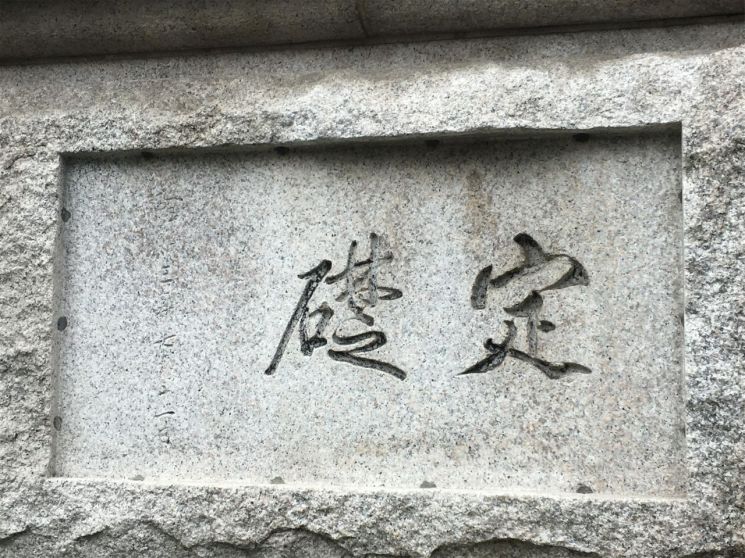
The Cultural Heritage Administration announced on the 21st that the inscription on the cornerstone of the Bank of Korea Currency Museum (formerly the Bank of Joseon headquarters) has been confirmed to be the handwriting of It? Hirobumi. A cornerstone is a stone engraved with the date of the groundbreaking ceremony, placed after the foundation work is completed (usually at a corner).
The cornerstone of the Bank of Korea main building bears the inscription "Jeongcho (定礎)." Jeon Yong-gi, a member of the National Assembly's Culture, Sports and Tourism Committee from the Democratic Party, claimed on the 12th during the Cultural Heritage Administration's national audit that it was It?'s handwriting, based on the "Economic outlines of Chosen and Manchuria" held by the UC Berkeley Library in the United States. The Cultural Heritage Administration formed an advisory group of three calligraphy experts and conducted an on-site investigation on the 20th. They compared and analyzed It?'s brush calligraphy found on the Hamamatsu City Central Library website in Japan, photos of the cornerstone engraved with the name of the second-class passport holder published in the "Economic outlines of Chosen and Manchuria," and other materials.
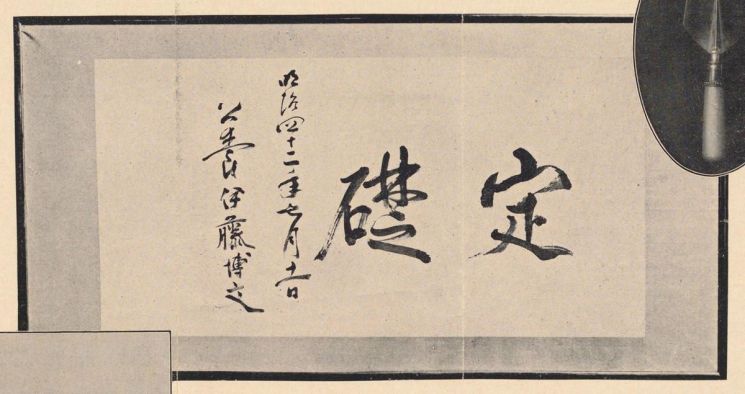
The inscription on the cornerstone exhibited characteristics found in It?'s handwriting. An official stated, "The ink brush strokes and the slanting strokes descending from the upper left to the lower right are identical." Some strokes were less refined. The official added, "In the process of engraving the inscription, some strokes that should have been separated were connected. The calligraphic style known as 'bibaek' (which looks like broom strokes) was not preserved in the brush marks."
Regarding the claim that the newly inscribed "Yunghui (隆熙·the last era name of the Korean Empire used from 1907) 3rd year, July 11th," which replaced the original date and the second-class passport holder's name, appears to be in the handwriting of former President Syngman Rhee, the official said, "There is no accurate record," and added, "It is presumed that after liberation, to remove Japanese remnants and express national spirit, former President Rhee specially wrote it, and a stonemason engraved it."
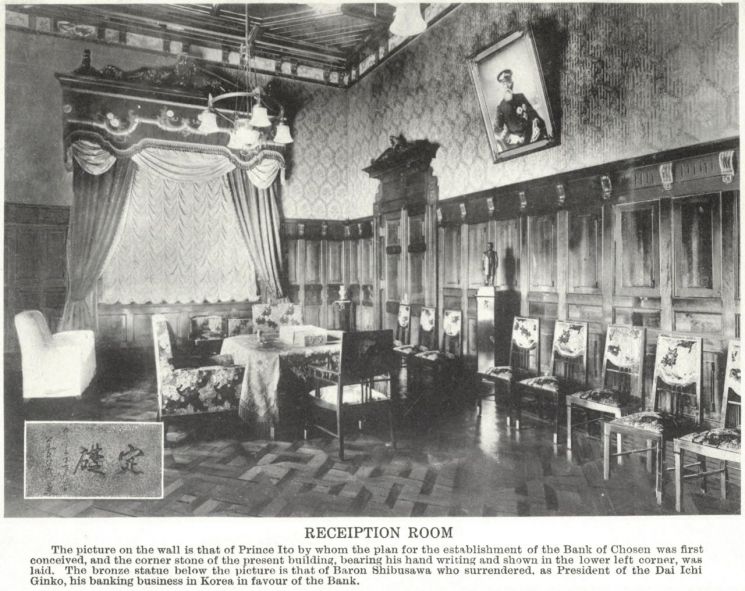 The English magazine published by the Bank of Joseon in 1918, "Economic Outlines of Chosen and Manchuria"
The Cultural Heritage Administration plans to notify the Seoul Metropolitan Government and the Bank of Korea of the verification results. If the Bank of Korea applies for permission to alter the cultural heritage, such as installing a guide sign or removing the inscription, a management plan will be prepared after review by the Cultural Heritage Committee.
© The Asia Business Daily(www.asiae.co.kr). All rights reserved.



















