Regulatory Protein Factor of Lipid Biosynthesis
Confirmed to Cause COVID-19 Lung Damage
Hope for Development of Infectious Acute Inflammation Treatment
 This flowchart shows the activation of the intracellular lipid biosynthesis regulatory protein (SREBP-2) in COVID-19 patients. Cholesterol depletion in the cell membrane caused by COVID-19 virus infection induces the activation of SREBP-2, leading to the secretion of a large amount of inflammatory cytokines.
[Asia Economy Reporter Junho Hwang] A study has found that a protein regulating cholesterol in our body causes lung damage in severe patients infected with the novel coronavirus disease (COVID-19). The degree of expression of this protein can be used to determine the severity of COVID-19, and suppressing its expression is expected to prevent severe conditions such as lung damage.
Dr. Younggyo Seo’s research team at the Korea Research Institute of Bioscience and Biotechnology’s Aging Control Research Group, in collaboration with research teams from Yeungnam University and Kyungpook National University, announced these findings, which were published on the 21st in the international journal Signal Transduction and Targeted Therapy, specializing in intracellular signal transduction and targeted therapy.
Protein Regulating Cholesterol Destroys Lungs of Severe COVID-19 Patients
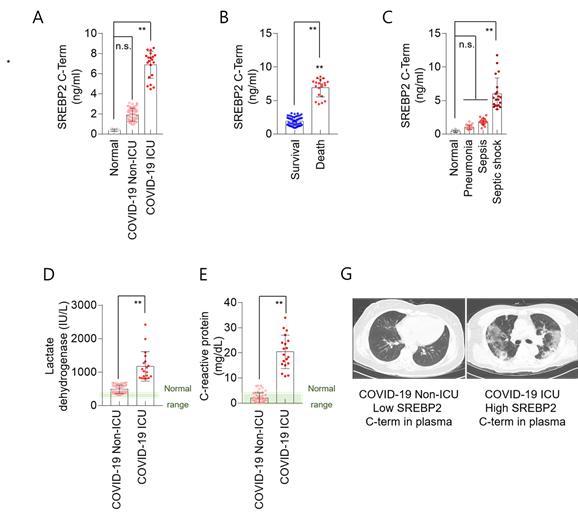 This graph shows the secretion of the SREBP-2 C-terminal fragment according to the activation level of intracellular lipid biosynthesis regulatory proteins in the blood of COVID-19 patients. The research team revealed that the secretion of the SREBP-2 C-terminal fragment was also increased in patients with severe sepsis (C), suggesting that the SREBP-2 C-terminal fragment can be used as a general marker for infectious diseases that induce inflammation.
The research team identified the cause of lung damage in severe COVID-19 patients. When COVID-19 progresses to a severe stage, diseases causing serious lung damage such as acute respiratory distress syndrome, cytokine release syndrome, and sepsis can occur, potentially leading to death. A cytokine storm refers to the phenomenon where excessive immune substances are released, attacking normal cells.
The team revealed that excessive activation of the intracellular lipid biosynthesis regulatory protein (SREBP) causes lung damage. Upon examining the blood of COVID-19 patients, they found that total cholesterol, high-density lipoprotein (HDL), and low-density lipoprotein (LDL) levels were significantly lower compared to healthy individuals. Additionally, through computed tomography (CT) images and various sepsis indicators, they confirmed that the regulatory protein levels sharply increased in severe patients. Furthermore, in cell experiments under acute inflammatory conditions, they succeeded in suppressing inflammatory cytokine production by administering inhibitors of the regulatory protein or by modulating the signaling of inflammatory molecules.
The protein identified by the research team as the cause of lung damage due to COVID-19 originally activates enzymes involved in the cholesterol biosynthesis pathway, regulating cholesterol and lipid homeostasis in various tissues including the liver. It also participates in enhancing innate immune responses.
Target for Diagnosis and Treatment of Severe COVID-19
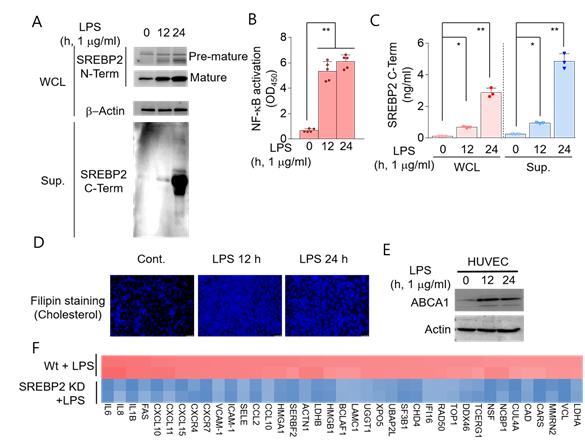 Data verifying the activation of intracellular fat biosynthesis regulatory proteins and the regulation of cytokine expression at the cellular level.
The research team stated that this protein is a suitable biomarker for determining treatment targets in severe COVID-19 patients and suggested that it could be a key therapeutic target to prevent cytokine storms and organ damage in severe sepsis patients.
Dr. Younggyo Seo said, "This achievement could lead to the development of targets for diagnosing or treating acute lung damage caused by COVID-19," adding, "This factor is expected to contribute greatly not only to the development of effective anti-inflammatory drugs but also to treatments for seasonal acute infectious diseases and age-related metabolic imbalance disorders."
© The Asia Business Daily(www.asiae.co.kr). All rights reserved.



















