Deputy Prime Minister Hong's "Strong Punishment" Intent Undermined
Experts Call for Closing Loopholes in the Housing Act
Double Lease Contracts, Agreement Execution Memorandums, and Re-Registration Practices
[Asia Economy Reporter Donghyun Choi] # Office worker Park Mo (45, Seoul) recently received a recommendation from a real estate agent to purchase a pre-sale right while looking for a house. Although the resale of pre-sale rights is illegal, the agent explained that if various documents are properly prepared, there would be no problem, and everyone does it. Park hesitated and turned away with uneasy feelings, but since he could not expect to win the pre-sale due to a low subscription score, he is still considering whether to purchase the pre-sale right.
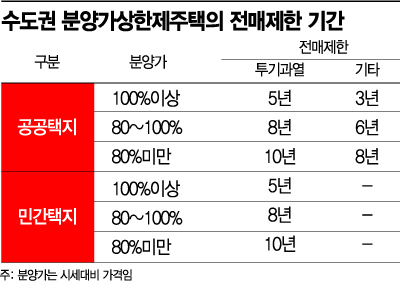
Although the resale of apartment pre-sale rights is banned until move-in in most areas of Seoul and the metropolitan area, illegal resale activities continue in the field market. Despite the government’s recent strong warning to severely punish illegal resale of apartment pre-sale rights, secret resale of pre-sale rights in the form of 'bokdeunggi (double registration)' is taking place mainly in newly built complexes approaching move-in. In particular, concerns are rising that illegal resale of pre-sale rights will become more rampant as complexes priced low?sometimes at half the market price?due to government controls such as the pre-sale price ceiling system continue to appear.
On the 19th, Asia Economy’s investigation confirmed that such illegal resale is not difficult to find. At a real estate agency near Goduk Ja-i in Gangdong-gu, where move-in is scheduled for February next year, the agent recommended the reporter, who inquired about a lease, to rather add money and purchase the pre-sale right. Although resale of pre-sale rights is clearly illegal in Seoul, a speculative overheated district, the agent explained in detail, saying, "There is always a way." First, the seller and buyer sign a lease contract, but at the same time, they create an additional sales contract as a double contract. In this process, the payment dates for the deposit, interim payment, and balance are made the same on both contracts, but the sales contract specifies that "upon payment of the balance, the seller will immediately transfer ownership to the buyer after completing the ownership transfer registration." It is essentially a sales contract disguised as a lease contract. The lease acts as 'insurance' that makes it difficult to trace the flow of funds in illegal resale of pre-sale rights and reduces the buyer’s risk.
In particular, such transactions are not exposed in the actual transaction reporting system because leases do not require reporting. According to a real estate agency near Sangil-dong, a pre-sale right for an 84㎡ unit in Goduk Ja-i was recently traded in this manner for 1.55 billion KRW, but it does not appear in the Ministry of Land, Infrastructure and Transport’s actual transaction system.
Currently, various forms of illegal resale of pre-sale rights are rampant in regulated areas beyond disguised transactions like this. Basically, the structure is based on double registration sales contracts with additional double safeguards such as lease contracts, agreement execution memorandums, notarizations, and litigation settlement documents. This is to prepare for lawsuits in case defects arise in illegal resale contracts. A real estate specialist lawyer pointed out, "In some precedents, courts recognized resale of pre-sale rights as illegal but ruled that agreements between contracting parties must be upheld," adding, "This is often exploited as if illegal resale is practically possible." Earlier in May, a court ruled that resale of pre-sale rights disguised as lease contracts was illegal in a lawsuit related to the transfer of move-in rights in a Gangnam redevelopment complex but recognized the effect of the resale itself.
Experts pointed out loopholes in current laws and said additional legislation is necessary. The Land Development Promotion Act, which applies to public land such as new towns, strongly restricts resale and invalidates legal acts that violate this, but the Housing Act, which applies to redevelopment and reconstruction, interprets illegal resale of pre-sale rights as a 'regulatory provision.' Regulatory provisions punish illegal acts themselves but recognize the validity of legal acts. Attorney Kim Garam of the Good Plan Law Firm emphasized, "Since the illegal resale regulations under the Housing Act recognize the validity of contracts between parties, lawsuits related to this continue even now," adding, "It is an issue that needs to be supplemented through additional legislation."
© The Asia Business Daily(www.asiae.co.kr). All rights reserved.

















