By November, 150 installations in about 10 crime-vulnerable alleyways reflecting residents' opinions... Improving lighting and building number plate readability to protect residents' lives and property in emergencies
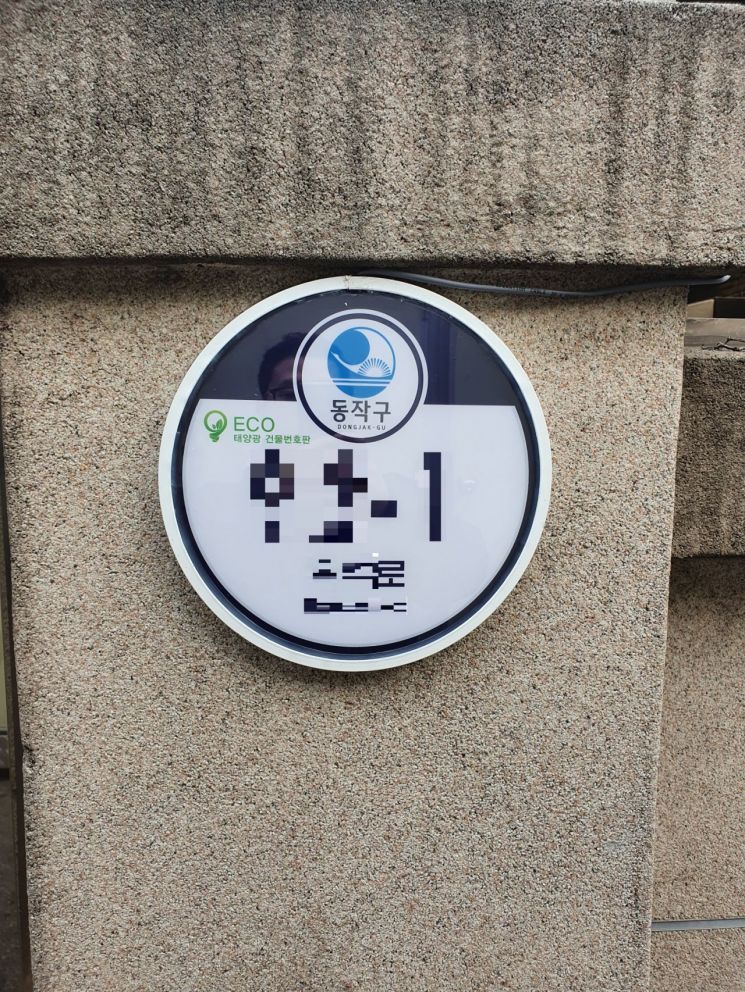
[Asia Economy Reporter Jongil Park] Dongjak-gu (Mayor Changwoo Lee) will install 150 solar-powered LED building number plates at about 10 crime-vulnerable locations as part of the resident-proposed CPTED project by next month.
The district completed the installation of a total of 215 solar-powered LED building number plates at more than 20 locations in the area by last year, receiving high resident satisfaction, and is proceeding with additional installations this year.
The solar-powered LED building number plates collect electricity through solar panels and operate LED lights at night to minimize power consumption. They illuminate alleys where security lights do not reach with a brightness of 600 lux, which causes less light pollution, improving nighttime illumination and scenery, playing a significant role in crime prevention.
In particular, by enhancing the readability of road name address plates compared to before, it becomes easier to identify locations during emergencies such as fires, reducing damage to life and property.
In June, the district reflected opinions from residents and community service centers regarding appropriate project sites and is conducting on-site inspections and obtaining consent from nearby residents by this month.
The project sites include about 10 crime-vulnerable residential areas or alleys around Noryangjin-dong, Sadang-dong, and Sangdo-dong, where a total of 150 solar-powered LED building number plates will be installed.
Additionally, the district plans to invest 300 million KRW by March next year to promote the ‘Urban Niche Space CPTED’ project targeting safety blind spots such as vulnerable groups including women and the elderly, low-rise residential areas, and densely packed shopping districts.
Based on big data analysis of resident opinions, crime types and causes, and regional characteristics through village safety maps and resident workshops, facilities applying crime prevention design will be installed.
Lee Eui-shin, Director of Urban Planning, said, “Through this project, we will improve the environment of crime-vulnerable areas to prevent various crimes and create a city where residents can live safely.”
Last year, the district strengthened safety by installing crime prevention design facilities at about 400 locations in the area, including 39 high-mounted lights, battery-type markers to improve ground illumination, pole area reinforcement sheets, and 30 safety mirrors.
© The Asia Business Daily(www.asiae.co.kr). All rights reserved.

















