Re-pushing Expansion of Flexible Working Hours Unit Period... Last Year's Choice Work System Stalled
Drive to Amend Labor Union Act for ILO Convention Ratification... Management Expresses Opposition
Before Legislation of 'Three Corporate Regulation Laws'... People Power Party Unveils Labor Reform Card
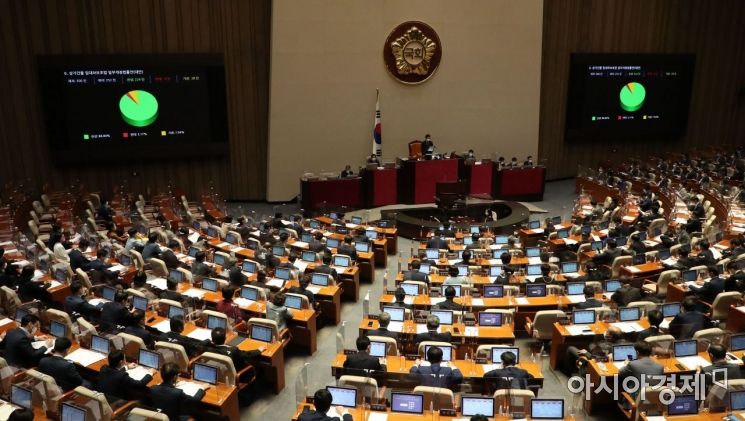
[Asia Economy Reporter Kim Bo-kyung] As the guidance period for the 52-hour workweek system for workplaces with fewer than 300 employees is set to end later this year, the government and ruling party are expected to accelerate efforts to expand and reform the flexible working hours system during the remaining months of the year. A senior government official said on the 12th, "Enhancing flexibility in working hours, including the flexible working hours system, will be the most important task for the National Assembly's Environment and Labor Committee this year," adding, "I think the expansion of the flexible working hours system and the ratification legislation of the International Labour Organization (ILO) core conventions should proceed together."
However, regarding the labor reform proposed by Kim Jong-in, the emergency committee chairman of the People Power Party, the official stated, "We are not yet prepared to discuss flexibility in employment and wages," and emphasized, "It must go through a maturing process via social dialogue bodies." This indicates a focus on working hours flexibility rather than employment and wage flexibility.
◆Pushing for Expansion of Flexible Working Hours System... Starting with 'Working Hours Flexibility'= By the end of December, the guidance period for the 52-hour workweek system for workplaces with 50 to fewer than 300 employees will end. To reduce the burden on small and medium-sized enterprises caused by the reduction in working hours, expanding and reforming the flexible working hours system is essential. Both ruling and opposition parties agree on this. Last year, the Economic, Social and Labor Council reached a tripartite agreement on improving the flexible working hours system. The plan is to extend the flexible working hours system’s unit period from 3 months to 6 months.
However, at that time, the opposition party insisted on processing bills to expand both the flexible working hours system and the selective working hours system simultaneously, causing the legislative amendment to fail. The flexible working hours system has working hour limits such as a maximum of 52 hours per week, whereas the selective working hours system allows concentrated work without time limits. The opposition party, reflecting business interests, argued to extend the selective working hours system’s unit period from 1 month to 3 months or more. The ruling party opposed the amendment, fearing it would undermine the purpose of the 52-hour workweek system, and the reform of the flexible working hours system also failed in the 20th National Assembly.
In July, Rep. Han Jeong-ae of the Democratic Party of Korea proposed an amendment to the Labor Standards Act to establish a flexible working hours system with a unit period of 3 to 6 months. The bill includes provisions to grant workers 11 consecutive hours of rest to prevent overwork and requires employers to prepare wage compensation measures. However, the government and ruling party remain negative about the selective working hours system advocated by business and the opposition, citing "no tripartite agreement has been reached."
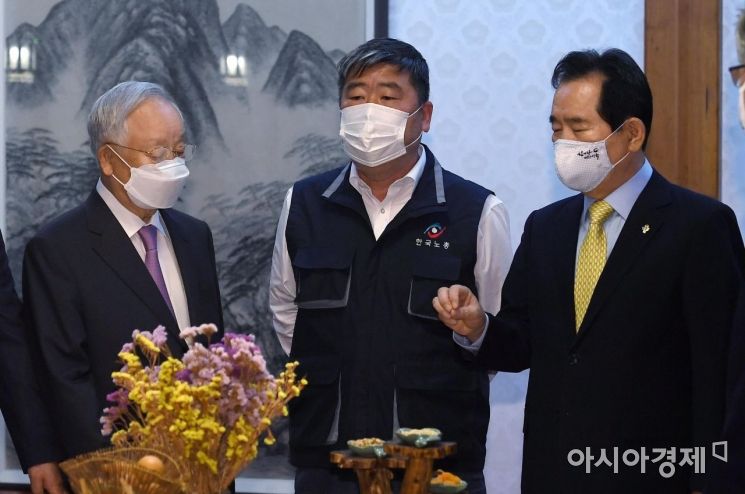
◆Ruling Party and Government to Push ILO Convention Ratification and Corporate Regulation... Oppose 'Labor Reform'= The ruling party and government are also expected to drive amendments to the Trade Union Act for ratifying the ILO core conventions. The amendment includes allowing dismissed and unemployed persons to join company-specific unions and deleting the provision banning payment of salaries to union full-time officers. They argue that ratifying the ILO core conventions will help Korea become a labor-advanced country and resolve economic and trade uncertainties arising from disputes with the European Union (EU). However, business circles oppose this, claiming it will worsen the power imbalance between labor and management.
Accordingly, the government and ruling party plan to 'package' the amendment of the flexible working hours system law, which business demands, with the Trade Union Act amendment during the regular National Assembly session. It is a kind of big deal. However, whether the legislative discussions will proceed as planned is uncertain. The corporate regulation three laws (amendments to the Commercial Act and Fair Trade Act, and the enactment of the Financial Group Supervision Act), along with the labor law amendments proposed by Chairman Kim, are variables. Forcing the passage of the corporate regulation three laws, which are criticized as 'tightening the noose on companies,' without labor reform is likely to provoke extreme opposition from the opposition party.
The ruling party and government have expressed reluctance toward Kim Jong-in’s labor reform, saying it is "not timely." Lee Nak-yeon, leader of the Democratic Party, recently stated that in the current situation where labor stability is fragile due to the prolonged COVID-19 pandemic, making layoffs easier and wages more flexible is "harsh." Labor reform is expected to focus on securing labor flexibility to reduce the burden on corporate management and enhance national competitiveness. It is also expected to include measures to address polarization, create jobs, and respond to the Fourth Industrial Revolution and the post-COVID era.
The People Power Party will speed up labor law revisions once the national audit ends. They recently launched a labor reform task force (TF) and appointed Rep. Im Eui-ja, the Environment and Labor Committee secretary, as the team leader. The TF reportedly consists of party lawmakers, labor law experts, former senior officials in labor policy, and representatives from business and labor sectors. Chairman Kim has repeatedly emphasized the necessity of labor reform in his books and various interviews, stating that without labor reform, the Korean New Deal cannot succeed.
© The Asia Business Daily(www.asiae.co.kr). All rights reserved.


















