Battle for Votes from Developing Countries in the US and Europe
Do Not Abandon Africa and Europe
Mobilizing a Comprehensive ODA Vision Beyond K-Quarantine
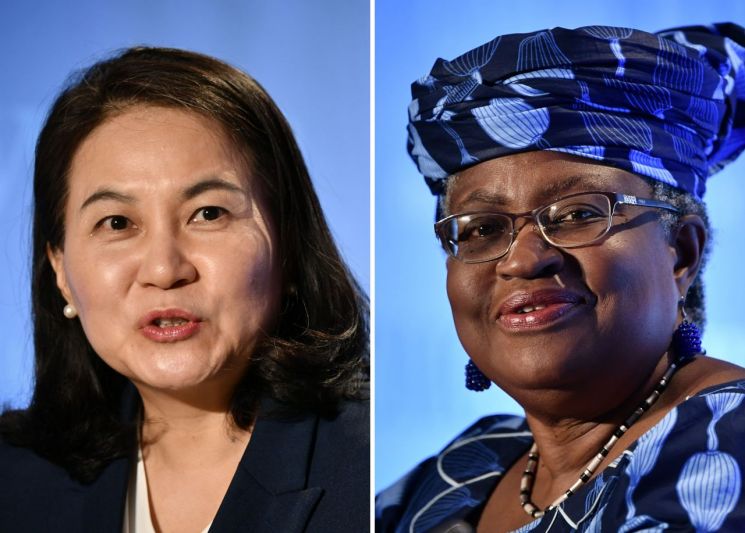 Yoo Myung-hee, head of trade negotiations at the Ministry of Trade, Industry and Energy (left), and Ngozi Okonjo-Iweala, former Nigerian Minister of Finance and Foreign Affairs, competing for the first female head position of the World Trade Organization (WTO). (Image source=AFP Yonhap News)
[Asia Economy Reporter Moon Chaeseok] Yoo Myung-hee, the head of trade negotiations at the Ministry of Trade, Industry and Energy and the first Korean woman to challenge for the position of Director-General of the World Trade Organization (WTO), is called an underdog compared to her rival candidates. However, experts analyze that if she launches a rapid campaign targeting the voting bases of developing countries in the United States, Northeast Asia, as well as Latin America, Southern Europe, and South Asia during the remaining period, she has a chance of winning. Experts also urge not to give up on Africa, where her rival Ngozi Okonjo-Iweala, former Nigerian Minister of Finance and Foreign Affairs, is expected to have an advantage, but to try to disperse even one more vote.
Even Excluding Africa and the EU, 92 Votes... Full Effort Needed in Vote Battle
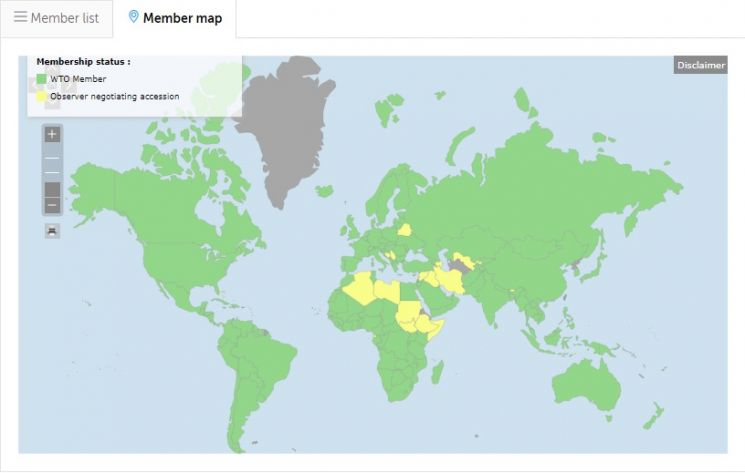
According to trade experts on the 10th, out of a total of 164 votes (163 member countries + EU), there is concern that 44 African votes will go to candidate Okonjo-Iweala, and 28 European votes (27 countries + 1 vote for EU as an organization) will also be concentrated on her. It is also predicted that campaigning in the United States will not be easy due to Okonjo-Iweala’s long residence in the U.S. while working at the World Bank (WB).
However, the consensus is that the final round has shifted from 'regional competition' to 'country-by-country competition.' It is premature to worry that all 44 African countries will give their votes to Okonjo-Iweala or that Head Yoo will lose the 28 EU votes by losing Germany and France’s votes.
An official from the Ministry of Trade said, "Initially, there was a forecast that the second round would be unfavorable to Head Yoo because support would consolidate based on regions or historical ties such as Africa and the Commonwealth. However, overcoming such forecasts, Head Yoo seems to have secured support evenly from WTO member countries across regions such as Europe, Latin America, Asia-Pacific, and Central Asia."
Experts emphasize that votes from the United States and its allies, where Okonjo-Iweala’s influence is expected to be relatively weak, as well as votes from Europe and even Africa, should not be given up.
Professor Kang Insu of the Department of Economics at Sookmyung Women’s University said, "It is realistically difficult to take African votes away because China has invested heavily in Africa, but Europe, including Germany, France, and the 19 Eastern European countries with relatively weak ties to Africa, is worth targeting." He advised that since the final round is conducted on a 'one country, one vote' basis, efforts should be made to acquire votes by focusing on Europe, Latin America, and some parts of Africa.
"The Developed-Developing Country Frame Is Not a Time to Rest on 'K-Quarantine' Faith"
Head Yoo advanced to the final round through three strategies: ▲ being a model country benefiting from multilateral trade ▲ contributing to preventing the spread of COVID-19 through 'K-Quarantine' ▲ focusing campaigning efforts on the U.S. and Europe. These three strategies were considered limited cards that Head Yoo and Korea could play, as they lagged behind Okonjo-Iweala in recognition.
However, experts say it is not enough to rely solely on emphasizing the role as a bridge between developed and developing countries or the 'K-Quarantine' premium. Unlike the second round’s 'one country, two votes' system, the change to 'one country, one vote' means that giving the impression of sweeping all developed country votes could backfire.
In particular, it is pointed out that overemphasizing the idea that Korea "greatly contributed to stopping the global pandemic through K-Quarantine" is problematic. While the 'K-Quarantine system' was effective domestically and Korea exported quarantine supplies, framing this as a major contribution to multilateral trade could alienate some countries.
Professor Heo Yoon of Sogang University’s Graduate School of International Studies said, "Head Yoo and the government have used 'K-Quarantine' well to reach the final round, but there are limits to relying solely on it. If necessary, it is time for the government to consider trade visions and diplomatic cards beyond 'K-Quarantine,' such as official development assistance (ODA) and demand-country tailored free trade agreement (FTA) strategies included in the 'Post-COVID New Trade Strategy (K-Trade Strategy)' announced last July."
This means that campaigning should also be conducted in cooperation with national research institutes and private organizations targeting countries benefiting from Korea’s knowledge-sharing projects such as the 'Knowledge Sharing Program (KSP)' and the Korea International Cooperation Agency (KOICA), including Ethiopia and Kenya.
"Excessive Dependence on the U.S. Is Forbidden... Developed Countries Should Also Be Seen as 'Vote Bases' of Developing Countries"
For Head Yoo to achieve a 'comeback victory,' it is essential to secure votes from developed countries such as the United States, Germany, France, and the United Kingdom. Conservatively, since the 44 African votes and 41 European votes are considered within Okonjo-Iweala’s reach, Head Yoo must attract votes from developed countries and developing countries influenced by them to catch up.
It is a situation where both the 'African-European vote dispersion strategy' and the 'acquisition of developed country support followed by a battle for related developing country votes' must be pursued simultaneously. According to the WTO Secretariat, consultations among member countries for the final round of the Director-General election will be held from the 19th to the 27th, meaning there are eight days left.
Experts say that even assuming votes from the United States, Germany, and France are secured, votes from Central America and the Caribbean (18 countries), South America (13 countries), and Oceania (8 countries), which are expected to be influenced by these countries, must also be obtained. Among the 164 votes, the number of countries classified as developed is only about 16, including 13 countries in Western Europe and North America, plus Australia, Japan, and Korea.
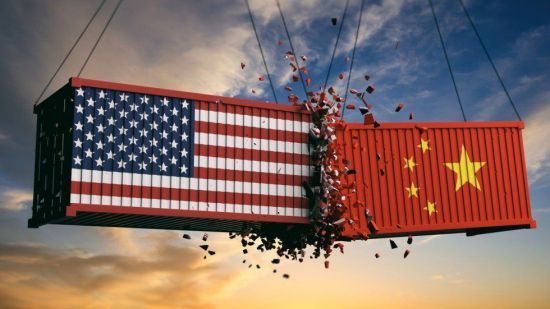
Professor Kang said, "Since the final round is conducted on a 'one country, one vote' basis, as a country closer to developed countries than Nigeria, we must secure as much support as possible from developed countries including the U.S. However, if we take an overly pro-U.S. stance on detailed issues such as Chinese state-owned enterprises, subsidies, and technology theft, which are current issues in the U.S.-China trade war, it could negatively affect the votes of developing countries including Africa, Eastern Europe, Latin America, and Southwest Asia."
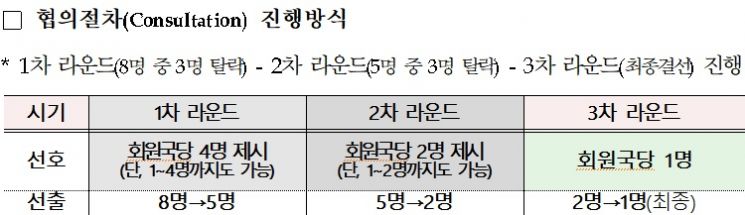
The election proceeds by eliminating candidates with low consensus potential in the final round to narrow down to a single candidate. Then, the WTO General Council adopts the single candidate. A vote is held only if member countries cannot reach consensus.
The final result will be announced early next month. Bloomberg forecasts that the final decision will likely be made before November 7.
© The Asia Business Daily(www.asiae.co.kr). All rights reserved.



















