Indoor dining prohibited for a total of 6 days until the 4th of next month
Dedicated staff assigned to crowded areas like restrooms, temperature checks conducted
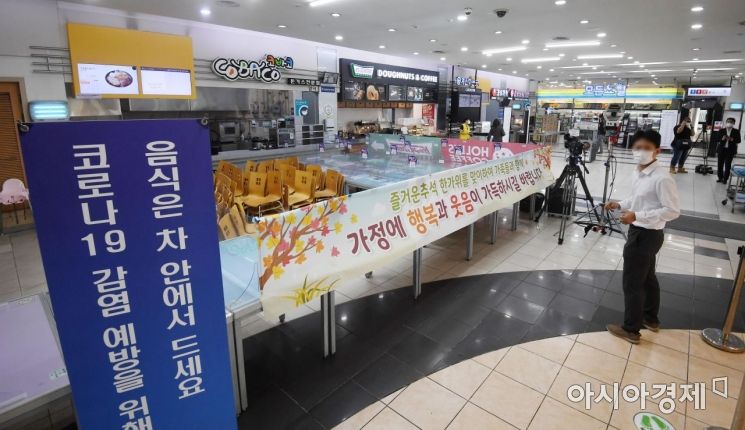 On the 29th, indoor seating operations at the Mannam Square rest area on the Gyeongbu Expressway heading towards Busan in Seocho-gu, Seoul, are being restricted during the Chuseok holiday. From this day until the 4th of next month, for a total of six days, all indoor stores at highway rest areas managed by Korea Expressway Corporation will prohibit seat operations and allow only takeout to prevent the spread of COVID-19. Photo by Kim Hyun-min kimhyun81@
[Asia Economy Reporter Jo In-kyung] From the 29th, when the full-scale Chuseok holiday homecoming begins, eating inside highway rest area stores will be prohibited, and only takeout will be allowed.
According to Korea Expressway Corporation, to prevent the spread of the novel coronavirus infection (COVID-19), seat operation will be banned in all indoor stores at highway rest areas managed by the corporation for a total of six days from that day until the 4th of next month. This is to prevent the increased risk of infection when customers crowd inside the indoor stores. However, 'takeout' of food is allowed.
Each rest area will operate by separating entrances and exits depending on operational conditions, and dedicated guides will be assigned to indoor stores and restrooms frequently used by customers to conduct temperature checks.
A new 'simple phone check-in' system has also been introduced, where visitors to rest areas can call a virtual phone number for each rest area, and their entry details will be automatically recorded. This method replaces the creation of entry logs with call records and is expected to minimize confusion and waiting lines at rest area entrances.
Additionally, the Expressway Corporation will collect highway tolls normally for three days from the 30th of this month to the 2nd of next month. The government has waived tolls during holidays in the past, but this year it will switch to paid tolls, and the toll revenue during this period will be used for COVID-19 response, such as expanding quarantine personnel and supplies at rest areas. Especially this year, highways are expected to be congested as homecoming travelers avoid public transportation and prefer private cars.
The Ministry of Land, Infrastructure and Transport forecasted that the number of visitors returning to their hometowns during this year’s Chuseok holiday will be about 27.59 million, approximately 30% less than last year due to the impact of COVID-19. The homecoming route is expected to be most congested on the morning of the 30th, one day before Chuseok, and the return route on the afternoon of the 3rd, the day before the end of the holiday.
© The Asia Business Daily(www.asiae.co.kr). All rights reserved.

















