Proposal to expand budget for strengthening social safety nets, establishing comprehensive youth measures, protecting citizens' lives and safety, and Seoul-type New Deal policies... Active expenditure restructuring needed to prepare for prolonged COVID-19 concerns... Budget support and system improvement for local finance enhancement to be actively requested to ruling party and government... Joo Sang-ho, floor leader, urges central government for national funding support for Seoul public transportation public service provision
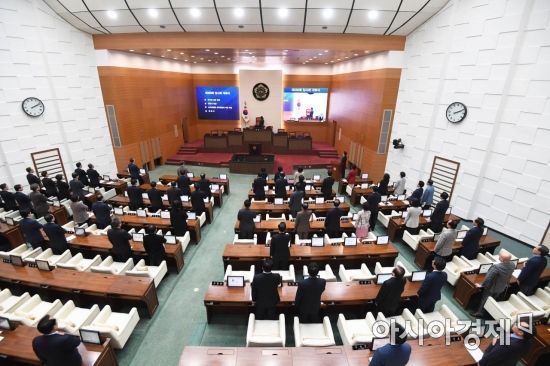
[Asia Economy Reporter Jongil Park] The Seoul Metropolitan Council's Democratic Party of Korea (Representative Assemblymen Jo Sang-ho, Seodaemun 4) held a budget policy direction meeting with the Seoul Metropolitan Government on the 18th to discuss the budget direction for 2021.
The Democratic Party of Korea in the Seoul Metropolitan Council emphasized the need to revitalize the economy, which has been contracted due to the unprecedented crisis of COVID-19, and to strive for the prompt stabilization of people's livelihoods. They requested that Seoul maintain a budget expansion policy in line with the central government's active fiscal expansion stance.
In particular, regarding Seoul's budget formulation for next year, they stressed that the budget should be tangible to Seoul citizens in areas such as ▲regional economic revitalization ▲strengthening social safety nets and establishing comprehensive youth measures ▲protection of citizens' lives and safety ▲Seoul-type New Deal policies. They indicated that during the budget review process, they would focus on these areas based on cooperation between the relevant standing committees and the Budget and Accounts Examination Committee.
At the meeting, they requested a significant increase in the budget for revitalizing the regional economy, including restoring vitality to the contracted local economy, promoting consumption activities, and supporting small business owners and micro-entrepreneurs.
They also called for a substantial strengthening of customized welfare budgets to expand the income base of low-income vulnerable groups and to enhance the four major social safety nets?livelihood, medical care, housing, and education?to eliminate welfare blind spots.
Specifically, they urged active policies to expand emergency welfare support for low-income crisis households, stabilize housing for ordinary citizens, increase rental housing supply focused on youth and newlyweds, and establish employment safety nets for vulnerable employment groups.
Along with this, they emphasized the need for active support to establish comprehensive youth measures, including stabilizing youth livelihoods, addressing youth employment issues, and supporting youth education and welfare.
Furthermore, they requested a significant increase in the budget directly related to the lives and safety of 10 million Seoul citizens to actively prevent safety accidents. To this end, they asked for a substantial reinforcement of the entire system covering 'prevention-diagnosis-treatment' in preparation for prolonged COVID-19 and other infectious diseases, as well as proactive fiscal investment in urban infrastructure such as river and sewage pipeline maintenance, improvement of aging bridges, tunnels, roads, and aging subways to prepare for wind and flood damage.
Finally, they requested securing necessary resources and actively reflecting them in the budget to discover and expand Seoul-type New Deal projects aimed at securing future innovation growth engines and establishing a leading Seoul economic foundation.
Above all, they pointed out that Seoul's budget proposal was focused on maintaining existing projects and emphasized the need for active investment not only in the Green New Deal but also in Digital New Deal projects in response to the government's Korean New Deal policy.
In response, the Seoul Metropolitan Government decided to actively consider the budget policy direction discussed that day and prepare the final budget proposal. However, they noted that due to the COVID-19 crisis, the contraction of the local economy is expected to reduce tax revenue, and the rigidity of local government budget utilization has intensified due to four supplementary budgets for COVID-19 response. Therefore, they stated that for active expansion of next year's budget, budget support and institutional improvements from the central government to expand local tax revenue are necessary.
Representative Assemblyman Jo Sang-ho shared the recognition of the situation faced by Seoul and decided to actively propose to the party and government the preparation of active self-help measures such as restructuring unnecessary and non-urgent expenditure budgets during the budget review process, urging the central government for national subsidy support for Seoul's public transportation public service provision, and early implementation of the second phase of fiscal decentralization to strengthen local finance through budget support and institutional improvements.
© The Asia Business Daily(www.asiae.co.kr). All rights reserved.
![Clutching a Stolen Dior Bag, Saying "I Hate Being Poor but Real"... The Grotesque Con of a "Human Knockoff" [Slate]](https://cwcontent.asiae.co.kr/asiaresize/183/2026021902243444107_1771435474.jpg)















