SK Telecom Publishes 'T map Trend Map 2020' for the First Time
[Asia Economy Reporter Seulgina Jo] 18.5 million users, 3.8 billion km of data per month.
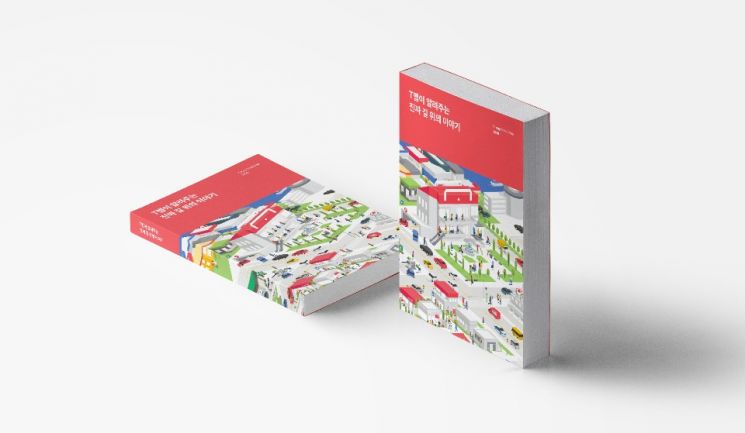
SK Telecom announced on the 28th that it has published the ‘T map Trend Map 2020’ based on data accumulated through its navigation service T map. It analyzed usage data from 18.5 million T map users, equivalent to one in three Koreans, focusing on the culture and consumer lifestyle of the Korean people.
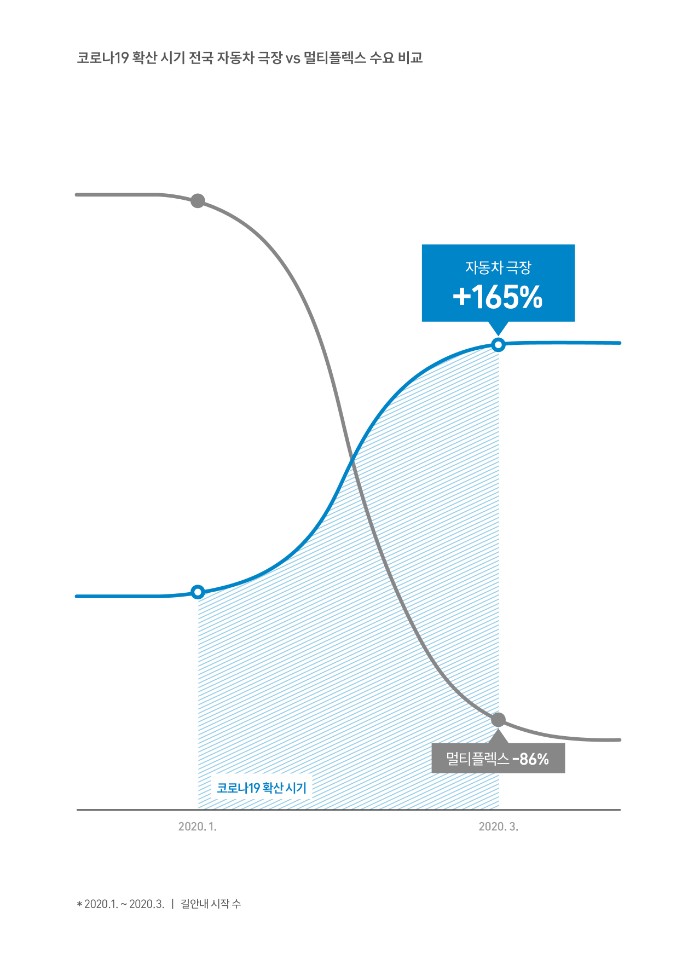
In particular, this year confirmed that the movement patterns of the public have changed significantly due to the impact of the novel coronavirus disease (COVID-19). One example is the sharp increase in the use of drive-in theaters where people can watch movies inside their cars instead of going to cinemas. In March, the number of visitors to multiplex theaters dropped by 86% compared to January, while the number of people visiting drive-in theaters increased by 165%.
Analysis of drive-thru usage trends also revealed new changes in eating habits. Before the spread of COVID-19, the number of drive-thru uses was around 600,000, but from March, when strong social distancing was practiced, usage surged, reaching about 1 million by June. In a situation where movement was restricted, the advantages of contactless services like drive-thrus emerged, establishing them as a new consumer trend among the public.
The T map Trend Map 2020 includes easily readable episodes on topics closely related to daily life such as ▲hobbies of new employees and managers, ▲changes in parenting and lifestyle, and ▲the joys and sorrows of local small businesses. It also introduces local favorite restaurants by region.
SK Telecom also introduced cases where technology was used to enhance social value. Since April, a function to prevent child traffic accidents was added to T map, and it has proven to be highly effective in accident prevention.
SK Telecom selected the 10 locations with the highest number of speeding and sudden deceleration/acceleration (hereafter referred to as sudden deceleration/acceleration) incidents within child protection zones and compared traffic volume and speeding incidents in March and June, before and after the implementation of the Min-sik Act. While traffic volume at these 10 locations increased by 16.6%, speeding incidents decreased by about 4,500, resulting in a 5.0 percentage point decrease in the speeding rate relative to traffic volume.
Additionally, the driving habit service analyzes and utilizes users’ driving habits and driving history, which is estimated to have reduced social costs by approximately 147.5 billion KRW by decreasing traffic accidents and environmental pollution.
SK Telecom also announced future plans to develop T map beyond a mobile navigation service into an ‘All-in-One platform.’ They plan to continuously develop the service by integrating various mobility services such as parking, subway, bus, and taxi?family services?into T map, allowing customers to use them more conveniently.
Lee Jong-ho, head of SK Telecom’s Mobility Business Unit, said, “We analyzed T map’s mobility data using artificial intelligence (AI) and machine learning technology to capture changes in the daily mobility life of the public. We will continue to strive to lead Korea’s mobility business through the continuous development of the T map platform.”
Meanwhile, the T map Trend Map 2020, which includes various mobility information, can be downloaded and viewed at https://www.tmap.co.kr/trendmap2020.
© The Asia Business Daily(www.asiae.co.kr). All rights reserved.


















