Deadly Hamburger Disease for Children
Development of Technology to Detect Toxins On-site
Capable of Detecting Various Diseases Beyond Hamburger Disease

[Asia Economy Reporter Junho Hwang] A technology capable of diagnosing hamburger disease caused by undercooked ground meat or vegetables prepared with contaminated knives and cutting boards has been developed. This device detects the toxin of the bacteria that cause hamburger disease, and the research team expects commercialization within 3 to 4 years. If commercialized, it is anticipated to contribute to the prevention of hamburger disease.
Capturing the Toxin of Hamburger Disease Pathogens
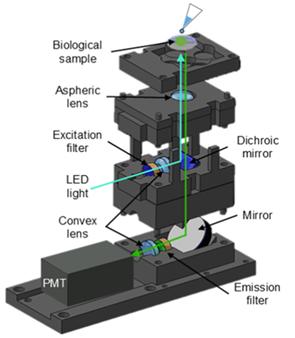
The research team led by Dr. Mooseung Lee of the Environmental Disease Research Center at the Korea Research Institute of Bioscience and Biotechnology developed a highly sensitive detection technology for Shiga toxin (a toxic protein), the key toxin secreted by enterohemorrhagic Escherichia coli (EHEC) that causes hemolytic uremic syndrome (HUS). The device is portable and can detect even minute amounts of Shiga toxin.
This device works by detecting fluorescence molecules that attach to Shiga toxin when it is present on the surface of lipid receptors, emitting light that is displayed on an LCD screen. Conversely, if there is no Shiga toxin-specific receptor, the fluorescence molecules do not attach, and nothing is detected.
Notably, this device can detect fluorescence sensitivity as low as 110 pM and measure Shiga toxin concentrations as low as 2 pg/μl. It operates independently on battery power without the need for a computer or additional equipment, and its total size excluding the battery is only about 17×13×9 cm. Weighing approximately 770 g, it is suitably portable.
Previously, detection of Shiga toxin relied on PCR-based diagnostic devices or antigen-antibody assays. These methods required skilled technicians and lengthy preprocessing, making high-sensitivity on-site detection challenging.
Hamburger Disease, Fatal to Children
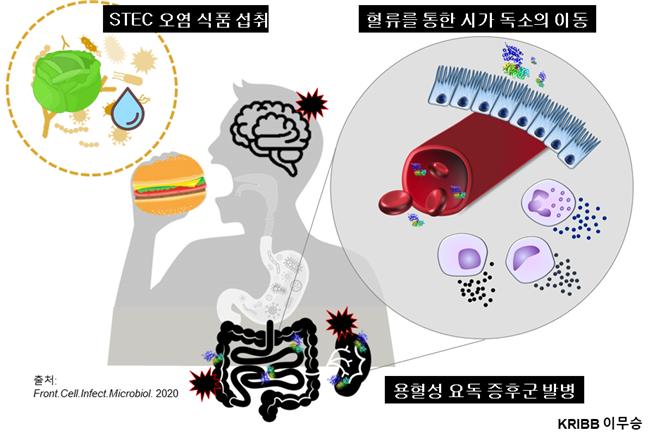
If commercialized, this device is expected to enable rapid on-site prevention of hemolytic uremic syndrome. The research team anticipates commercialization within 3 to 4 years.
Hemolytic uremic syndrome is a complication of enterohemorrhagic Escherichia coli infection (hemorrhagic colitis), a Group 1 legally designated infectious disease that frequently occurs in summer. It became known as "hamburger disease" after a 1982 outbreak among people who ate hamburgers at a fast-food restaurant in the United States. A similar incident in South Korea in 2016 also brought attention to the disease.
This disease primarily affects infants and children aged 5 to 9 and currently has no curative treatment or inhibitors developed. Patients often have to rely on lifelong dialysis.
Drs. Mooseung Lee and Chiwan Koo, the lead researchers, stated, "This research achievement could serve as the foundation for developing portable detection devices that accurately identify infectious agents such as Shiga toxin-producing E. coli, Listeria, and Salmonella, which can contaminate our daily food and many agricultural products."
© The Asia Business Daily(www.asiae.co.kr). All rights reserved.


















