Bank of Korea's 'September 2020 Financial Stability Report' on the 24th
Household debt reached 1,637.3 trillion KRW in Q2, up 5.2% year-on-year
Mortgage loan growth rate 6.4% · Credit loan growth rate 3.9% increase
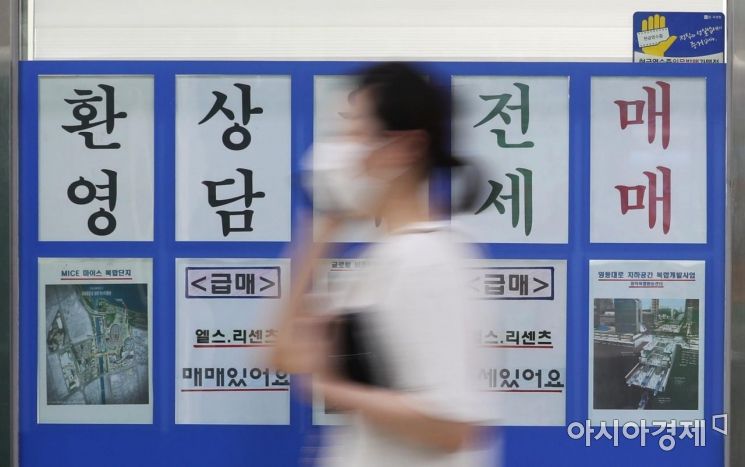 On the 19th, the government decided to lower the jeonse-to-monthly rent conversion rate from the existing 4% to around 2.5%. Hong Nam-ki, Deputy Prime Minister and Minister of Economy and Finance, stated at the related ministers' meeting on real estate market inspection that the current 4% conversion rate could accelerate the trend toward monthly rent and increase the burden on tenants, leading to this decision. The photo shows a real estate agency in Jamsil, Seoul on the same day. Photo by Moon Ho-nam munonam@
[Asia Economy Reporter Jang Sehee] Due to the impact of the novel coronavirus infection (COVID-19), increased demand for funds, and a rise in stock investment on credit (debt investment), the household debt-to-disposable income ratio reached an all-time high. This is the highest since statistics began to be compiled in the first quarter of 2007.
According to the "Financial Stability Report as of September 2020" published by the Bank of Korea on the 24th, the household debt ratio as of the second quarter of this year was 166.5% (estimated), up 7.0 percentage points from the second quarter of last year.
Household debt (based on household credit) stood at 1,637.3 trillion won at the end of the second quarter of this year, an increase of 5.2% compared to the same period last year. Although the growth rate has somewhat expanded, it remains lower than the average of previous years (7.7%).
By sector, bank household loans increased by 8.6%, while non-bank household loans decreased by 0.6%.
Since June, as housing transaction volumes have significantly increased, the growth rate of housing-related loans has expanded again, and other loans have also increased substantially. In fact, the growth rate of mortgage loans rose by 0.7 percentage points from 5.7% in the previous quarter to 6.4%, whereas the growth rate of other loans such as credit loans increased by only 3.9%.
The Bank of Korea analyzed that the soundness of household debt, measured by delinquency rates, slightly increased mainly in the non-bank sector compared to the end of last year but still remains at a low level.
Furthermore, the Bank of Korea stated, "Although the debt repayment ability of stores has deteriorated due to decreased sales of self-employed businesses caused by the spread of COVID-19 and the overall worsening employment situation, various financial support measures such as principal and interest repayment deferrals appear to have prevented credit risks from materializing so far."
It was analyzed that if COVID-19 prolongs, household debt defaults may increase. In fact, the private (household + corporate) credit-to-GDP ratio was 206.2% (estimated) at the end of the second quarter of this year, and amid economic activity contraction, the rapid increase in credit supply to the private sector has expanded the upward trend.
© The Asia Business Daily(www.asiae.co.kr). All rights reserved.

















